The Atafona Beach Incident
In the summer of 1966, Miguel José Viana, Manoel Pereira da Cruz, and Elcio Gomes were carrying out one of their latest experiments on Atafona Beach in Brazil. As they worked, witnesses reported a strange luminous object descending over the ocean, rising sharply, and then exploding above the water. The blast produced a huge fireball that lit up the sky, and the air filled with the sharp smell of sulphur. The blast was reportedly heard up to ten miles away, and buildings in the nearby city of Campos trembled from the force. At the same moment, fishermen claimed they saw a UFO plunge into the sea.
This dramatic event became the opening chapter of a mystery that continues to intrigue and captivate as one of history’s most perplexing unsolved cases.
Two Deaths on a Hill
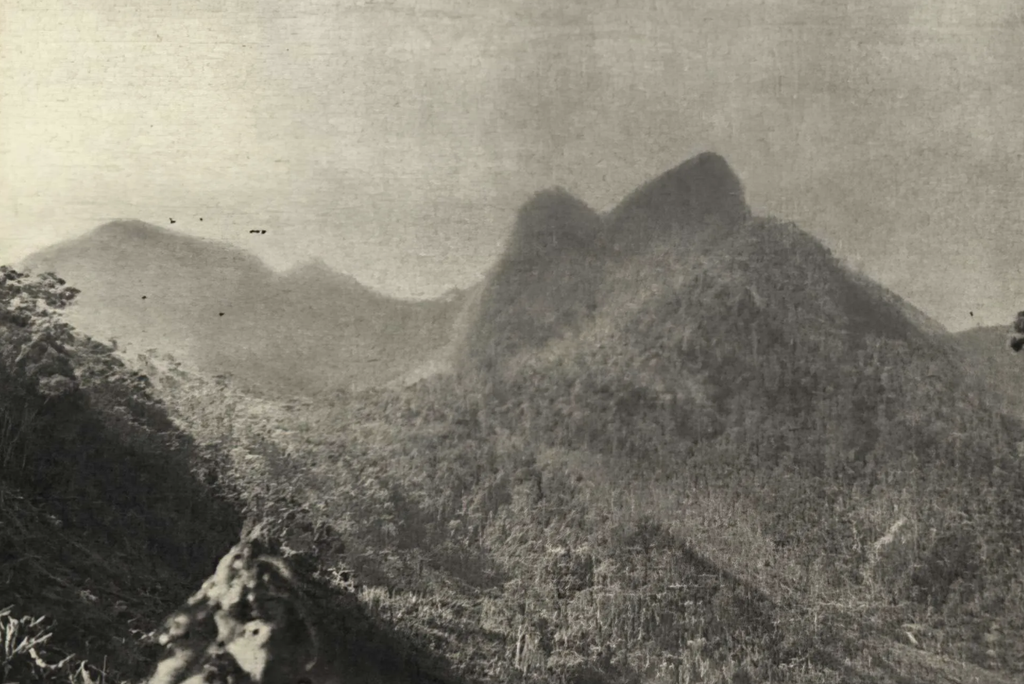
A couple of months later, on Thursday, 18th August 1966, a young man named Paulo Cordeiro Azevedo dos Santos was hunting birds on Morro do Vintém, a hill in Niterói, Rio de Janeiro. While there, he stumbled upon two men lying side by side. Unsure if they were sleeping, Paulo alerted a nearby guard, Antônio Guerra, but the guard did not investigate further.
Two days passed. On Saturday, 20th August, an 18‑year‑old named Jorge de Costa Alves was flying a kite on the same hill when he noticed a strong odour coming from the bodies. He informed the Niterói police, but officers did not respond until the following day. The delay was attributed to fading daylight and the steep, difficult terrain. By the time authorities reached the summit, the bodies had been exposed to the elements for more than three days.

The men were identified as 32‑year‑old Manoel Pereira da Cruz and 34‑year‑old Miguel José Viana — two of the men involved in the Atafona Beach incident. They were friends and business partners from Campos dos Goytacazes. Manoel owned a shop selling TV and radio components, while Miguel, a radio enthusiast, ran a repair shop. Both were married with children and were well‑regarded in their community.
On the surface, Manoel and Miguel appeared to be very ordinary men. However, the peculiar circumstances of their deaths and the strange items found with them made the scene far from ordinary.

The two men were lying on their backs on a bed of Pindoba leaves. The leaves appeared to have been cut with a blade, though no knife was found. There were no signs of a struggle, no visible injuries, and — unusually — no evidence that animals had disturbed the bodies. Even scavengers had avoided them.
The men were dressed in formal suits and identical raincoats. Nearby lay crudely cut homemade lead eye masks shaped like glasses, but without eye holes to see or stems to keep them on.

The men also carried handwritten notes. Some pages contained alphanumeric codes later identified as part numbers for electronic components related to their work. Others contained cryptic instructions that remain unexplained.
One of the notes, when translated, read:
Sunday, one capsule after lunch; Wednesday, one capsule at bedtime.
Another stated:
16:30 be at the specified location.
18:30 ingest capsules, after the effect protect metals await signal mask.
Miguel’s brother later confirmed the paper came from a notebook in their shop, and handwriting analysis showed Miguel had written the notes. However, police believed some of the terminology was not typical of him, suggesting the instructions may have been dictated by someone else.

18:30 ingest capsules, after the effect protect metals await signal mask.
Several other items were found at the scene. These included: two towels inside a paper packet, square pieces of cellophane paper soaked in an unknown chemical substance, a handkerchief with the initials M.A.S., some cigarettes, a newspaper, a bottle of magnesian mineral water, and two cups crudely fashioned from aluminium foil.
Inside Miguel’s pockets were a wedding ring tied to a pair of reading glasses, and a wristwatch. One theory is that the men removed their jewellery to “protect metals,” as the note instructed.
Between them, they carried approximately Cr$161,000. Police also found a receipt for the raincoats they were wearing and a ticket for the water bottle, which would have allowed them to return it for a small refund.
The Autopsy
The bodies were taken to the coroner’s office, which happened to be particularly busy that day. Because the coroner could not examine them immediately, an assistant handled the initial preparations. Unfortunately, the organs were not properly stored, and by the time the coroner finally began the examination, decomposition had advanced so far that meaningful testing was impossible. A toxicology report was later issued stating that no abnormalities were found — a conclusion almost certainly fabricated, as no viable testing had been carried out.
When the official autopsy report was released the following month, it simply stated:
Cause of death could not be determined because of the advanced state of decomposition on the bodies.
The report was signed by the coroner, Astor Pereira de Melo. However, the specialist’s name — Sebastiao Faillace — had been erased and replaced with the name Walmore Giani. The prevailing speculation is that Faillace disagreed with the report’s conclusions and had his name removed from it.
Miguel’s and Manoel’s Final Movements
With no clear clues as to how the men died, police focused on reconstructing their final movements. They interviewed family members and acquaintances in Campos, as well as witnesses who had seen the men in Niterói.

The men had told their families they were travelling to São Paulo — around 430 miles away — to purchase a car and supplies for their electronics business. Three days before their bodies were discovered, on Wednesday, 17th August, their friend Elcio Gomes dropped them at the bus station, where they boarded the 9:00 am bus from Campos. But instead of continuing to São Paulo, they got off the bus at around 2:00 pm in Niterói, roughly 170 miles from home. They were believed to be carrying Cr$ 2,300,000 — far more than the Cr$ 161,000 later found on their bodies.
Their first stop was an electronics shop called Fluscop. The owner recalled that the men asked about components that were not in stock. He found the conversation odd; given their expertise, they should have known the parts they wanted wouldn’t be available there. They left without buying anything.
Rain had begun to fall by the time they arrived in Niterói, and receipts found on their bodies show that their next stop was a clothing store, where they purchased matching raincoats for Cr$ 9,400 each. The clerk remembered them leaving in such a rush that they didn’t even bother putting the raincoats on before heading back out into the rain.
Their next stop was a bar, where they bought a single bottle of mineral water — later found almost empty at the scene. The waitress told police the men seemed agitated, particularly Miguel, who kept checking his watch and appeared anxious about missing something important. Despite being in a hurry, they waited for a receipt so they could return the glass bottle later for a small refund.

The men left the bar at approximately 3:15 pm. It remains unclear whether their agitation was linked to the timings in the note — which instructed them to be at a specified location by 4:30 — or whether they were planning to meet someone. According to one account, they set out for Vintém Hill on foot. Another account came from a guard who claimed he saw the men being dropped off at the base of the hill by a jeep carrying three unidentified individuals.
No one knows exactly what happened after they left the bar. But whether they walked or were driven, it is believed they reached the top of Vintém Hill at around 4:30 pm.

The Third Man – Elcio Gomes
Shortly after the discovery of the bodies, Elcio Gomes — the third man present at Atafona Beach — was brought in for questioning. Manoel’s widow told police she had witnessed an argument between her husband and Gomes, but Gomes was able to provide an alibi for the time of the deaths. He produced a receipt for vehicle parts he had purchased in Campos that day, and neighbours reported seeing him working on his car at home during the period the men were believed to have died.
Even so, it appeared Gomes was withholding something. In September 1966, he informed police about a man named Álvares de Souza, who was subsequently arrested. No charges were brought against him, raising questions about whether Gomes was genuinely assisting the investigation or attempting to divert suspicion away from himself. But to what end?

When questioned about the Atafona Beach incident, Gomes gave conflicting accounts. He first claimed the men had travelled there in Miguel’s car, then later said Miguel’s car was broken and they had used his instead. Valdir Cardoso, an employee of Miguel and Manoel, alleged that Gomes lied to police when he said Miguel and Manoel were the masterminds behind the experiment. According to Cardoso, it was actually Gomes who had instigated it.
Cardoso also described Gomes as a kind of spiritual doctor, someone who held considerable influence over Miguel and Manoel and whom they consulted for physical ailments. This raised the possibility that Gomes may have prescribed the “capsules” mentioned in the notes — and may explain his conflicting testimonies.
No further action was taken against him. However, it was clear that Gomes played a significant role in the men’s spiritual beliefs. Manoel’s widow had already told police that her husband and Miguel were members of a spiritualist group, and Gomes was also part of this circle.
Spiritual Scientists
Gomes confirmed that the men were part of a secret society of experienced electrical technicians who practised spiritism. The group regularly held séances, attempting to communicate telepathically with the spirit realm.
Spiritism is extremely popular in Brazil. It centres on the belief that every living person has an immortal spirit or soul connected to their physical body, which is released and reincarnated after death. What distinguishes spiritism from other religions with similar beliefs is its approach: practitioners favour a more scientific, experimental method of contacting the spirit world rather than relying on traditional mystical practices.
Miguel and Manoel’s beliefs, however, appear to have extended beyond the spirit realm and into the cosmos. Spiritists believe there is life on other planets, and where there is life, there is also spirit. According to Gomes, Manoel’s backyard had been used for “first‑contact” rituals, and two months before the men died, they built a device intended to establish communication with beings on Mars. The device reportedly exploded — a detail confirmed by Manoel’s father.

Police found evidence supporting Gomes’ claims when they searched Miguel’s home workshop. Among the items were tools, scraps of lead used for making masks, and a book on scientific spiritualism. One highlighted passage described an “intense luminosity” emitted by certain beings, which could blind humans — a detail that aligned with the men’s belief that lead masks were necessary for eye protection.
Investigators could not rule out the possibility that Miguel and Manoel had gone to Vintém Hill that day to conduct another experiment. Adding weight to this theory was the fact that Gomes was not the last person to see them before they boarded the bus to Niterói. The men had also encountered Miguel’s cousin, who expressed scepticism about their claim of taking a five‑hour bus trip to buy a used car. Miguel admitted the car‑buying story was merely a cover for their real intentions. As he allegedly told his cousin:
“Buying a car isn’t the real purpose of this trip. When I get back, I’ll tell you whether or not I believe in spiritualism.”
Alien Sighting
On 25th August 1966, a new witness came forward who supported the theory police were now considering — that Miguel and Manoel had travelled to Vintém Hill to make contact with extraterrestrials. The witness, Gracinda Barbosa Coutinho da Sousa, stated that on the evening of 17th August, the night the men arrived in Niterói, she and her three children were driving home when they saw a UFO hovering over Vintém Hill. Gracinda described it as an orange oval shape with a ring of fire around its edges, emitting blue rays of light in all directions. Given her high standing in society, her account was taken seriously.

Local newspapers reported the sighting, and soon other residents came forward claiming they had seen the same object. Another sighting occurred over Vintém Hill in September 1968, when Ari Pereira of the newspaper Diário de Notícias captured a photograph of an unidentified object hovering above the hill. UFO reports were common at the time, and some believed the sightings over Vintém Hill were evidence that Miguel and Manoel had been attempting to make contact with extraterrestrials that evening.
One of the more bizarre theories suggests that Miguel and Manoel did make contact — and that the extraterrestrials retaliated, supposedly in revenge for the luminous object “obliterated” over Atafona Beach. It is an extraordinary claim, but it remains part of the folklore surrounding the case.
While the alien theory may sound far‑fetched, police did believe the men had conducted similar experiments in other cities. The explosion at Atafona Beach had drawn the attention of the Navy, who became intrigued by the men’s alleged connection to reported alien sightings and their potential threat to national security. On the night before the explosion, the Navy’s monitoring system intercepted a conversation between three unidentified ham radio stations. When the logs were reviewed, none of the stations were found to be officially registered in Brazil.
According to Gomes, Miguel and Manoel operated a covert radio station, which likely accounted for one of the signals. The origins of the other two signals, however, remain unknown — hinting that whoever was behind them may have played a role in the experiments.
A Related Death
Four years earlier, in 1962, another electronics technician was found dead under strikingly similar circumstances. Hermes Luiz Feitosa was discovered on Cruzeiro Hill near Neves, and like Miguel and Manoel, a homemade lead mask lay beside him.

It seemed likely that all three men were connected through the same society. Gomes even claimed that Miguel and Manoel had maintained a secret radio communication centre in their hometown to stay in contact with other members across the country.
Police reopened the case of Hermes Luiz Feitosa but were unable to establish any formal link.
There was no clear explanation for Hermes’ death. It was believed he had taken drugs under the conviction that he could receive radio and television signals with his mind — a belief that echoed the experimental, spiritually‑scientific mindset shared by Miguel and Manoel.
Mind-Altering Substances
Around ten days after the men’s deaths, the Brazilian newspaper Folha de São Paulo published a statement from a yoga teacher suggesting that Miguel and Manoel may have been using mind‑altering drugs such as LSD to heighten their mental alertness during telepathic experiments.
Similarly, Father Oscar González Quevedo, a professor of parapsychology, told the newspaper, O Globo, that the drugs the men used were intended to induce a trance state, allowing them to reach a higher level of consciousness. He also claimed that the light emissions received during these trances were extremely powerful, and that lead masks were used in occult practices to protect the eyes from this intense brightness.
In his statement to police, Elcio Gomes also said the men used drugs during their rituals.
The men’s notes included instructions for taking capsules, but without a proper toxicology report, it is impossible to determine what — if anything — they consumed. Frustratingly, the results of testing on the square pieces of cellophane soaked in an unknown chemical substance were never released.
Even so, the evidence — the notes, the makeshift aluminium cups, the nearly empty water bottle, and the connection to Hermes Luiz Feitosa, who is believed to have used drugs on the day he died — strongly suggests that Miguel and Manoel ingested some kind of substance on the day they died.
But even with this likelihood, many questions remain. What could they have taken? Psychedelic drugs like LSD are not known to cause accidental overdose. A contaminated batch is possible, but the odds of Hermes Luiz Feitosa dying from a similarly “bad batch” four years earlier seem slim.
Another theory proposes that the men intended to commit suicide — that they overdosed deliberately in an attempt to shed their physical bodies and travel to an alien world. Given their spiritual beliefs, it is not impossible. But their behaviour leading up to their deaths does not strongly support suicidal intent. Their families noticed nothing unusual before they left, and the men were still concerned about returning the water bottle to the bar for a small refund.
Finally, there is the possibility that the capsules were tampered with — that the men were deliberately poisoned. If so, who would have wanted to kill them, and why?
Robbery
If Miguel and Manoel were deliberately poisoned, one possibility is that they were killed because of whatever had brought them to Vintém Hill in the first place.
Some speculate that the men travelled there to purchase smuggled or illegal goods for their work. At the time, Brazil was struggling with inflation and economic instability, and the military government had introduced measures to reduce reliance on foreign products by promoting domestic manufacturing. Imported goods were often more expensive and harder to obtain, creating a market for smuggled goods.
Another theory is that Miguel and Manoel were attempting to acquire radioactive materials for their experimental devices. Some believe the lead masks were intended to protect them from radiation. In 1980, Jacques Vallée — a researcher known for his work on UFO phenomena — visited the area to investigate the case. In Confrontations: A Scientist’s Search for Alien Contact, he noted that the sparse vegetation where the bodies were found could indicate radiation. However, a more mundane explanation is that the lack of regrowth was caused by chemicals used on the ground where the decomposing bodies had been recovered.
There are problems with the radioactive‑material theory. If Miguel and Manoel had actually been handling radioactive substances, it seems reasonable to assume they would have used more comprehensive protection than simply covering their eyes. The Army’s analysis of the masks also found no trace of radioactive material.
Even so, it is possible that the men were meeting someone to purchase radioactive material, or that they had been led to believe they were going to obtain it. One theory suggests they may even have been given what they believed were anti‑radiation tablets, which were actually poison.
If that was the case, the question becomes whether someone used the men’s interest in illegal or unusual materials to lure them to Vintém Hill — and whether robbery was the real motive.
Miguel and Manoel were reportedly carrying Cr$ 3,000,000 when they left home. The figure sounds substantial, although estimates put its equivalent at roughly US$ 2,000 in today’s money. Only Cr$ 161,000 was found on their bodies, equivalent to around US$ 100 today. Inflation makes any modern comparison imperfect, but there was at least a significant amount of money involved.
Could they have been lured to Vintém Hill under the pretext of purchasing rare components for their work, or radioactive materials for their experiments? Or had someone gained their trust with the promise of alien contact, only to lead them to the location and rob them?
When police revisited the scene a few days later, they found a stone post on the ground, believed to have served as a meeting marker. Yet given Miguel and Manoel’s intelligence, it seems doubtful they would have fallen for such a crude setup. And would someone really go to such lengths simply to rob them?
If the stolen amount was only a few thousand dollars, does robbery still seem like a convincing motive? It feels excessive to orchestrate a ruse, lure two intelligent men to a remote hilltop, and kill them for a relatively modest sum.
That said, an opportunistic robbery remains plausible. The bodies lay undiscovered on the hillside for three days. We know two boys encountered the scene before police arrived, as did the security guard, Antônio Guerra, who chose not to investigate. This window of time could have allowed someone to find the bodies and take the money.
Some might question why a small amount of cash was left behind if the men had been robbed. But in a hurried search of their pockets, it is entirely possible a thief overlooked it while making a quick escape. This could also explain why their jewellery was untouched — opportunistic thieves are far less thorough than organised criminals.
The Exhumation and New Tests
After weeks of conjecture — smuggling, radiation, robbery, even spiritual manipulation — the investigation produced nothing concrete. The case went quiet for nearly a year. Dissatisfied with the lack of significant progress from the police, the Justice Department ordered a new investigation, and on 25th August 1967, the bodies of Miguel and Manoel were exhumed from Caju Cemetery in Campos. However, Dr. Sebastiao Faillace found that a toxicology report still could not be performed, and the cause of death remained unknown.

In 1968, bones and tissue samples were sent to the Institute of Atomic Energy in São Paulo for further analysis. The goal was to determine whether the men had been victims of murder, suicide, or accidental poisoning. A neutron activation analysis was carried out on their hair follicles to test for arsenic, mercury, barium, and thallium. All levels were found to be within normal ranges.
By this stage, investigators increasingly believed the men had been murdered and their bodies dumped on the hill. In August 1967, police were searching for a vehicle they believed was involved. Ten months later, in June 1968, the Brazilian press reported that police were looking for a blonde man — thought to be a foreigner — who had been seen sitting behind the wheel of a jeep, speaking with the men near Vintém Hill. Then, in February 1969, newspapers began reporting that the case had been solved, and police named a suspect for the men’s murder.
The Case is ‘Solved’
The suspect was a smuggler named Hamilton Bezani, who had allegedly confessed earlier that year to involvement in the murders of Miguel and Manoel.
When police interviewed Bezani, he was already serving a fifty‑year sentence for smuggling. He claimed that while on the run, he had been hiding in a safe house in Rio when three associates approached him with an offer: a paid hit job in Niterói, enough money to keep him afloat while he remained in hiding. He said he accepted the job.

According to Bezani, the gang travelled in a stolen car to a spiritualist centre where the manager, Helena, was conducting a séance. There, they met Miguel and Manoel and learned the men were carrying a large sum of money. After the séance, Bezani said he drove the gang — along with Miguel and Manoel — to Vintém Hill, where the men were forced at gunpoint to ingest poison before being robbed.
But who had ordered the hit? In some versions of the story, Helena was responsible. In another, reported by Diário de Notícias, Bezani claimed Miguel and Manoel had installed communication equipment on ships used by the smugglers, and the men had to be silenced.
However, Bezani’s account was riddled with contradictions, and police quickly dismissed it. It appeared the real motive behind his confession was to negotiate a transfer to the prison in Niterói, which was rumoured to be easier to escape from. Instead, he was returned to his original prison and later sued for giving false testimony.
However, Hamilton Bezani’s false confession does leave unanswered questions, such as whether Miguel and Manoel were truly dropped off at the base of the hill by a jeep carrying unidentified individuals, and whether they had visited the spiritualist centre before arriving at Vintém Hill.
Final Thoughts
In my view, this was a tragic accident rather than a deliberate act. Miguel and Manoel were deeply committed to their beliefs and had begun using drugs to enhance their spiritual practices. But as electronics technicians rather than scientists, they — or whoever supplied the drugs and determined the dosage — may simply have misjudged the quantities involved. If their money was taken, it was likely an opportunistic theft after the fact rather than anything planned.
This case was mishandled from the start. Had a proper toxicology report been carried out immediately, we might not be left as in the dark as Miguel and Manoel were when they put on those masks.
Sources
Anomalies. 1966, August 17: The Lead Masks Mystery.
Dead Volume. The Case of the Lead Masks.
Flying Saucer Review. The Mystery of the Morro do Vintém: How Did the Men with the Lead Masks Die? Bowen, C. March/April 1967. Volume 13, Number 2. Pages 11-14.
Flying Saucer Review. No Easy Solution to the Morro Mystery. Bowen, C. July/August 1968. Volume 14, Number 4.
Flying Saucer Review. Follow-Up on the Morro Do Vintém Mystery. Creighton, G. July/August 1971. Volume 17, Number 4.
Linha Direta, Máscaras de Chumbo. (TV). 1990. Available on YouTube.
Pmig96 (WordPress.com). The Lead Masks Case.
Vallee, Jacques. Confrontations: A Scientist’s Search for Alien Contact. New York: Ballantine Books, 1990.
Various newspaper articles from:
Correio da Manhã Available at Lead Masks Case: sources (part 1) – pmig96 (wordpress.com)
Diário de Notícias Available at Lead Masks Case: sources (part 2) – pmig96 (wordpress.com)
Luta Democrática Available at Lead Masks Case: sources (part 3) – pmig96 (wordpress.com)
Folha de São Paulo Available at Lead Masks Case: sources (part 4) – pmig96 (wordpress.com)