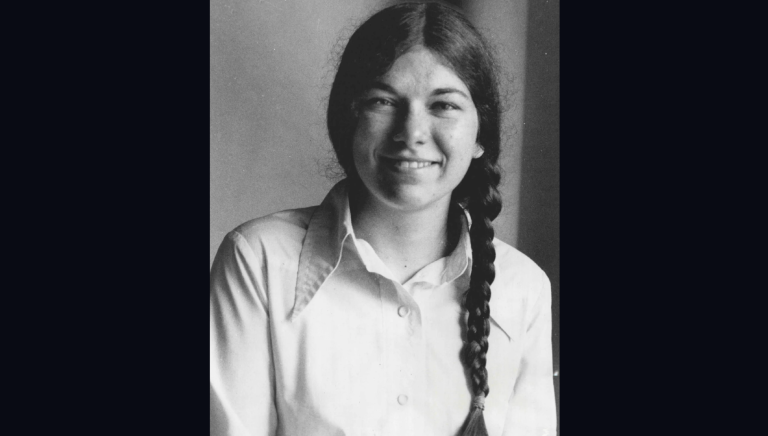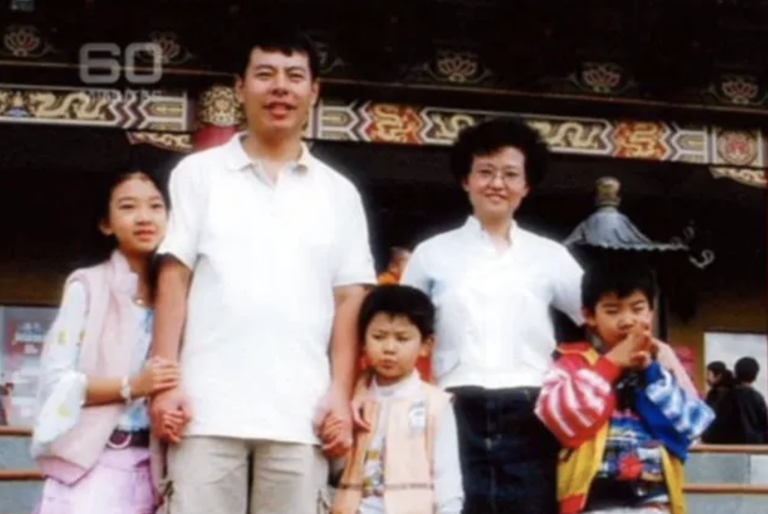
In December 1972, seven-year-old Steven Stayner left school in Merced, California, with plans for the rest of his afternoon. His best friend was celebrating her birthday, and Steven hoped to visit her once he had finished his chores at home.
He never made it there.
As Steven walked home, a stranger approached him and began handing out religious leaflets. Nearby, another man sat waiting in a parked car.
What happened next would separate Steven from his family and the life he knew. But his story would ultimately become about far more than the day he disappeared. It would become a story of survival, courage, and one extraordinary decision that would change the life of another child.
⚠️ Content warning: This article contains references to child abduction, sexual abuse, and other distressing events. Reader discretion is advised.
Stolen Childhood
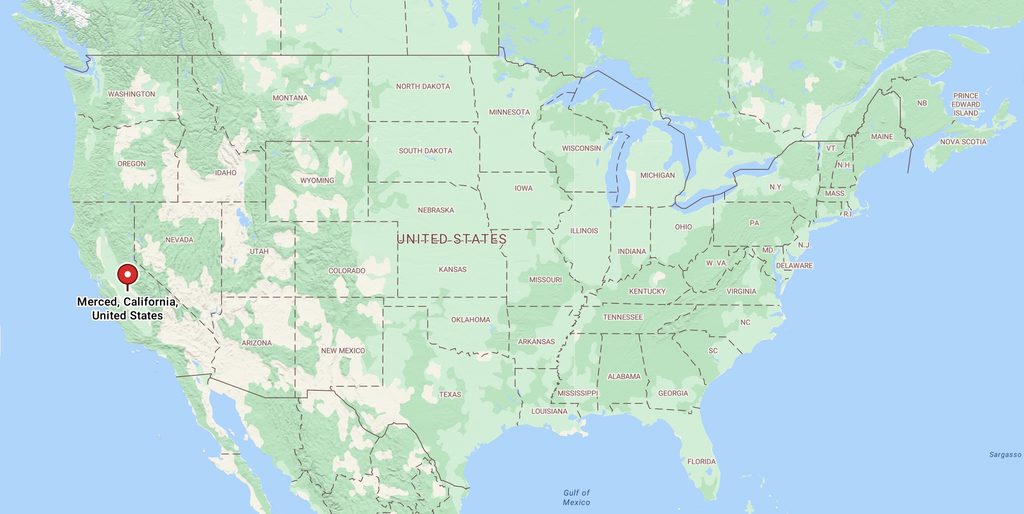
Steven Gregory Stayner was born on April 18th, 1965, in Merced, California. The middle child of five siblings, he had an older brother, Cary; an older sister, Cindy; and two younger sisters, Jody and Cory. In 1972, 7-year-old Steven lived with his parents, Kay and Delbert, in a three-bedroom suburban home on Bette Street in Merced, a small rural community about 60 miles west of Yosemite National Park. The town’s slogan, ‘Gateway to Yosemite’, reflected its proximity to the famous park.
Before moving to Bette Street, the family had lived on a 20-acre ranch in northern Merced County, complete with an almond orchard. Steven loved playing outside, running among the trees with his dog. However, farm work had taken a physical toll on Delbert, who underwent back surgery in 1970 after slipping a disc. The following year, a dry summer and problems with irrigation forced the family to sell the ranch and move into the city.
Steven struggled with the change. He missed the open space and his dog, which had been given to friends in the countryside, and frequently got into trouble for cutting through neighbours’ gardens. He also found it difficult to adjust to Charles Wright Elementary School, where he got into fights with classmates and missed the friends he had known since kindergarten.
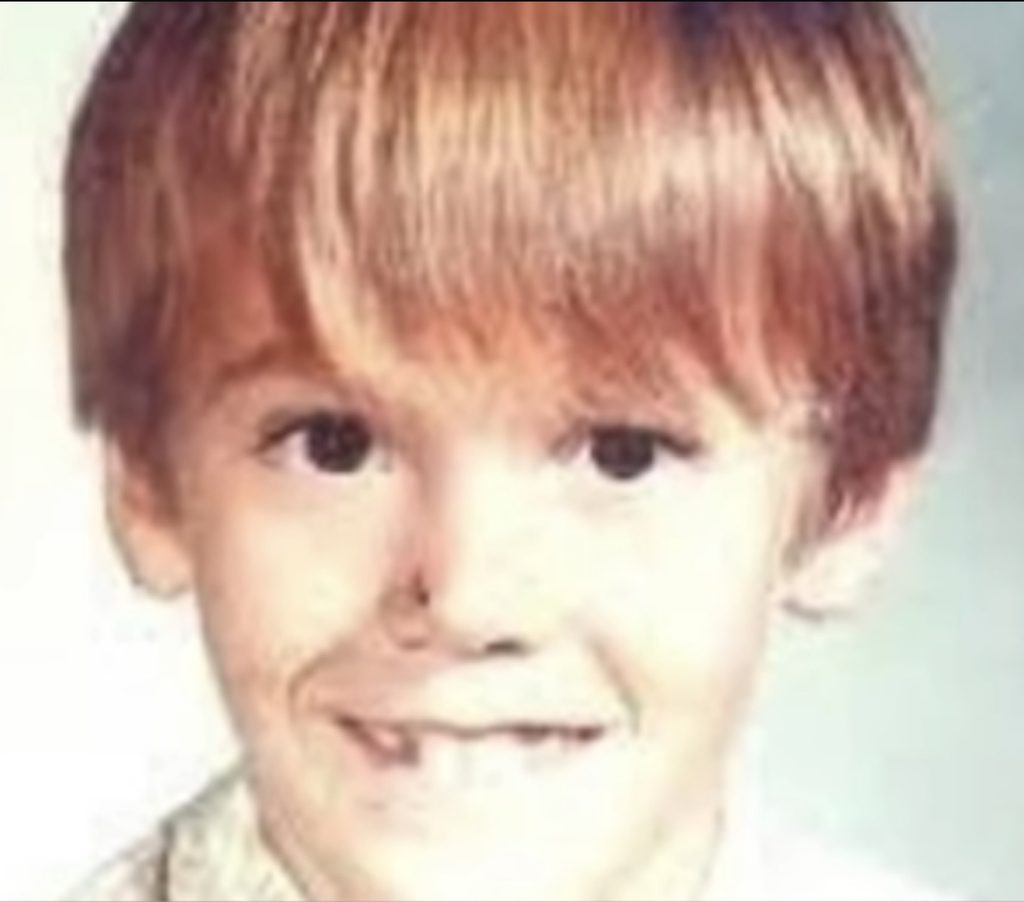
By the end of 1972, however, Steven was beginning to settle into his new life. He was happier at school and had started making friends.
On 4th December, Steven finished school at 2 pm. It was his best friend Sharon Carr’s birthday, and he planned to visit her later with a present. First, though, he had chores to do at home. His parents had previously reprimanded him for visiting friends without permission, and Steven did not want another ‘whooping’ from his father, so despite the rain, he headed straight home.
As Steven followed his usual route, just a few blocks from his house, he was approached by 30-year-old Ervin Edward Murphy. Murphy was handing out religious tracts and claimed to be collecting donations for a church. He asked Steven whether his mother might have anything to donate, and when Steven said that she would, Murphy offered to drive him home. Steven initially hesitated, but he had been raised in a devout Mormon family and had been taught to respect and trust adults, particularly those associated with the church.
Nearby, 41-year-old Kenneth Parnell was watching from his white Buick. Parnell wanted a young boy to raise as his own and had previously used religious tracts as a way of approaching children walking home from school. On this occasion, he had enlisted Murphy to make the initial approach, believing his small stature and gentle manner would appear less threatening to a child.
When Steven finally accepted Murphy’s offer, Parnell pulled up alongside them. Murphy opened the rear door, and Steven climbed into the car.
But Parnell did not take him home. Instead, Steven was driven around twenty-five miles away to Parnell’s rented, run-down cabin at the Catheys Valley Cabin Resort in Mariposa County. Parnell and Murphy both worked near Yosemite Lodge, around fifty miles away.
During the journey, Parnell stopped at a payphone and pretended to call Steven’s parents. He then told Steven that they had given permission for him to spend the night. When they arrived at the cabin, several toys were waiting for him.
That night, Parnell made Steven shower and join him in the cabin’s only bed. Murphy slept on the sofa, listening to Steven’s cries from the next room. For the next seven years, this abuse would be Steven’s new normal.
The next day, Parnell and Murphy returned to work, taking Steven with them to Yosemite Lodge. After dropping Murphy off, Parnell drove Steven to a remote area and forced him to perform oral sex on him. Steven later explained that he complied because he didn’t want to be fighting every night, so he just did what Parnell wanted him to do.
After the assault, Parnell moved Steven to his private room in the employee dormitory at Yosemite Valley Lodge. He drugged Steven with sleeping pills so he could work undisturbed as the hotel bookkeeper. For days, Steven was confined with only a bucket for a toilet. Murphy occasionally checked on him, bringing food, books, and toys. Murphy was kind to Steven and tried to comfort him. Steven liked him and called him ‘Uncle Murphy’.
On 11th December, Parnell, Murphy, and Steven returned to the cabin at Catheys Valley. Parnell left Murphy in charge of Steven while he travelled to Bakersfield to visit his mother. When he returned, he told Steven that he had been in court and claimed that his parents no longer wanted him, could not afford to care for him, and that a judge had granted Parnell custody.
Steven was devastated, but Parnell softened the blow by bringing home a 6-week-old Manchester Terrier puppy for him. Steven adored his new companion and named her Queenie.
While he had been away, Parnell had stopped at a service station in Merced, where he spotted one of Steven’s missing-person posters. He memorised the boy’s full name, date of birth, and physical description. Using that information, Parnell gave him a new identity, ‘Dennis Gregory Parnell’, and instructed him to call him ‘Dad’.
A couple of days later, Parnell cut Steven’s hair shorter and dyed it a darker colour, making him less recognisable from the description on the poster of a boy with ‘light brown, shaggy, collar-length hair’.
The next day, Parnell drove Murphy back to Yosemite, quit his job, and returned to the cabin, where he molested Steven again. The abuse escalated, and thirteen days after the kidnapping, Parnell sodomised Steven for the first time. When he finished, he gave him sleeping pills.
The following morning, Parnell traded his Buick for a Rambler, making his connection to Steven’s kidnapping even harder for the police to trace. That day, Parnell, Steven, and Queenie left Catheys Valley, driving 200 miles to Santa Rosa. They spent weeks in run-down motels, where Steven spent his first Christmas away from his family.
The Search
Kay had been running errands on the afternoon Steven disappeared and arrived around ten minutes late to collect him from school. She hoped he had gone straight home, but when she arrived at 2:20 pm, he was not there. At first, neither Kay nor Delbert was overly concerned. Steven did not always come straight home, but as time passed, they began to worry.
They called Steven’s friends, while Delbert drove around the neighbourhood looking for him, but nobody had seen him. By 5 pm, they contacted the Merced Police.
That night, a search party, assisted by local Boy Scouts, combed gardens, sheds, wooded areas, and construction sites. Delbert continued searching late into the night, at one point using a torch to search a local junkyard.
He also drove to Catheys Valley to tell Kay’s father, Bob Augustine, that Steven was missing. Bob lived at Judy’s Trailer Park, the same park where Parnell’s cabin was located. Neither man knew that Steven was around 200 feet away.
News of Steven’s disappearance was broadcast on local radio that night, and by the following day, television stations and newspapers were carrying reports. Police officers canvassed homes and businesses within a ten-block radius as the search expanded across Merced.
For several days, community volunteers and members of the Mormon church joined the effort. Kay and Delbert continued searching and cooperated with the police investigation, including undergoing polygraph tests, which they both passed.
On 6th December, they awoke to find the FBI excavating part of their property.
Delbert increasingly feared that Steven had been murdered. He drove around the area examining mounds of earth in case they concealed a grave and kept a sawn-off shotgun in his truck in case he encountered the person responsible for Steven’s disappearance. Kay continued to hope that her son was alive. She made sure someone was always at home in case he called, while she and her friends distributed missing-person posters to schools and local businesses.
Several psychics also contacted the family. Although sceptical, the Stayners and investigators followed up on the information they provided. One directed them towards the cabins at the trailer park in Catheys Valley, but they were not searched. The family believed the psychic may have focused on the location because Bob Augustine lived there. Bob had been uncooperative when questioned by investigators, although he later passed a polygraph test.
Given Merced’s proximity to Yosemite National Park, the FBI requested a list of park employees. However, the list did not arrive until three months later and was incomplete. Employees were paid fortnightly, with half receiving their wages one week and the remainder the next. The records supplied to investigators omitted those who had been paid during the week Steven disappeared. Parnell was among them, meaning his name was not available for investigators to check against their records.
Park rangers searched Yosemite, but problems with the employee information were not the only obstacle. The Curry Company, which employed staff within the park, had hired people with criminal records, including sex offenders, making the missing employment records potentially significant.
Additionally, when FBI agents asked to display Steven’s missing-person posters, the park manager refused, saying they might frighten visitors. He also maintained that because Yosemite was under federal jurisdiction, investigators would require a warrant.
As a result, Steven’s posters were not displayed in the park.
On 11th December, the organised search was called off. That Christmas, Steven’s unopened present, a G.I. Joe action figure, remained beneath the family’s tree.
Kay and Delbert still had no way of knowing whether their son was alive. In 1973, the discovery of a child’s cowboy boot on the bank of Bear Creek prompted another search for remains, but the boot was eventually determined not to belong to Steven.
As the months passed, Kay and Delbert continued asking news organisations to cover Steven’s disappearance, but were eventually told that his case was now ‘old news’. Despite this, the family continued to hope that he would return.
Later that year, Delbert and Cary repainted the family garage. On one wall was Steven’s name, which he had mischievously scribbled there the day before he disappeared. Delbert made sure Cary did not paint over it.
The writing remained on the garage wall for years.
Steven’s New Normal
After Christmas, Parnell found work as a bookkeeper and front desk clerk at a Holiday Inn in Santa Rosa. He hired babysitters to look after Steven and warned him that if he ever revealed his true identity, he would be sent to a children’s home.
On 2nd January 1973, Parnell enrolled Steven at Steel Lane Elementary School under the name Dennis Parnell. He listed Yosemite Elementary as his previous school, but despite delays in obtaining Steven’s records, Steel Lane did not request a birth certificate or question his identity.
In fact, that same month, the Bellevue Union School District received several of Kay’s missing-person posters, along with a letter asking for them to be circulated among its schools, including Steel Lane. Instead, the posters were discarded, and no connection was made between ‘Dennis’ and the missing Steven Stayner.
Having only recently begun to settle into life in Merced, Steven now faced another upheaval. On 24th February, Parnell moved them to a small trailer at Mt. Taylor Trailer Park on the outskirts of Santa Rosa. Steven was forced to change schools again, this time enrolling at Kawana Springs Elementary under the identity Parnell had created for him.
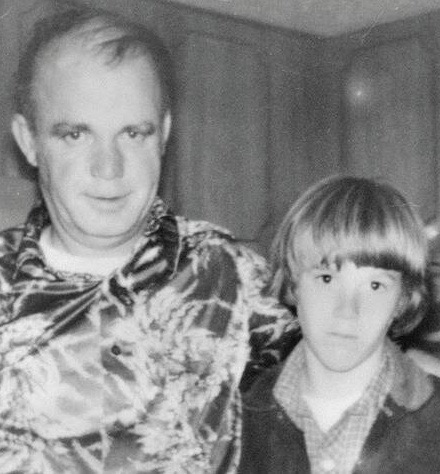
In April, Steven turned 8, and Parnell continued to sexually abuse him. One night, while Parnell was asleep, Steven tried to escape. He made it only a short distance before becoming lost and frightened, and eventually returned to the trailer before Parnell woke.
Parnell had convinced Steven that his family had abandoned him, but Steven still searched newspapers and watched television for some indication that they were looking for him. He never found one.
Gradually, Steven began to settle into his new surroundings. The trailer was shabby, but he enjoyed being outdoors with Queenie, which reminded him of his childhood on the ranch. He also became friends with a boy named Kenny Matthias, and as the friendship developed, Parnell persuaded Kenny’s mother to babysit Steven.
Later that year, when Steven became ill, Parnell was able to obtain medical treatment for him despite having no legitimate documentation proving that he was Steven’s father. He also began taking Steven to public places, including Denny’s, without attracting suspicion. By then, Steven was effectively being hidden in plain sight.
In November 1973, Parnell rented a larger house in Santa Rosa, bringing another change of school for Steven, this time to Doyle Park Elementary. Although Steven missed Kenny, Parnell allowed the boys to have sleepovers, and they remained close. Parnell also began a relationship with Kenny’s mother, Barbara.
By February 1974, Parnell had lost his job at the Holiday Inn and was delivering newspapers. Unable to keep up with the payments on the house, he and Steven returned to motel accommodation in Santa Rosa. The move did, however, allow Steven to return to Kawana Springs Elementary and reconnect with Kenny.
That spring, Parnell found work at the El Tropicana Motel, while his relationship with Barbara grew closer. Barbara’s husband, Bob, often returned home drunk and violent, and she increasingly turned to Parnell for support. Eventually, she moved into the motel room with Parnell and Steven, where all three shared a bed.
One night, while Barbara was drunk, she and Parnell had sex in front of 9-year-old Steven and forced him to participate.
In June, Parnell returned to work at the Holiday Inn, and the three moved to North Star Trailer Park, where they again shared the one bed. Over the following eighteen months, Steven was raped another eight times. Although Steven did not like Barbara, he later said that he felt relieved when she was there because her presence reduced the frequency of Parnell’s assaults.
Kidnapping Steven had not ended Parnell’s desire to have another child. In December 1974, he enlisted Steven to help him abduct a boy from a Santa Rosa shopping centre. Steven deliberately sabotaged the attempt, approaching boys as instructed but then returning to Parnell and falsely claiming that they had refused to go with him.
Almost six months later, in May 1975, Parnell persuaded Barbara to help him. She attempted to lure a boy from the Santa Rosa Boys’ Club, but when they approached Parnell’s car, the boy became frightened and ran away.
Soon afterwards, Parnell, Barbara, and Steven moved around eighty miles north to Willits in Mendocino County. Steven changed schools again, enrolling at Brookside Elementary. Parnell was unable to find steady work, and within weeks, they moved again, this time to Harbor Trailer Park in Fort Bragg.
With financial assistance from his mother, Parnell opened a Bible store. Steven was once again enrolled at a new school, Dana Gray Elementary, where ‘Barbara Parnell’ was listed as his mother.
One weekend, Steven was caught shoplifting. Although he was briefly held by police, he said nothing about his true identity or Parnell’s abuse. He remained frightened of Parnell and still believed that revealing the truth could result in him being sent to a care home. After years of being told that his parents had abandoned him, the possibility that he might have no family to return to frightened him even more.
By spring 1976, Barbara had regained custody of her four youngest children, including Kenny. Parnell’s Bible store had failed and eventually closed, while the arrival of Barbara’s children placed further strain on their finances.
Their trailer was too small for all seven of them, so Parnell bought a converted school bus, and the family moved to the nearby Anchor Trailer Park. While they were living there, Kenny told Steven that Parnell had made advances towards him, although Steven dismissed what his friend told him.
Financial pressures eventually contributed to the breakdown of Parnell and Barbara’s relationship, and by June, she and her children had left to live with another man she had met through work. With Barbara gone, Parnell’s abuse of Steven intensified.
In July, Parnell took a bookkeeping job at Wells Dental Supply in Comptche, Mendocino County. He rented a mobile home from a colleague, and he and Steven moved once again.
For Steven, Comptche offered a brief reprieve. For the first time in some time, he had his own bedroom, and he loved being surrounded by the countryside. He made friends at Mendocino Middle School and had his first girlfriend, Lori MacDonald.
But Parnell continued to prey on young boys. Kenny later told Steven about visiting the trailer when Parnell sent Steven out. Left alone, Kenny was cornered by Parnell but escaped before anything happened. According to the book I Know My First Name is Steven by Mike Echols, Steven then confided in Kenny about the abuse. When Kenny asked Steven why he didn’t tell anyone, Steven said he didn’t want to tell on his ‘dad’.
In another incident, Barbara left Kenny and her 9-year-old son Lloyd with Parnell in the trailer. Parnell began touching Kenny, but Kenny ran off, leaving his younger brother alone with him. Allegedly, Parnell then raped Lloyd.
Parnell propositioned other boys, offering them money or cigarettes. One boy he offered money to was 10 years old. He declined Parnell’s advances.
Another time, Parnell purchased cigarettes for Steven’s friend, George. He then served Steven and George beer and got them drunk. According to a police report filed at the time by George’s mother, Parnell sodomised George.
In another incident, Parnell got Steven and a friend drunk and photographed them nude in the shower. It wasn’t the first time Parnell had taken intimate pictures of Steven.
In the spring of 1978, 13-year-old Steven had been drinking and smoking marijuana at a party when he tearfully told several friends, including George and his girlfriend Lori, that his real name was Steven Stayner and that he wanted to go home.
His friends dismissed the confession as drunken rambling. Parnell had everyone fooled.
A year later, in the spring of 1979, Parnell put down a deposit on a plot of land in Franklin County, Arkansas, nestled in the Ozark Mountains. He planned to build a cabin there once the sale was finalised. While they waited, he and Steven made a sudden move to a caretaker’s cabin on Mountain View Ranch in Manchester. In exchange for guarding the property and its cannabis crops, the owners allowed them to live there rent-free.
Steven was devastated. After three happy years in Comptche, surrounded by good friends and with a bedroom of his own, he now found himself living in a primitive one-bedroom cabin with no electricity and only outdoor toilet and washing facilities.
Parnell found work as a night clerk at the Palace Hotel in Ukiah, around forty miles from the cabin. Steven transferred to Point Arena High School, although the isolation of their new home meant that he frequently missed classes.
By then, Steven was 14, and although the abuse continued, Parnell’s sexual interest in the developing teenager was waning. His desire for another young boy, however, had not. He still hoped to take a child with him to Arkansas and repeatedly tried to involve Steven in his plans.
Several times, Parnell drove Steven to Santa Rosa and instructed him to approach children, just as he had done before. Each time, Steven deliberately sabotaged the attempt.
When Steven continued to thwart his plans, Parnell turned to someone else.
Randall ‘Sean’ Poorman was a troubled teenager looking for a way out of a difficult home life. Parnell exploited his vulnerability, providing him with cigarettes, alcohol, and drugs. He also stole marijuana from the ranch and had Sean sell it for him.
In November 1979, while Sean was staying at the cabin, Parnell told him that he wanted to ‘rescue’ a boy from a bad home and offered him $50 to help. Sean agreed.
At around 8 am on 14th February 1980, Parnell and Sean drove to the area around Yokayo Elementary School in Ukiah and watched as kindergartners arrived for the school day. Parnell already had a particular boy in mind. He had followed him before and knew the route he took, but when they failed to see him that morning, they decided to return later.
In the meantime, they visited charity shops, where Parnell bought Sean a briefcase as a reward for helping him. Sean would later use it to carry his pornography. Parnell also bought girls’ clothing intended to disguise the child they planned to abduct, along with a mattress and sleeping pills, repeating some of the preparations he had made before abducting Steven.
At around 11 am, they returned to the school.
This time, they saw the boy.
Parnell drove a short distance away and parked. He and Sean were ready to act.
Timmy White
Five-year-old Timmy White was cheerful as he left school. His class had held a Valentine’s Day party, and he had dressed as a cowboy for the occasion. Clutching a goody bag filled with Valentine cards, he began the walk to his babysitter’s house.
As Timmy made his way down the street, he passed Parnell’s parked car, where Sean was crouched beside one of the tyres. Sean called out and asked Timmy to help him, but Timmy declined and continued walking.
Moments later, Sean followed him. Timmy realised what was happening and broke into a run, but the older teenager quickly caught up and grabbed him. Timmy clung to a nearby chain-link fence, but Sean prised his small fingers away and dragged him, kicking and screaming, back towards the car.
Sean forced Timmy into the back seat, slammed the door shut, and Parnell sped away. Timmy was made to swallow several pills and told to lie down before being concealed beneath a blanket.
Frightened and confused, Timmy lay still as Parnell drove away from Ukiah. He had no idea where the two were taking him.
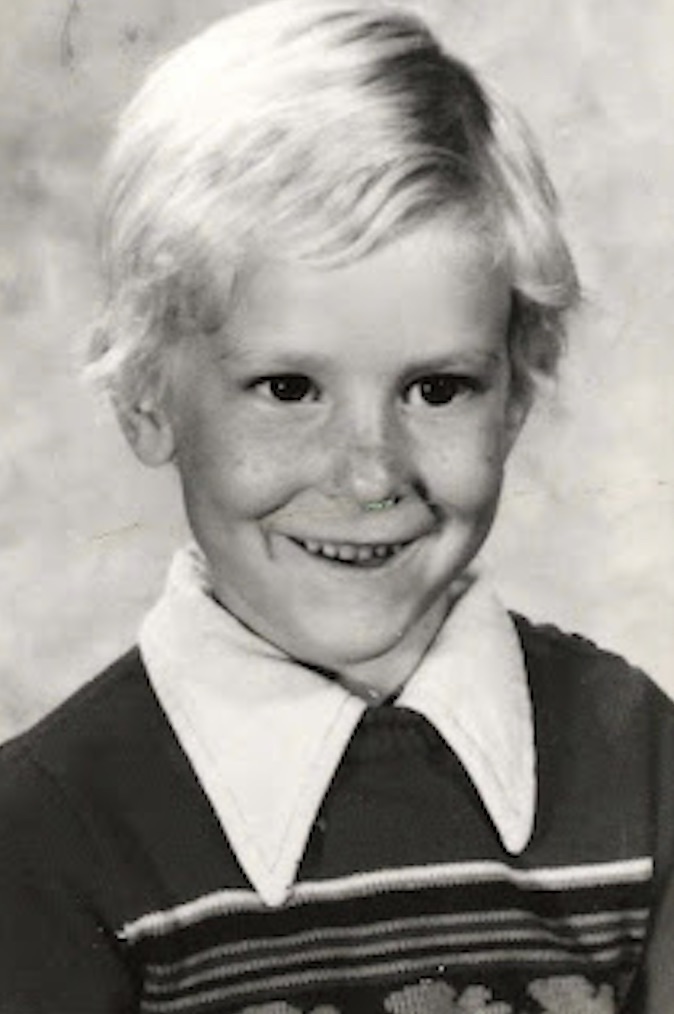
Borrowed Time
Back at the cabin, Parnell carried the drowsy Timmy inside. He undressed him, changed him into pyjamas bought from a charity shop, and laid him on the bed before drugging him again.
Before Sean left, Parnell gave him whisky, marijuana, and nude photographs of one of Sean’s classmates as payment. He also handed him photographs of the intersection where they had abducted Timmy, intended as a souvenir of their day. Sean placed everything into his new briefcase, pleased with his rewards.
He never returned to the cabin.
Steven learned about his new ‘baby brother’ later that afternoon when Parnell collected him from school. Timmy was lying sedated in the back seat. Steven immediately understood the danger the little boy was in. The cabin had only two beds, meaning Timmy would have to sleep beside Parnell.
Back in Ukiah, a search began as soon as Timmy failed to arrive at his babysitter’s house. Police were quickly alerted, prompting coordinated searches by land and air. News reports carried updates about the missing 5-year-old, while posters were distributed throughout the area. Timmy’s mother and stepfather, Angela and Jim, searched the neighbourhood, enduring the same uncertainty the Stayners had experienced more than seven years earlier.
Timmy spent his first week heavily sedated. At night, Parnell left for his security job in Ukiah, leaving Steven alone to look after him. During the day, Parnell took over while Steven attended school. Steven worried so much about what might happen while he was away that he began returning to the cabin during his lunch breaks to check on Timmy.
There was a short period each morning, after Steven left for school and before Parnell returned from work, when Timmy was alone. However, the cabin’s isolated location made escape extremely difficult, particularly for a frightened 5-year-old who was being kept sedated. Just as Steven had once been, Timmy was too afraid to run.
Eleven days after the kidnapping, Parnell dyed Timmy’s blonde hair brown. For Steven, it was an unsettling repetition of what Parnell had done to him shortly after his own abduction. The more time Steven spent caring for Timmy, the more determined he became not to let the little boy suffer the same fate.
Steven began planning a way to get Timmy home. His idea was to hitchhike the forty miles to Ukiah, take Timmy somewhere safe, and then hitchhike back to the cabin before Parnell returned from work and discovered that he was missing.
Their planned move to Arkansas meant Steven was running out of time. Once Parnell took them out of California, his plan to return Timmy to Ukiah would no longer be possible.
Escaping during the day was not an option because Parnell was home sleeping after his night shift. They would have to leave at night while Parnell was working. Steven understood the risks of travelling in the dark and accepting rides from strangers, but he feared what Parnell would do if he discovered their escape.
Steven considered confiding in a teacher, but fear held him back. If Parnell was arrested, Steven believed he would be left with nobody. After more than seven years of Parnell’s lies, he still believed that his birth parents did not want him.
Steven made his first attempt to escape with Timmy around a week after the abduction. They had not travelled far when lightning began flashing across the sky and heavy rain forced them to turn back. Steven lifted Timmy onto his shoulders and carried him towards the cabin, where they arrived cold and wet.
A second attempt a couple of days later also failed.
Meanwhile, the investigation into Timmy’s disappearance was continuing in Ukiah. One evening, officers visited the hotel where Parnell worked and asked whether any suspicious guests had checked in. Parnell showed them the guest register without hesitation.
Parnell remained unaware of what Steven was planning and continued preparing for the move to Arkansas. However, his plans did not include taking Steven with him.
On 27th February, Parnell began digging a hole behind the cabin. It was six feet long and three feet deep.
It was intended to be a grave for Steven.
And Queenie.
The Escape
On 1st March 1980, Steven made his third attempt to escape. After Parnell left for work, he and Timmy fled into the night. They had not walked far when they were picked up by Armando Gomez, a Mexican national who drove them to Ukiah.
The boys arrived at around 9 pm. Lost in the dark, they wandered for hours searching for Timmy’s house. At one point, they passed the Palace Hotel, where Parnell was working his night shift.
Just after 11 pm, they reached the Ukiah Police Department. Steven hesitated. He was afraid of being recognised and still did not want to get Parnell into trouble, so he urged Timmy to go inside alone.
Steven stood back as the 5-year-old pushed open the door and peered inside. But at the sight of a uniformed officer, Timmy became frightened and bolted back across the car park into Steven’s arms.
Officer Bob Warner had caught only a fleeting glimpse of the child at the door. Realising that something was wrong, he radioed for assistance but chose not to pursue the boys in case he frightened them further. Patrol officer Russell VanVoorhis soon found them nearby.
When Warner arrived, he saw VanVoorhis holding Timmy White, the 5-year-old who had disappeared more than two weeks earlier.
Steven then revealed his own identity.
He was taken back to the station for questioning, where he was initially frightened that police might treat him as a suspect. He also remained protective of Parnell and withheld information that he thought might get him into trouble. With encouragement from officers, however, Steven eventually disclosed where Parnell could be found.
Even then, Steven insisted that Parnell had never sexually abused him and said that he had treated him well. After more than seven years of living with Parnell and being told that his own family had abandoned him, Steven was still reluctant to implicate the man he had been taught to regard as his father.
Shortly before 2 am on 2nd March 1980, Kenneth Parnell was arrested. He was taken to the Ukiah Police Station, where Steven, visibly shaken, identified him as the man who had kidnapped both him and Timmy.
Timmy’s mother and stepfather, Angela and Jim, rushed to the station after receiving the news. At first, Angela did not recognise her son. His hair had been dyed, and he looked dishevelled. She fainted from the shock.
When she regained consciousness, she clutched Timmy tightly and sobbed with relief. Through her tears, she thanked Steven for bringing her son home.
Before Timmy returned home, he was examined at a local hospital for signs of sexual abuse. None were found. Whatever Parnell may have intended, Steven had brought Timmy home before he could suffer the same abuse that Steven had endured.
In the early hours of the morning, Steven gave a formal statement to police. It began:
My name is Steven Stainer [sic]. I am fourteen years of age. I don’t know my true birth date, but I use April 18, 1965. I know my first name is Steven, I’m pretty sure my last name is Stainer [sic], and if I have a middle name, I don’t know it.
Later that day, police searched the cabin in Manchester. Inside, they found Timmy’s Valentine’s Day goody bag and cowboy costume.
Steven was worried about Queenie, so officers escorted him back to the cabin to collect her. Once she was safely in his arms, he gathered a few belongings and returned to the patrol car. Steven gave the cabin one last look before turning his back on it, and everything it represented.
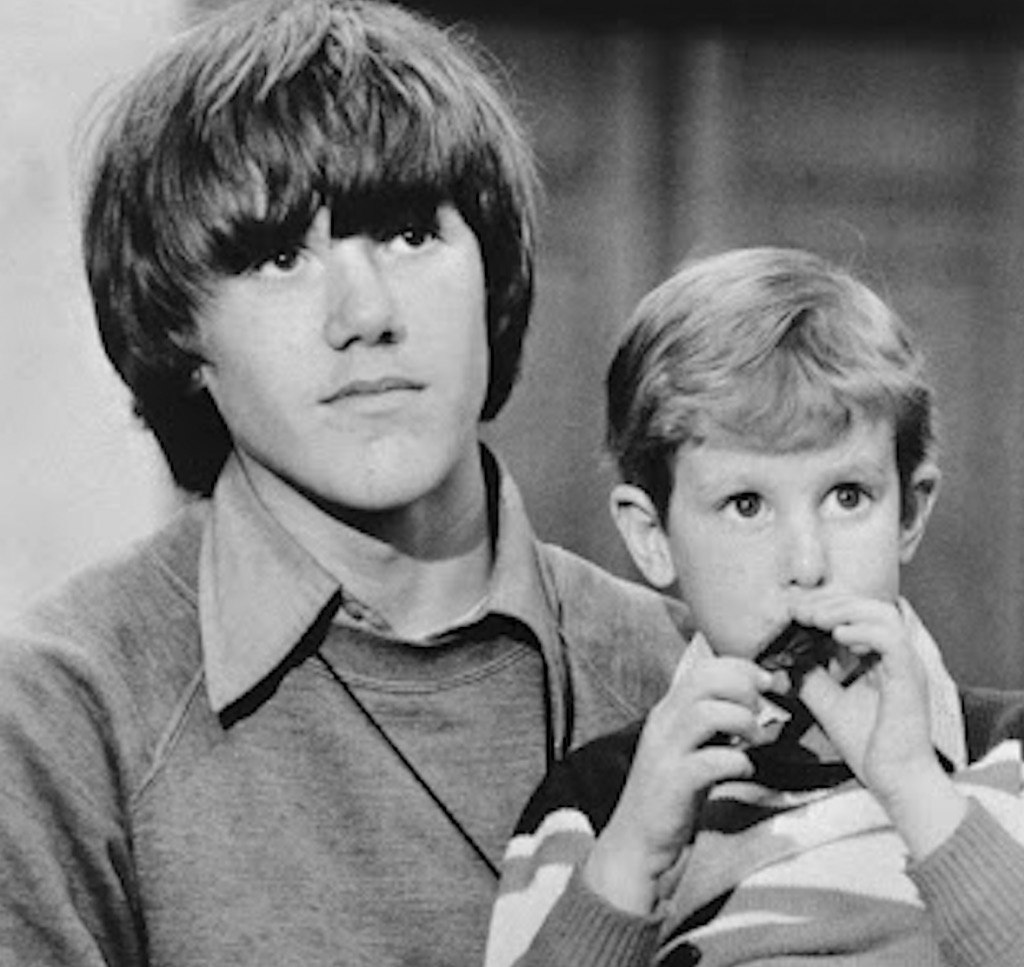
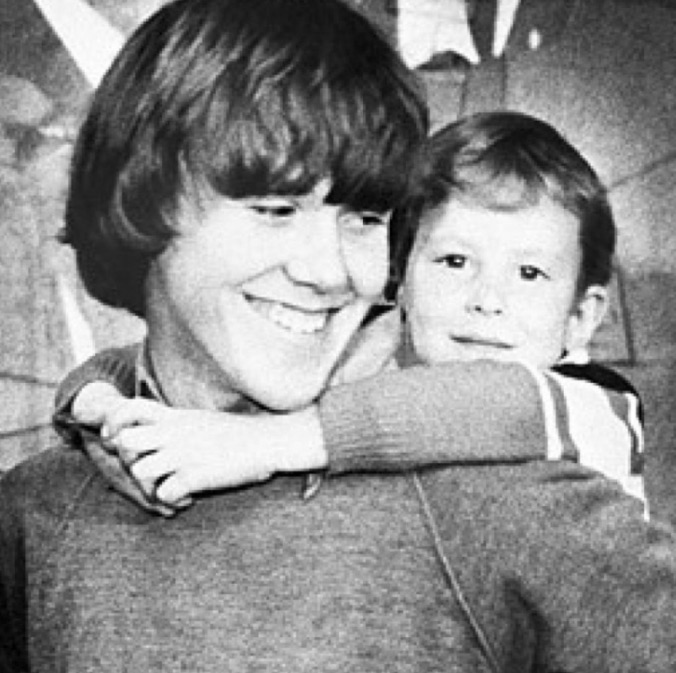
At noon on 2nd March, Steven was taken to a press conference where Timmy was sitting with his parents. The moment Timmy saw him, he ran across the room with his arms outstretched. Steven lifted the 5-year-old onto his shoulders as camera flashes erupted around them, capturing the reunion of the little boy who had finally made it home and the teenager who had risked his own freedom to take him there.
A Hero’s Welcome
After the press conference, Steven began the 240-mile journey back to Merced, where his family and childhood best friend, Sharon, were waiting. Crowds lined the street as the police car pulled up outside 1655 Bette Street. Camera flashes erupted and reporters gathered around the car as Kay and Delbert pushed through the crowd, tears streaming down their faces as they embraced their son for the first time in more than seven years.
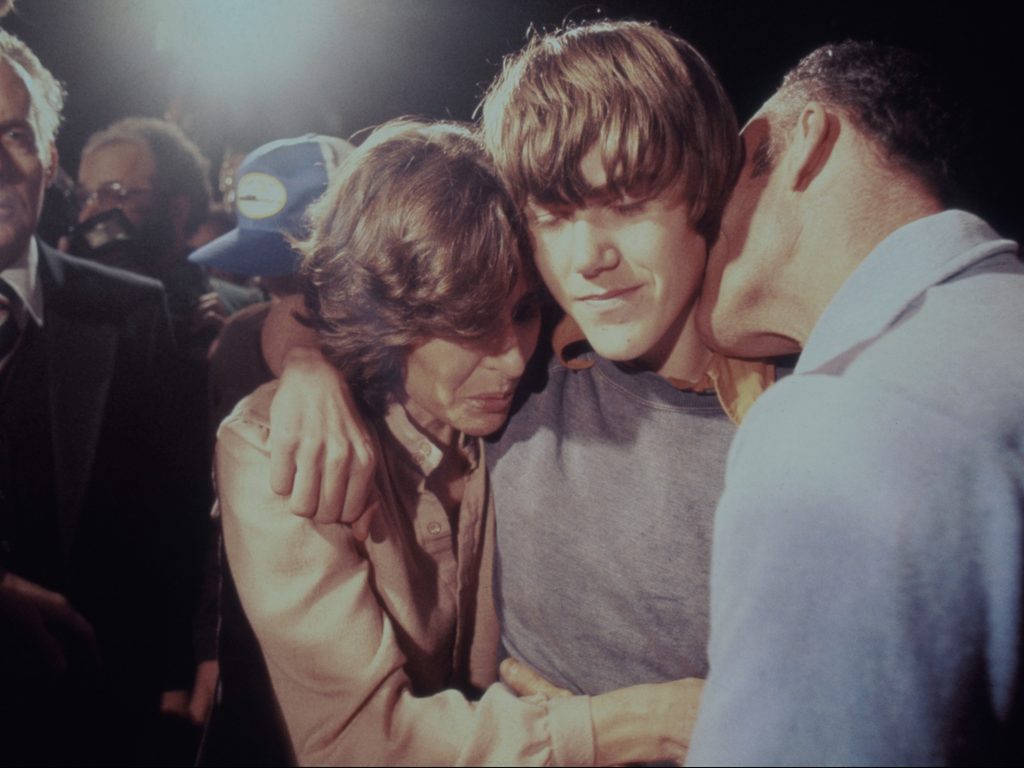
For Steven, the homecoming was bittersweet. He bathed in clean water, scrubbing away years of grime. He wore new clothes instead of the second-hand charity shop cast-offs he had grown used to, and at night, he slept between freshly laundered sheets, a stark contrast to the grimy motels, trailers, and cabins he had known for so long.
Emotionally, however, returning home was far more complicated. After years of being known as Dennis, Steven found it difficult to adjust to his real name and sometimes failed to respond when his family addressed him as Steven. Hearing Delbert call him ‘son’ also felt alien after Parnell had monopolised the word for years.
Steven was equally uncomfortable calling Delbert ‘Dad’. What Parnell had taught him about relationships between fathers and sons weighed heavily on his mind, and Steven feared that his biological father might expect the same sexual intimacy Parnell had demanded from him.
His relationship with his older brother Cary was also strained. During Steven’s absence, Cary had spent years wishing on a star that his younger brother would come home. Now that wish had finally come true, but the intense attention surrounding Steven’s return left Cary feeling increasingly overlooked within his own family.
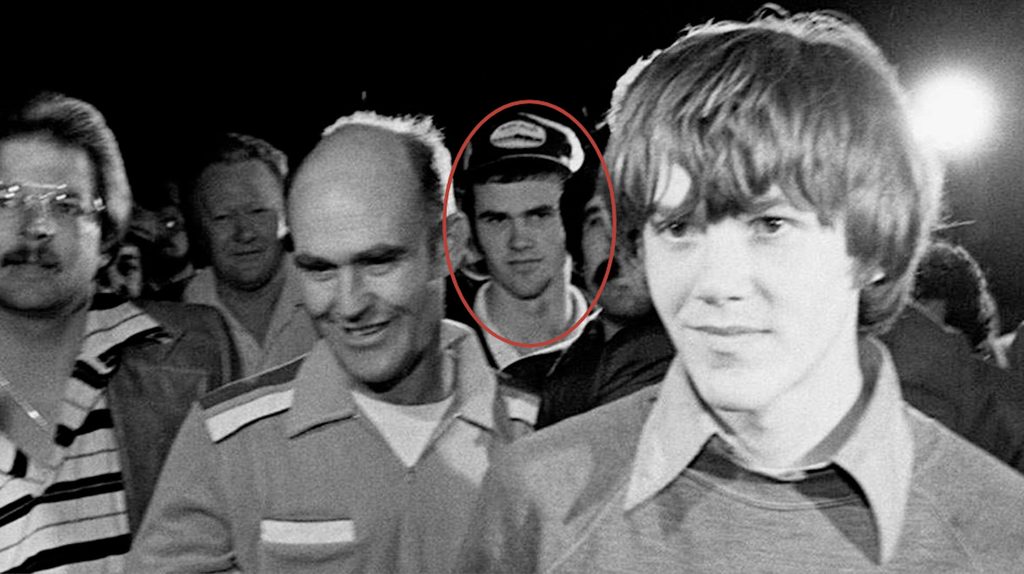
Cary felt increasingly overlooked within his own family.
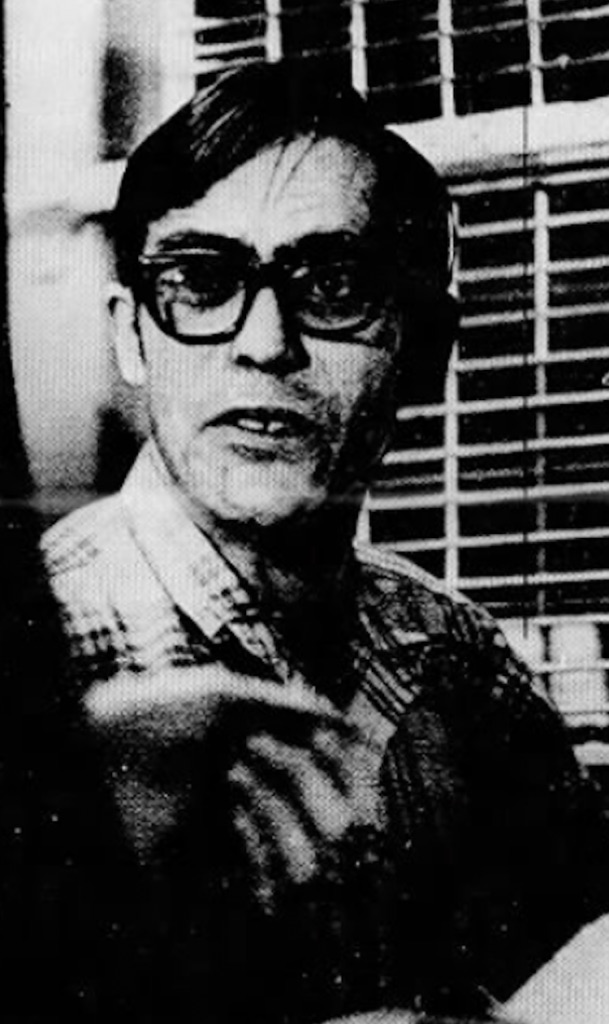
Steven was questioned again by police, this time about Ervin Murphy, the second man involved in his abduction. On 4th March, Steven identified him, and the following day, Murphy was arrested at Yosemite Lodge, where he still worked. The same park manager who had refused to display Steven’s missing-person posters seven years earlier watched as Murphy was led away in handcuffs.
On 5th March, Murphy appeared at Merced County Court and pleaded not guilty to kidnapping. His bail was set at $50,000, which was $30,000 more than the Ukiah court had set for Parnell, and he was remanded to Merced County Jail pending trial.
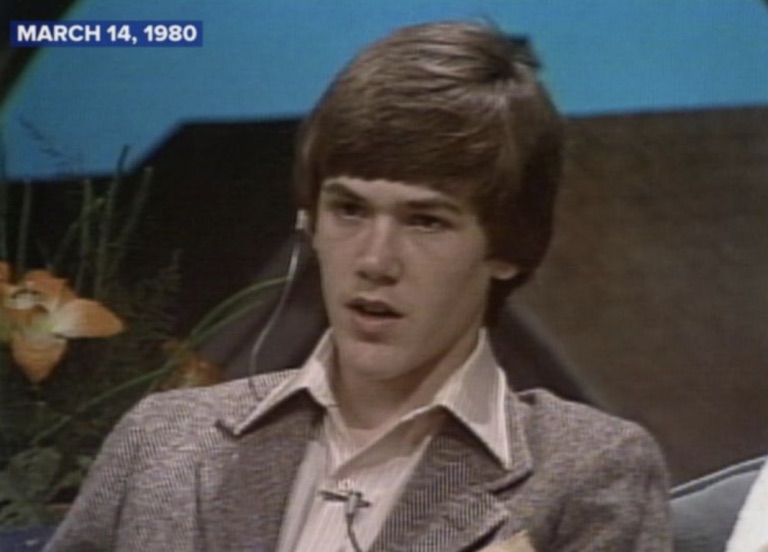
The press quickly portrayed Steven as a hero for rescuing Timmy. On 6th March, just days after returning home, Steven and his parents travelled to San Francisco to appear on Good Morning America. Steven told the presenter that he was not interested in becoming a celebrity. He simply had not wanted Timmy to suffer as he had.
Later that month, the Stayners learned that Steven would receive the $15,000 reward offered during the search for Timmy. The Timmy White Reward Committee organised a public presentation, with Timmy himself due to hand Steven the money. The ceremony took place in Ukiah on 6th April, during Easter weekend, with cameras capturing an excited Timmy presenting Steven with the reward.
Afterwards, the Stayners extended their trip and travelled by camper van through some of the places where Steven had lived with Parnell. He showed his family the route he and Timmy had taken on the night of their escape and the Palace Hotel, where Parnell had worked. In Comptche, they visited the place where Steven had been happiest during his years away. He reunited with old friends and his former girlfriend, Lori MacDonald. The following day, they travelled to Mountain View Road and the cabin where Steven had spent his final nine months with Parnell.
For the first time, Kay and Delbert saw the conditions in which their son had been living. Behind the cabin, they stood beside the grave Parnell had dug for Steven and Queenie, confronting the fate Steven had narrowly escaped.
On 14th April, after the Easter break, Steven enrolled at Merced High School. However, the media attention followed him there. Reporters entered the school and approached him in the hallways, pressing him for details about the sexual abuse he was still denying. Rumours spread among the students, and some classmates began accusing Steven of being homosexual.
After only four days, the taunting escalated. When one boy directed homophobic slurs at him, Steven punched him in the face, leaving him with a black eye and bloody nose. Although the principal was sympathetic and knew the other student had a history of causing trouble, he suggested Steven remain away from school for two weeks to allow tensions to settle.
Sharon remained firmly in his corner. She organised a pool party and invited some of Steven’s friends from before his disappearance, along with classmates she knew would welcome him. For a few hours, Steven was able to relax with friends again, although the experience also reminded him how much he missed the friendships he had left behind in Comptche.
Steven continued to deny publicly that Parnell had sexually abused him. Shortly after the family’s trip to Ukiah, however, police told him that photographs Parnell had taken of Steven and another boy in the shower had been found.
The Manchester cabin had not been adequately secured after Parnell’s arrest, allowing several reporters to enter what was effectively a crime scene and remove items. A reporter from the San Francisco Chronicle discovered the photographs and turned them over to Merced police. Faced with evidence of the abuse, Steven finally acknowledged what Parnell had done to him.
Despite everything Steven had experienced, professional support was limited. He continued to face bullying from his peers, while Kay and Delbert believed that the family should deal with his problems privately rather than through therapy. His sister Cory later told the St. Louis Post-Dispatch:
“He got on with his life…but he was pretty messed up, and he never got any counselling. My dad said he didn’t need any.”
Life at home remained difficult. Kay and Delbert were trying to reconcile the 7-year-old boy they remembered with the 14-year-old who had returned. Their household rules also clashed with the independence Steven had grown accustomed to during his years away, and he increasingly rebelled through alcohol, marijuana, and other drugs.
In September 1980, Steven began tenth grade, but school remained a challenge. He had already missed a significant amount of education, and with the trials of Parnell and Murphy approaching, he would soon miss even more.
Returning home had ended Steven’s disappearance, but adjusting to the life he had returned to would take much longer.
First Trial: Timmy White
Kenneth Parnell’s first trial, for the kidnapping of Timmy White, began in June 1981 in Mendocino County.
Sean Poorman appeared in court to testify against him. He had already faced proceedings in juvenile court for his role in Timmy’s abduction. After cooperating fully with the investigation, his original kidnapping charge was reduced to false imprisonment, and he was sentenced to two years in a juvenile facility.
Timmy also testified, identifying Sean as the person who had grabbed him and forced him into Parnell’s car.
Steven took the stand and confirmed that Timmy was the boy Parnell had brought back to the cabin. He also revealed that, before Timmy’s abduction, Parnell had repeatedly asked him to help kidnap other boys.
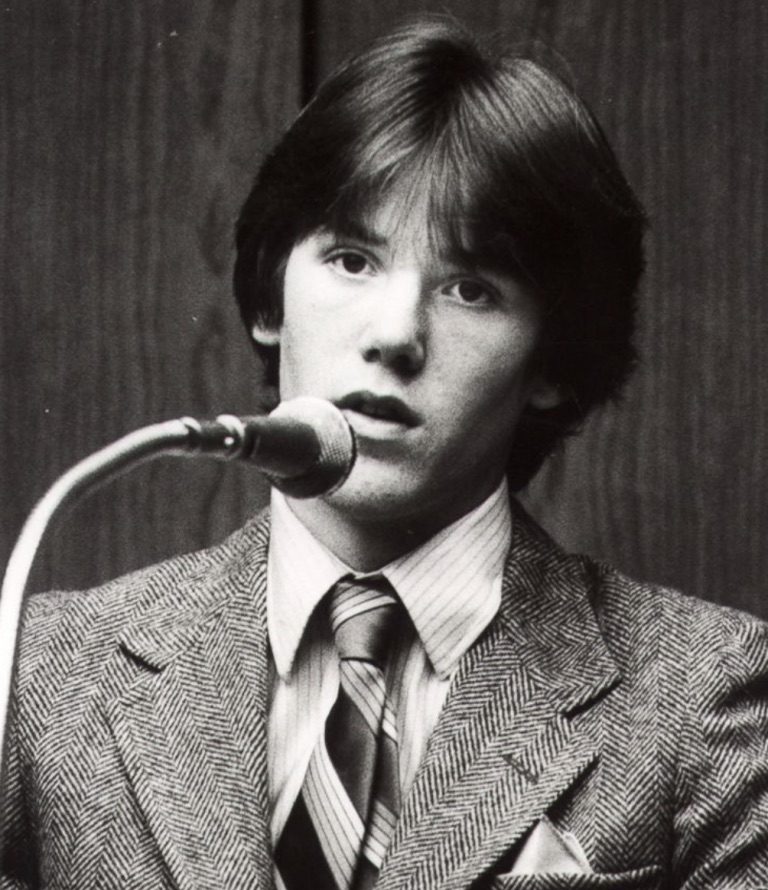
When Parnell testified, he placed the blame on Sean and his stepfather, Henry Mettier Jr. He claimed that Mettier had been blackmailing him and had threatened to harm Parnell’s mother unless he kidnapped a child who could be exchanged for drugs or money.
Parnell maintained that he had been at home on the day Timmy was abducted and that Mettier and Sean had arrived unexpectedly with the boy. Timmy’s testimony directly contradicted that account, and he told the court that Mettier was not one of the men who had kidnapped him.
On 29th June, the jury found Parnell guilty of second-degree kidnapping. On 25th September, he was sentenced to seven years in prison, the maximum sentence available.
Second Trial: Steven Stayner
During the lead-up to Parnell’s trials, Merced police investigated the sexual assaults committed against Steven and several other boys.
California’s three-year statute of limitations meant that Parnell could only be prosecuted for assaults committed between 1977 and 1980. By then, Steven was entering adolescence, and the frequency of Parnell’s assaults against him had begun to decrease. Even so, Steven documented eighty-seven assaults during those years.
As part of the investigation, Merced police visited schools Steven had attended and interviewed his friends. Some alleged that they, too, had been sexually abused by Parnell. However, because those incidents had occurred outside Merced County, investigators could only forward the information to authorities in Mendocino County, where no charges were pursued.
Ultimately, the Merced District Attorney decided not to prosecute Parnell for any of the documented sexual assaults. Although Steven later testified about the abuse, there was insufficient supporting evidence to bring the charges. Even the nude photographs of Steven and other boys could not be used because reporters had removed and circulated them after entering the Manchester cabin, making it impossible to establish definitively who had taken them.
As a result, Parnell faced no charges for the sexual assaults against Steven or any of the other boys. When he was brought to Merced County in December 1981, six months after his trial for Timmy’s kidnapping, he faced prosecution only for the kidnapping of Steven Stayner.
Once again, the three-year statute of limitations presented a problem. Prosecutors argued that Steven’s kidnapping had been a continuing offence and therefore remained within the period in which Parnell could be charged. The court accepted the argument, allowing the prosecution to proceed. Because Parnell had made no ransom demand, he was charged with second-degree kidnapping.
Parnell’s defence argued that Steven had entered the car willingly and that no force had been used. They also claimed that Steven had chosen to remain with Parnell because he had been unhappy at home, pointing to the family’s move from the ranch and the physical discipline he had received from his parents.
Kay and Delbert took the stand and acknowledged that they had occasionally physically disciplined their children but denied using excessive force.
Parnell did not testify.
Also standing trial for Steven’s kidnapping was Ervin Murphy. Although there was evidence establishing his involvement in the abduction, the statute of limitations complicated the case against him as well.
Murphy testified openly about the events surrounding Steven’s disappearance. He said that on the day of the abduction, he had planned to go Christmas shopping in Merced but missed the bus after falling asleep. Parnell woke him and offered him a lift. After they had finished shopping, Parnell drove to Yosemite Parkway and told Murphy that he was studying to become a minister. He then asked him to hand out religious tracts to children walking home from school.
According to Murphy, Parnell told him that he wanted to adopt an underprivileged child and asked for his help in taking one. Murphy, who had himself experienced abuse as a child, claimed that he believed Parnell’s intentions were good.
Outside the Red Ball Gas Station, Murphy followed Parnell’s instructions. Several attempts to persuade children into the car failed before they eventually approached Steven.
Murphy said that after the abduction, Parnell threatened him, warning that he would also be implicated if he went to the police. Murphy claimed that he attempted to call the authorities but lost his nerve when someone answered.
He also testified that Parnell later blackmailed him for money, threatening to report him unless he paid part of his wages into Parnell’s account. Murphy eventually stopped making the payments. When Parnell attempted to blackmail him again in 1974, Murphy ended the call.
Murphy maintained that he had known nothing about the sexual abuse Steven suffered and told police following his arrest that he was relieved Steven was safe.
Barbara Matthias also cooperated with the investigation. She maintained that she had never known Steven was a kidnapped child and was neither arrested nor charged.
On 7th January 1982, the jury found both Parnell and Murphy guilty of conspiracy to kidnap and second-degree kidnapping. They were sentenced on 3rd February.
Parnell was sentenced to seven years for Steven’s kidnapping, the maximum sentence available. However, under California law at the time, most of that sentence had to run alongside the seven-year term he was already serving for kidnapping Timmy. As a result, Steven’s kidnapping added just twenty months to Parnell’s existing sentence.
In total, Parnell received a sentence of eight years and eight months for the two kidnappings.
Murphy received five years for conspiracy and five years for kidnapping. His sentences also ran concurrently, giving him a total prison term of five years, which was considerably longer than the twenty months Steven’s kidnapping added to Parnell’s sentence.
Murphy was released on 21st June 1983 after serving around three years. Parnell was paroled in April 1985 after serving approximately five years.
In the end, Parnell spent less time behind bars than Steven had lost to his stolen childhood.
In August 1982, Steven’s case contributed to changes in California sentencing law that allowed courts to impose consecutive prison terms for separate offences, meaning sentences could be served one after another rather than simultaneously.
Going Home
Although media attention faded after the trials, the coverage of Steven’s sexual abuse led to renewed harassment at school. He completed his senior year but did not graduate.
When Steven turned 18, he gained access to the reward money he had received for bringing Timmy home. Much of it was reportedly spent on drug debts and alcohol, although he was also able to buy a small mobile home in Atwater and move out of the family house.
He and Sharon remained close. They spent time eating pizza and watching television together in Steven’s trailer, and even travelled together.
By 1984, Steven was determined to turn his life around. He had already given up alcohol following a binge that caused internal bleeding and landed him in hospital — a scare that could have been fatal. He spent his spare time working towards his GED and joined a programme visiting kindergartens and primary schools to help prevent child abduction.
The possibility that his own experience might help prevent another child from going through the same thing gave Steven a renewed sense of purpose, and he continued the work for several years.
After most of the reward money was gone, Steven took a job at a meatpacking plant, where he met Jody Edmondson. They began dating and married a year later, in June 1985. Steven was 20 and Jody was 17. They went on to have two children, a daughter, Ashley, and a son, Steven Junior.
Meanwhile, Kenneth Parnell was released from prison in 1985 after serving around five years. When his parole ended in 1987, he was no longer required to report his whereabouts. Steven struggled with not knowing where Parnell was or whether he might be harming other children. With his own children, he became extremely protective, making sure they were never out alone and were always supervised.
In 1988, Steven agreed to work as an adviser on a television film about his life, based on the manuscript of Mike Echols’ I Know My First Name Is Steven. The title, used for both the book and the film, came from Steven’s written police statement in March 1980, on the night he and Timmy arrived at the Ukiah Police Department.
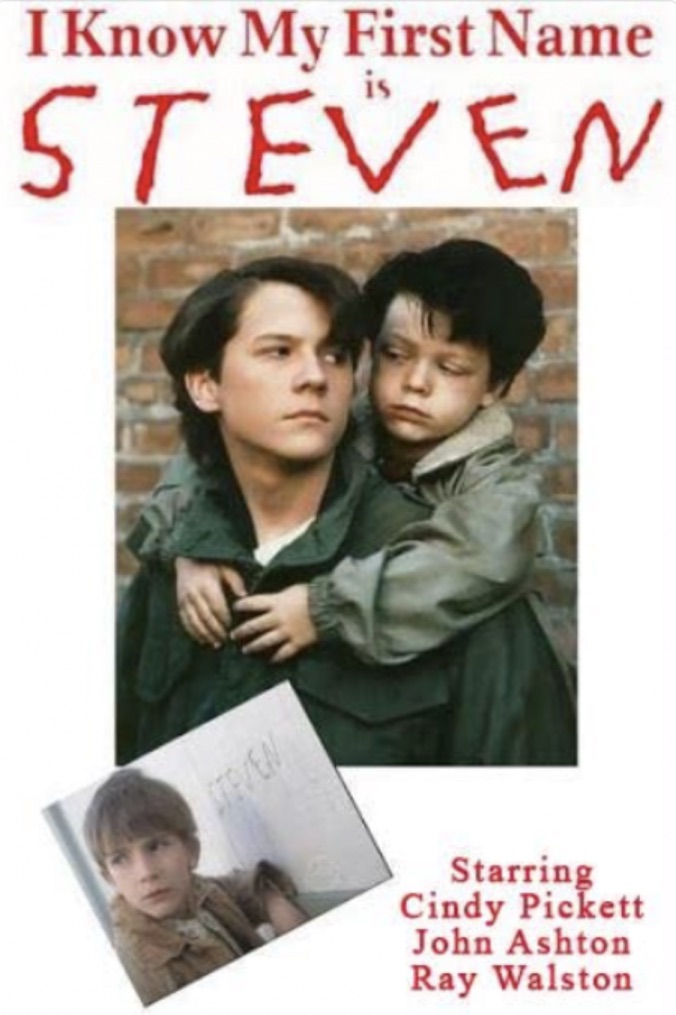
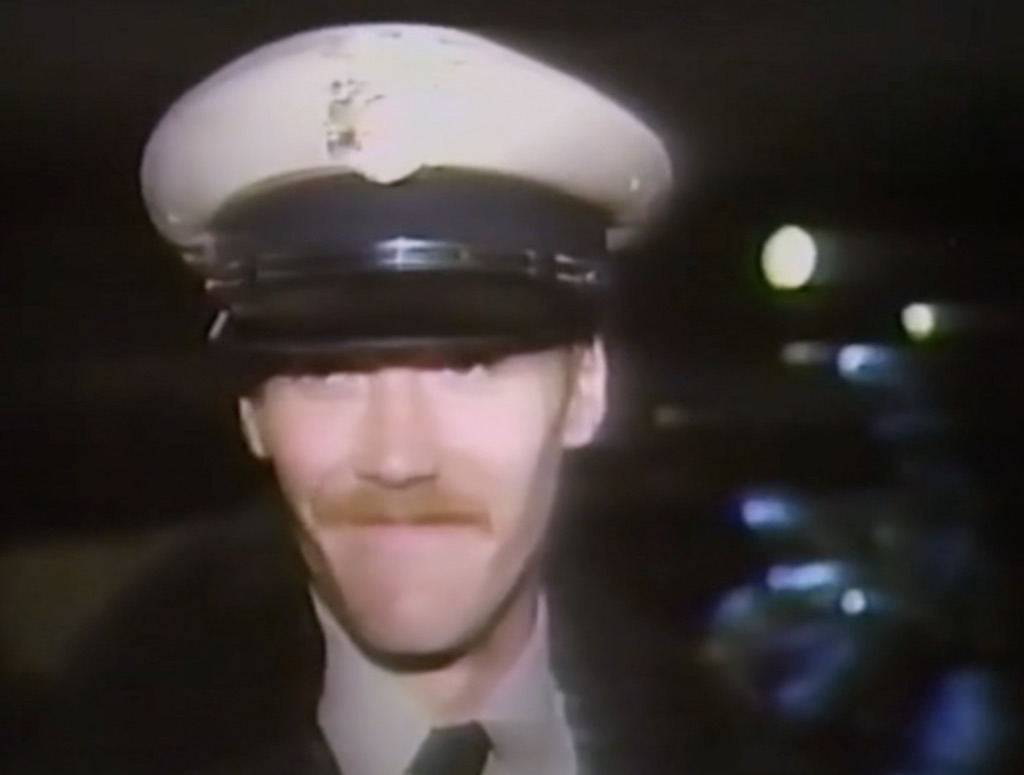
Steven had been interested in a career in law enforcement, and during filming, he appeared as a police officer escorting the actor playing him through the crowds during the recreation of his return to Merced.
He hoped the film would raise awareness of child abduction. In an interview with Entertainment Tonight, Steven explained what he hoped might come from telling his story:
“Maybe some kid out there that’s missing will see it and come forward and make an attempt to go home.”
I Know My First Name Is Steven aired in May 1989.
But tragically, the new life Steven was beginning to build for himself would be cut short.
Four months later, on 16th September 1989, Steven finished his shift at a pizza restaurant in Atwater and began the fifteen-minute journey home on his motorbike. It was raining, and the roads were slick. His helmet had been stolen three days earlier, so Steven was travelling below the speed limit and taking extra care.
As he rode home, a car suddenly pulled out and stalled in front of him. Steven was unable to stop in time and collided with the vehicle. The impact threw him forty-five feet from his motorbike and fractured his skull. The driver fled the scene.
Other motorists stopped to help as Steven lay beside the road, drifting in and out of consciousness. He was taken to Merced County Medical Center, where he was pronounced dead.
Steven was 24 years old.
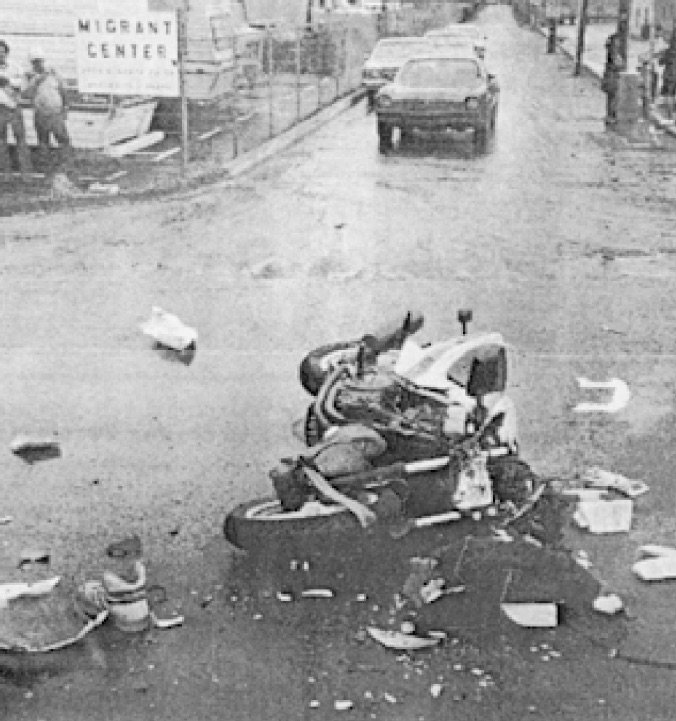
The driver, Antonio Loera, fled to Mexico. He was charged with hit and run and manslaughter, although the manslaughter charge was later dropped after investigators discovered manufacturing faults in his car, including a defective carburettor and loose throttle. Loera was sentenced to three months in prison, twelve months’ probation, and ordered to pay $100 to a restitution fund.
The day after Steven’s death, I Know My First Name Is Steven won four Emmy Awards.
Steven never knew.
His funeral was held on 20th September 1989 at the Church of Jesus Christ of Latter-day Saints, which Steven had joined shortly before his death. Around four hundred and fifty people attended. Timmy White, now 14, was one of the pallbearers.
Steven’s sister Jody told the congregation:
“I’m so glad that he went as Steven Gregory Stayner, our brother.“
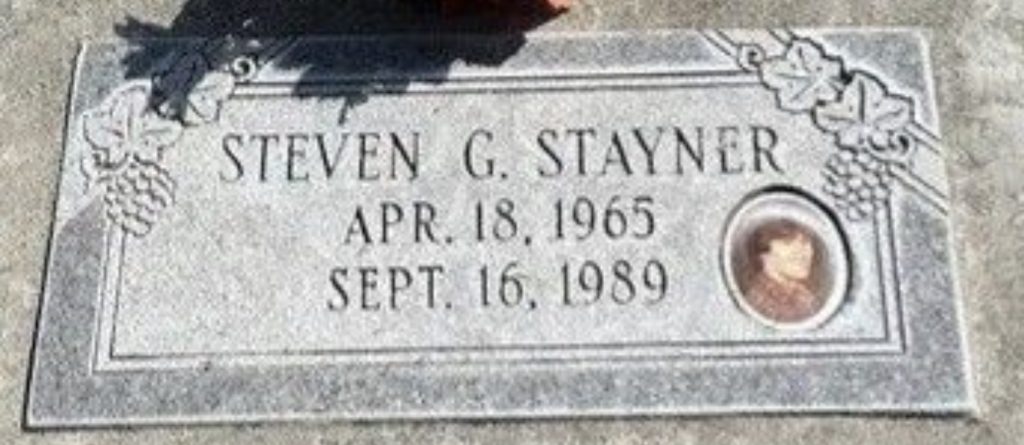
Steven was laid to rest at Merced County Cemetery.
The inscription on his casket read: Going Home.
Who Was Kenneth Parnell?
Kenneth Eugene Parnell was born on 26th September 1931 in Amarillo, Texas. His early years were marked by instability. His parents, Cecil and Mary, divorced when he was 5, after which Mary moved Kenneth and her children from a previous marriage to Bakersfield, California.
Mary was deeply religious and required her children to attend the Assembly of God Church three times a week. She also taught them scripture at home and insisted on daily prayer.
Parnell began harming himself during childhood. In one incident, he extracted four of his own teeth with pliers. At age 8, he shone a torch into his eyes for so long that he required corrective treatment, and by 9, he had jumped from a shed roof onto boards embedded with nails, puncturing the soles of his feet.
He also displayed suicidal behaviour. On one occasion, he removed the safety catch from a loaded .22 pistol and pointed it at his abdomen while his mother was present.
In 1944, Mary purchased a boarding house. The following year, when Kenneth was 13, one of the adult boarders groomed him into performing a sexual act. Soon afterwards, Kenneth set fire to a pasture and was sent to Bakersfield Juvenile Hall on the recommendation of a psychiatrist, who hoped confinement might address what was then described as his “perversion.”
Shortly after his release, Parnell stole a car and was sent to a juvenile facility, where he remained until February 1947. According to reports, he engaged in sexual activity with other male inmates while there. In December 1947, at age 16, he was arrested for engaging in public sexual activity with men.
Within months, Parnell stole another vehicle and was incarcerated at a facility in Lancaster, California. After escaping and returning to Bakersfield, he developed an intense interest in a young boy. He was rearrested and sent to Kern County Jail.
During this period, Parnell attempted suicide by drinking disinfectant. He was subsequently committed to a mental hospital in Napa for ninety days but escaped, intending to return to the boy in Bakersfield and stealing another car in the process. He was rearrested and returned to Lancaster.
In May 1949, Parnell was released and moved back in with his mother. Later that year, he married 15-year-old Patsy Dorton. But he was far from settled.
In March 1951, 19-year-old Parnell purchased a fake deputy sheriff’s badge and used it to impersonate a police officer. He approached 9-year-old Bobby Green, who was playing with friends outside Bakersfield, and told him that he matched the description of an escaped juvenile offender and needed to be taken in for questioning.
Instead, Parnell drove Bobby to an isolated area of Kern River Canyon and sexually assaulted him.
Parnell was arrested six days later. At a preliminary hearing held that same day, he admitted sexually assaulting Bobby and said that he had considered strangling him to prevent him from reporting what had happened. Instead, Parnell drove Bobby back to the area from which he had taken him.
Parnell remained in Kern County Jail until 20th April, when he pleaded guilty to lewd and lascivious contact with a male child under the age of 14. The judge then ordered three separate psychiatric evaluations.
On 11th May, the court reviewed the findings. Under the terminology used at the time, Parnell was declared a “sexual psychopath” and recommended for treatment in a state mental hospital. He was sent to Norwalk State Hospital for further evaluation, where he was diagnosed as a sexual psychopath without psychosis and considered legally sane.
At a hearing on 22nd June, the judge ordered Parnell to be committed to Norwalk indefinitely, until he was considered fit for release.
Despite this conviction, when investigators later searched for Steven Stayner, Parnell’s name did not appear on the list of known child molesters provided to police in Merced and the surrounding counties. He had never been registered.
During Parnell’s confinement at Norwalk, Patsy gave birth to their daughter. One psychiatrist noted that Parnell appeared excited about the birth and had been asking about treatment options. In June, he wrote to the judge complaining about the lack of therapeutic support at Norwalk and requesting release to Bakersfield, where he proposed receiving outpatient treatment and supervision.
Whether this was a genuine attempt to seek help or a move to manipulate the court remains unclear. But on September 11th, 1951, Parnell took matters into his own hands and sawed through a window lock and escaped. He was recaptured a few weeks later and placed in the hospital’s maximum-security ward.
On 14th October, he escaped again. This time, he remained at large for four months before being captured in New Mexico in February 1952. Although the judge attempted to have him returned to Norwalk, Parnell was ultimately sent to San Quentin State Prison, where he remained for just over three years.
During both escapes, Parnell made no attempt to visit his daughter.
Decades later, in a 2000 interview, Parnell discussed his assault on Bobby Green. He claimed that because his wife was pregnant and unable to satisfy him sexually, he had sought another outlet. The statement placed responsibility for his actions elsewhere rather than acknowledging his own decision to assault a child.
Parnell was paroled in April 1955 on the condition that he continue psychiatric treatment, a requirement he failed to meet. He returned to Bakersfield, visited his mother, and took a job that violated the conditions of his parole. At a hearing in September 1956, he was sentenced to three months at Folsom State Prison. He was paroled again on 17th December and returned to Bakersfield.
Parnell and Patsy divorced in 1957. That August, he married Emma Schaffer, who was ten years older than him. They had a daughter together, but Emma divorced him in 1961. Parnell later claimed to have married for a third time in 1968, although no record of the marriage or divorce has been found.
In 1960, Parnell moved to Utah. While experiencing financial difficulties, he used a revolver to rob a service station in Salt Lake City. The following year, he was convicted of armed robbery and grand larceny. He was released in September 1967 on the condition that he did not return to Utah.
For the next several years, Parnell moved between jobs until May 1972, when the Curry Company hired him as a night auditor at Yosemite Lodge. He had concealed his criminal record and mental health history on his application.
It was at Yosemite that Parnell met 30-year-old Ervin Edward Murphy.
Several colleagues described Murphy as likeable but lonely, someone who wanted to be accepted and was eager to help others.
He was born on 11th July 1941 in South Dakota and later described an abusive childhood, recalling that his mother beat him with a strap when he was 3. She subsequently left the family, leaving Murphy’s father to raise him and his nine siblings.
Murphy left school at 16 and spent several years moving around California and taking menial jobs. In the mid-1960s, he joined the Job Corps and trained in kitchen work but was expelled after being racially abusive towards a Black trainee. In 1969, the Curry Company hired him.
By the time Parnell arrived at Yosemite, Murphy had settled. He had not intended to remain there for long but felt that he had found friends. Colleagues also described him as easily influenced and inclined to believe what others told him, and it was this side of Murphy that Parnell was able to exploit. When Parnell claimed that he wanted to adopt an underprivileged child and persuaded Murphy to help him find one, Murphy agreed.
And so, in December 1972, Parnell and Murphy abducted 7-year-old Steven Stayner as he walked home from school in Merced.
Following his eventual convictions for the kidnappings of Steven and Timmy White, Parnell was released on parole in April 1985 after serving around five years. His two-year parole prohibited him from leaving Alameda County or being in the company of children and required him to attend regular counselling sessions. Parole officers visited him as often as six times a week at the Berkeley boarding house where he was living.
His release attracted considerable public attention and opposition. The public was outraged that a convicted child kidnapper was now living among them.
When Parnell completed his parole in 1987, he was no longer required to report his whereabouts. He subsequently became a volunteer caretaker at a boys’ home in Oakland, despite his convictions for kidnapping children. His criminal history was apparently not discovered until after I Know My First Name Is Steven aired in May 1989, after which he was dismissed.
Parnell’s mother continued to defend her son, describing him as honest and saying that he loved children and animals and would never harm anyone. She also said that although Parnell had visited her many times, she had never seen him accompanied by a child. Mary had, however, known about at least some of his earlier offending, having hired an attorney to represent him following his 1951 assault on Bobby Green.
More than a decade later, Parnell again came to the attention of police.
In December 2002, officers received information that the now 71-year-old Parnell was attempting to obtain another young boy. By then, he was in poor health and receiving round-the-clock nursing care at his Berkeley apartment following a stroke and several other health problems, including emphysema and diabetes.
The information came from Diane Stevens, the sister of one of Parnell’s caregivers. According to Diane, Parnell offered her $500 to obtain an English-speaking Black boy between 4 and 6 years old, together with a birth certificate. His specific request for documentation may have reflected what he had learned from kidnapping Steven, when maintaining a false identity for a child had repeatedly required him to provide personal records.
Diane knew about Parnell’s history and was concerned that he might approach somebody else if she simply refused. Instead, she contacted police and agreed to assist them with a sting operation.
On 3rd January 2003, Diane told Parnell that she had found a boy. The arrangement was for her to deliver the child’s birth certificate to his apartment in exchange for $100 before returning with the boy, when Parnell would pay the remaining $400.
Wearing a wire, Diane entered Parnell’s apartment and handed him the birth certificate. Police entered moments later and found the remaining $400 laid out for the proposed transaction.
Parnell was arrested. During a search of his apartment, police found children’s clothing, books, videos, and toys, as well as pornography, condoms, and sexual aids.
In a jailhouse interview, Parnell maintained that his intentions were innocent and that he simply wanted to raise another child. However, when his trial began on 2nd February 2004, Diane testified that Parnell had specified that the boy should have a clean rectum, providing evidence that his interest in obtaining the child was sexual.
Timmy White and Sean Poorman both testified against Parnell, while a transcript of Steven’s 1981 testimony was read to the jury.
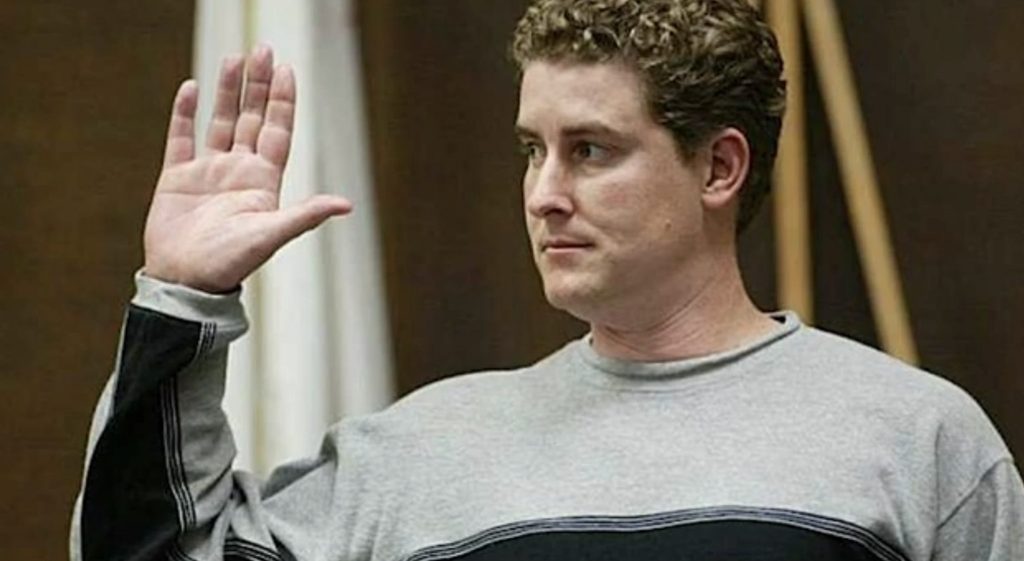
Although no actual child had been involved in the sting, prosecutors had sufficient evidence to pursue charges of solicitation to commit a felony, attempting to purchase a human being, and attempted child stealing.
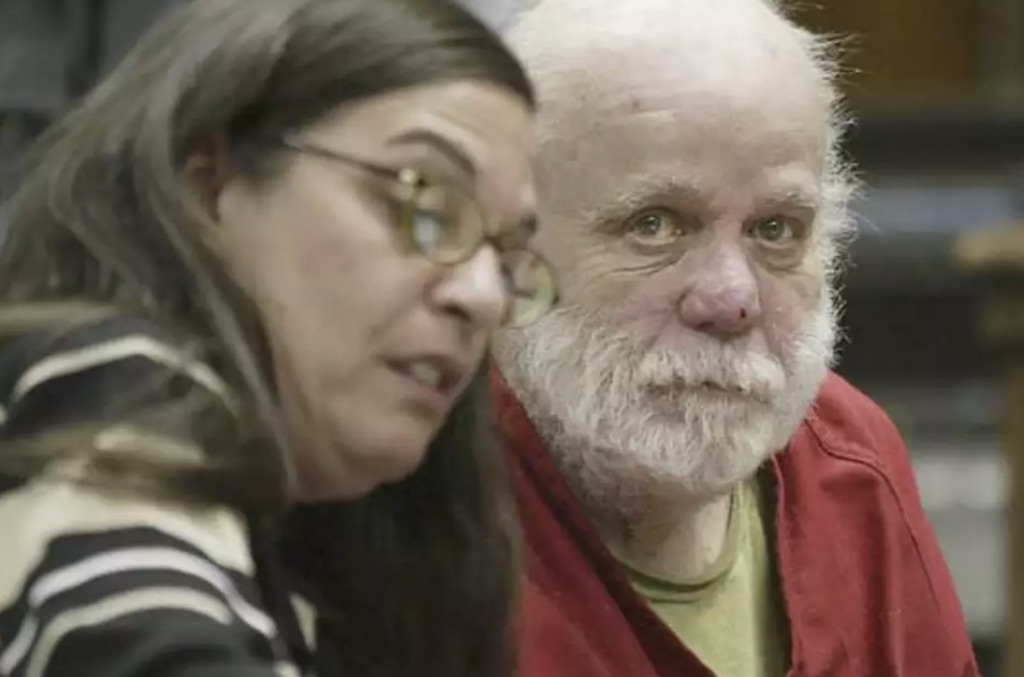
On 9th February 2004, Parnell was convicted. Under California’s three-strikes law, he was sentenced to twenty-five years to life in prison, a stark contrast to the far shorter sentences he had received for actually abducting Steven and Timmy more than two decades earlier.
During the trial, Timmy hugged Sean Poorman, forgiving him for his role in his kidnapping.
On 21st January 2008, Kenneth Parnell died of natural causes at the California Medical Facility in Vacaville. He was 76 years old and had served less than four years of his sentence.
Aftermath
Ten years after Steven’s death, the city of Merced invited residents to propose names for city parks honouring notable citizens. Steven’s family requested that one be named Stayner Park, both as a tribute to Steven and to raise awareness of missing children. The proposal was rejected because the Stayner name had also become associated with Steven’s brother Cary, who later murdered four women. (Read more about Cary Stayner and the Yosemite murders.)
In 2010, following years of discussion, a monument depicting Steven holding Timmy’s hand and leading him to safety was unveiled in Merced’s Applegate Park. It commemorates Steven’s actions and offers a message of hope to families of missing and kidnapped children.
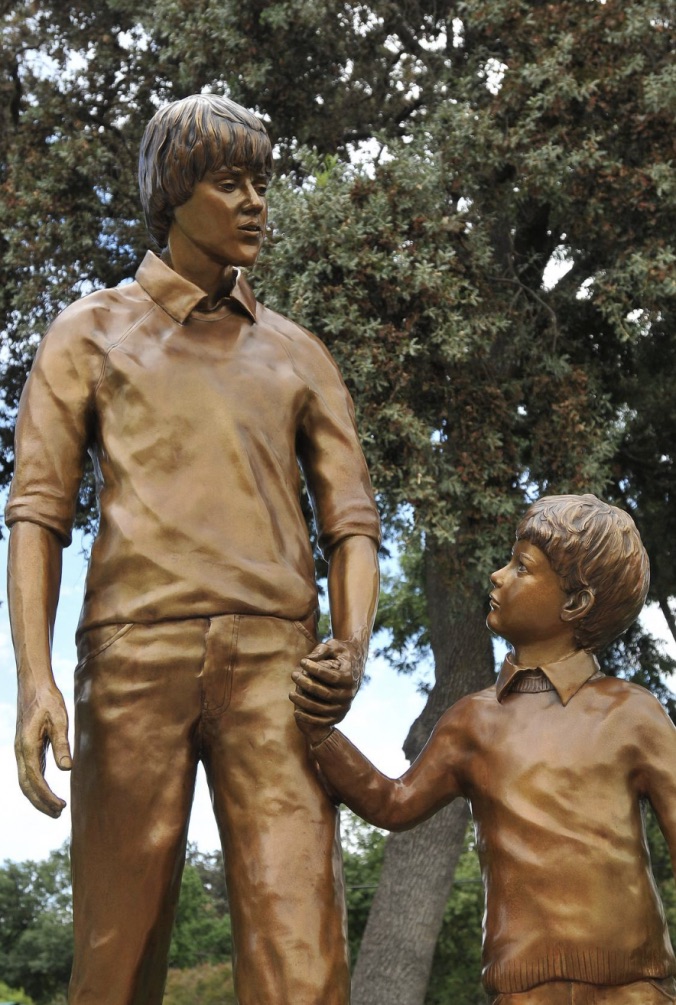
Timmy did not live to see the monument. On 1st April 2010, at just 35 years old, he died from a pulmonary embolism.
Timmy had served as a deputy with the Los Angeles County Sheriff’s Department and was married with two children. In the years before his death, he also visited schools to speak about stranger danger and child abduction.
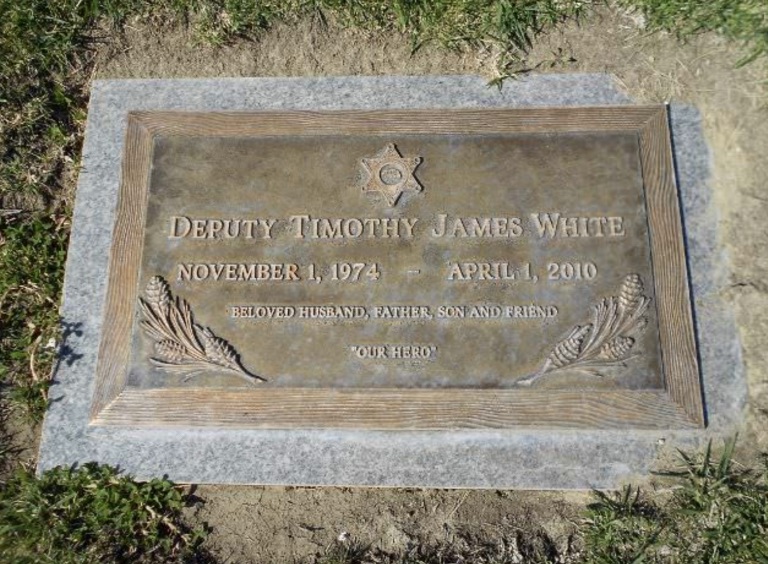
Thirty years earlier, Steven had taken Timmy by the hand and led him to safety. In the years that followed, both men chose to use their experiences to help protect other children.
Their lives were forever connected by something neither had chosen, but their legacy became about far more than what was done to them. It became one of courage, compassion, and the hope that, even after the darkest experiences, something good can still be carried forward.
Sources & Further Reading
Cinemaholic | How Did Steven Stayner’s Dad Del Stayner Die?
CNN | Steven Kidnapper Convicted
Crime And Investigation | Going Home: The Story of Steven Stayner
East Bay Express | Inside the Monster
ENews | Steven Stayner’s Kidnapping, Cary Stayner’s Horrific Crimes and One Family’s Unbelievable Story
Facebook | Steven Stayner: A True Hero
Guardian | There Was A Lot Of Torment: The Family Who Endured Two True Crime Stories
Independent | Two Kidnapped Boys, a Hero’s Return, Then a Tragic Twist: The Unbelievable Story Of Steven Stayner
Jim Laughter | From Victim to Hero
Los Angeles Times | Man Gets 90 Days in Death Of Stayner
Los Angeles Times | Who Was Steven?: The Little Boy Who Had Been Kidnaped Never Found Himself
New York Post | Captive Audience Revisits 1972 Steven Stayner Kidnapping and His Tragic End
Press Democrat | 24 Years After Ukiah Abduction, White Again Faces Parnell
Santa Cruz Sentinel | Steven’s Other Mother
Seattle Times | A Child Abductee’s Journey Back
SF Gate | Sex Predator Tried to Buy Son ‘To Raise’ / He ‘Just Wanted to be Loved,’ Parnell Says from Jailhouse
SF Gate | Heroism, Tragedy and Cold-Blooded Murder: The Stayner Brothers
Washington Post | Man Pleads Innocent in Calif. Kidnapping of Boy, 5
Books:
From Victim to Hero: The Untold Story of Steven Stayner. Jim Laughter. 2010. Buoy Up Press.
I Know My First Name is Steven. Mike Echols. 1999. Pinnacle Press.
Court Documents:
Parnell v Superior Court (People) (1981) Civ. No. 50913. Court of Appeals of California, First Appellate District, Division Two. May 21, 1981.
People v. Parnell California Court of Appeal. June 28, 2006.
Newspaper Articles:
Californian (Salinas) – Parnell Sex Charges Dropped. Volume 109, Number 94. April 18, 1980. Via California Digital Newspaper Collection.
Daily Kent Stater – Kidnapping Suspect Freed on Bail. March 6, 1980. Via Daily Kent Stater Digital Archive.
Desert Sun – Boy’s Kidnapper Sentenced. Number 46. September 26, 1981. Via California Digital Newspaper Collection.
Evening News – Mystery Woman Meets Stayner’s Real Parents. March 19, 1980. Via Google Books.
Hanford Sentinel – Kenneth Parnell Convicted of Trying to Buy Little Boy. February 10, 2004. Via California Digital Newspaper Collection.
Hanford Sentinel – Man Who Kidnapped Steven Stayner Goes on Trial in Child-Buying Case. February 3, 2004. Via California Digital Newspaper Collection.
Hanford Sentinel – Parnell Gets 25 Years to Life for Trying to Buy Little Boy. April 16, 2004. Via California Digital Newspaper Collection.
Hanford Sentinel – Stayner: Life With Kidnap Suspect. Volume 1981, Number 296. December 16, 1981. Via California Digital Newspaper Collection.
Lodi News-Sentinel – Missing Boy’s Saga Continues. March 4, 1980. Via Google News.
Los Angeles Times. Second Man Seized as Kidnapping Suspect. March 5, 1980. Via Newspapers.com.
Napa Valley Register – Convicted Child Kidnapper Arrested. Volume 140, Number 150. January 5, 2003. Via California Digital Newspaper Collection.
Napa Valley Register. Hunt for Child Called Off. Volume 111, Number 105. December 13, 1972. Via California Digital Newspaper Collection.
Napa Valley Register – Mendocino County Doesn’t Want Parnell. Volume 125, Number 186. April 5, 1988. Via California Digital Newspaper Collection.
Napa Valley Register. Reward Upped. Volume 111, Number 236. May 15, 1973. Via California Digital Newspaper Collection.
Napa Valley Register – Stayner Kidnapper Having Hard Time Finding a Job. Volume 127, Number 129. January 9, 1990. Via California Digital Newspaper Collection.
Oakland Tribune – Steven Stayner’s Life Just Beginning to Work When He Died. Volume 116, Number 267. September 24, 1989. Via California Digital Newspaper Collection.
Petaluma Argus Courier – 2 Kidnapped Boys Hitchike to Freedom. Volume 144, Number 169. March 3, 1980. Via California Digital Newspaper Collection.
Press Democrat – A Long Road to Trial. Volume 124, Number 97. February 15, 1981. Via California Digital Newspaper Collection.
Press Democrat. Assembly Passes Kidnap Law. Volume 125, Number 259. August 26, 1982. Via California Digital Newspaper Collection.
Press Democrat – Kidnap Accomplice Released. Volume 126, Number 191. June 2, 1983. Via California Digital Newspaper Collection.
Press Democrat – A Swift Conviction of Parnell. Volume 124, Number 211. June 30, 1981. Via California Digital Newspaper Collection.
Press Democrat – Kidnap Case Has Happy Ending. Volume 123, Number 115. March 3, 1980. Via California Digital Newspaper Collection.
Press Democrat – Kidnap Suspect’s Troubled Past. Volume 123, Number 116. March 4, 1980. Via California Digital Newspaper Collection.
Press Democrat. Man sentenced to 3 Months in Jail in Stayner Hit-Run Death. Volume 133, Number 76. January 5, 1990. Via California Digital Newspaper Collection.
Press Democrat – Massive Search for Ukiah Youth. Volume 123, Number 102. February 17, 1980. Via California Digital Newspaper Collection.
Press Democrat – Parnell Blames Hank for White Kidnap. Volume 124, Number 207. June 25, 1981. Via California Digital Newspaper Collection.
Press Democrat. Parnell Freed in Bay Area. Volume 128, Number 190. April 5, 1985. Via California Digital Newspaper Collection.
Press Democrat – Parnell Sentenced – 20 Years. Volume 125, Number 86. February 4, 1982. Via California Digital Newspaper Collection.
Press-Tribune (Roseville) – Driver sought in Stayner Accident. Volume 85, Number 66. September 18, 1989. Via California Digital Newspaper Collection.
Press-Tribune (Roseville). Family Remembers Former Kidnap Victim as Survivor. Volume 85, Number 69. September 21, 1989. Via California Digital Newspaper Collection.
San Bernardino Sun – Kidnap Victim Stayner Dead at 24. Volume 116, Number 260. September 17, 1989. Via California Digital Newspaper Collection.
San Bernardino Sun – Police Say Stayner Kidnapping Case Pretty Well Wrapped Up. March 21, 1980. Via California Digital Newspaper Collection.
Santa Cruz Sentinel – State Claims Sex Behind Kidnapping. Volume 125, Number 58. March 11, 1981. Via California Digital Newspaper Collection.
Santa Cruz Sentinel – Kenneth Parnell’s Lonely Odyssey. Volume 124, Number 54. March 5, 1980
Tulare Advance Register. Kidnap Mystery Woman Flees. Volume 98, Number 77, 20 March 1980. Via California Digital Newspaper Collection.
Screen Media:
20/20 Evil In Eden, Pt 1: Two Brothers Tied to Yosemite, One a Hero, The Other a Monster. ABC News.
20/20 Evil In Eden, Pt 2: Steven Stayner’s Abduction Changes Family’s Life Forever. ABC News.
20/20 Evil In Eden, Pt 3: Steven Stayner Escapes Captor, Returns Home After Seven Years. ABC News.
20/20 Evil in Eden, Pt 4: Cary Stayner Takes Refuge in Yosemite. ABC News.
Captive Audience: A Real American Horror Story. First episode date: April 21, 2022 (USA). Hulu.
Entertainment Tonight Report On I Know my Name is Steven. April 20, 1989.
Good Morning America Interview. March 14, 1980.
I Know My First Name is Steven. First episode date: May 22, 1989 (USA). NBC.
ⓘ If you or someone you know has been affected by the issues raised in this article, support is available. You don’t have to carry it alone. Find free, confidential helplines and guidance on the Help & Support page.