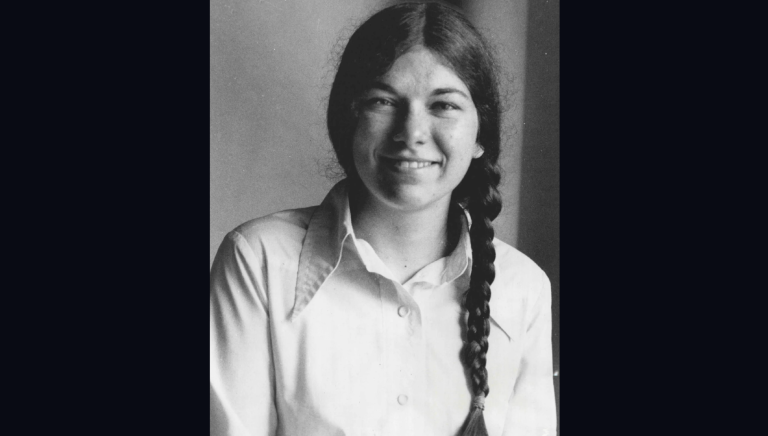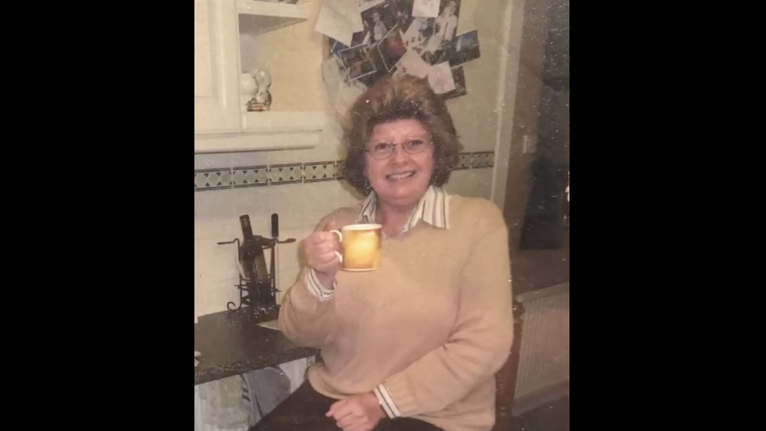
In 1974, newlyweds Renae and Jack Wicklund were building a life together in the quiet, wooded town of Clearview, Washington. Their happiness grew when they welcomed their baby daughter, Shannah, and they became close to their neighbours, Barbara and Don Hendrickson. With Jack often away for work, Barbara’s friendship was especially important to Renae as she adjusted to life as a new mother.
Then, one day, a stranger appeared on the Wicklunds’ driveway. What followed would change the lives of both families forever — and raise questions about how a dangerous man had been allowed to remain free.
⚠️ This article contains descriptions of violent or distressing events. Reader discretion is advised.
Background: Renae Wicklund
Renae Wicklund was born on 20th February 1952, in North Dakota to Allen and Hilda Ahlers. She grew up in a close family with a sister, a half‑sister, and two half‑brothers. When the family moved to a rural part of the state and settled on a farm, Renae thrived. She embraced the responsibilities of farm life and developed a lifelong love of animals, caring for a pet horse and even a pet raccoon.
Energetic and capable, Renae excelled in the activities she took on. As a committed member of the 4‑H club, she earned several special achievement medals, reflecting her dedication and skill. She was also musically talented, performing as a majorette and flutist — abilities that led Valley City State College to recruit her after she graduated high school in 1970.
In 1971, Renae moved to California, but a visit to her sister in Washington State soon changed her plans. She was drawn to the Puget Sound area and decided to make it her home. She left college and began working at a beauty salon in Seattle, where she met Jack Wicklund, a car salesman fourteen years her senior. The pair married in 1973.

Renae and Jack settled in Clearview, a small wooded community in Snohomish County. Their home sat on just over an acre of land, giving Renae a connection to the rural lifestyle she had always loved. By the time they moved in, she was already pregnant with their first child, and on 27th August 1973, their daughter Shannah was born. Shannah was often described as a striking likeness of her mother and quickly became the centre of their lives.
Renae formed a close friendship with her neighbour across the street, Barbara Hendrickson. Barbara and her husband, Don, had lived in the area for more than a decade and were well‑liked in the community. They welcomed Renae and Shannah into their lives and treated them like family. Although Barbara was older, she became a steady source of support and guidance for Renae, especially with Jack frequently away for work.

By the mid‑1970s, Renae’s life appeared to be settling into a hopeful rhythm. She was a young mother, a wife, and an active part of her community, surrounded by people she trusted. But the stability she had built was fragile, and the lives of both the Wicklund and Hendrickson families were about to be disrupted in ways none of them could have anticipated.
The Start of the Nightmare
On 11th December 1974, Renae Wicklund took advantage of an unusually warm winter day to clean the outside windows of her Clearview home. Jack was at work, but Renae felt safe in the neighbourhood and knew the Hendricksons were just across the street if she needed help. She set one‑year‑old Shannah down on the grass and began washing the windows.
As she worked, she noticed a tall white man with bushy reddish‑brown hair walking up the driveway. Strangers were uncommon in the area, so the sight caught her attention. When she looked directly at him, he turned and walked back toward the main road. Renae assumed he had simply realised he was at the wrong house.
Moments later, she saw the same man again — this time running towards her. Startled, Renae rushed to grab Shannah and headed for the front door. She managed to reach it, but before she could close it, the man pushed from the other side. Holding her daughter, she struggled to keep the door shut but was overpowered as he forced his way inside.
Once inside, he held a knife close to Shannah and threatened to kill her if Renae did not comply with his demands. Under that threat, he ordered her to remove her clothing. Renae did as she was told, trying to keep her daughter safe. He then forced her to perform oral sex while Shannah cried beside her. When he finished, he ‘thanked’ her and left the house.
Renae immediately ran to the bathroom, washed her mouth, dressed, and fled with Shannah to the Hendricksons’ home. Barbara recognised instantly that something was terribly wrong. Renae was shaking, pale, and barely able to speak. Barbara locked the doors, retrieved her shotgun, and stayed with her until police arrived.
When officers reached the scene, Renae provided a clear description of her attacker. He was very tall, with frizzy reddish‑brown hair, blue jeans, a red‑and‑black plaid shirt, early twenties, and smelling faintly of alcohol. Snohomish County police immediately recognised the description. Two weeks later, they showed Renae a mugshot of a man already known to them. She identified him without hesitation.
His name was Charles Rodman Campbell — but it would take more than a year before the police finally arrested him.

The assault left Renae deeply traumatised. She lived with constant fear, kept lights on at all hours, and struggled with the sense that she was being watched. The strain took a toll on her marriage, and she and Jack eventually separated, though they remained committed to co‑parenting Shannah.
Throughout this period, Renae relied heavily on the Hendricksons, who continued to support her as she tried to regain a sense of safety.
In March 1976, Renae finally received the news she had been waiting for: Charles Campbell had been arrested for burglary. For the first time since the attack, she felt she could breathe again.
Who Was Charles Campbell?
Charles Rodman Campbell was born on 21st October 1954, in Hawaii to Betty Lou and Oliver Campbell. After Oliver left the Marines, the family settled permanently in Snohomish County, Washington.
Campbell grew up with three siblings, including a younger sister with a severe hip disability. The pressures of raising a large family, combined with significant medical challenges, contributed to both parents developing serious alcohol dependence. Campbell later claimed he experienced physical abuse in the home, though it is unclear whether his siblings were treated similarly.
At school, Campbell struggled socially. His Hawaiian heritage made him stand out, and he was bullied about his sister’s disability. At age 5, he underwent surgery that resulted in the removal of one testicle — something psychologists later suggested may have influenced his behaviour and self‑image.
Campbell’s childhood was marked by instability and escalating behavioural problems. He attended multiple elementary schools due to aggression and was eventually labelled “behaviourally disordered”. By age 10, he had begun drinking. His early offences included vandalism, such as damaging a 2½‑ton cattle truck with a friend.
By 12, he was using methamphetamine and speed; by 13, heroin; and by 14, large amounts of LSD. His parents, heavily affected by alcoholism, frequently sent him to live with his grandparents. By 15, he had largely stopped attending school and was deeply involved in criminal activity.
He was caught with a friend vandalising a cemetery, pushing over headstones. An elementary school was broken into, and witnesses identified Campbell and a friend as the culprits, but there was not enough evidence to charge them. By the time he was 16, he was stealing cars and leading the police on car chases.
In 1971, after Campbell stole the family car, his father reported him to the police. From custody, Campbell phoned a friend and asked him to kill his father in retaliation.
By 17, Campbell had been charged with auto theft, resisting arrest, and threatening to kill the officers who detained him. Days later, he broke into his grandparents’ home and stole several guns, intending to sell them to fund a trip to California. During his arrest, he kicked out a window and said, “That’s to thank you for what you have done for me”.
He was sent to Green Hill Reformatory for boys in Chehalis for auto theft and placed on probation for second‑degree burglary. His mother expressed despair in a police report:
“Mrs. Campbell states that she has given up hope for Charlie except for trying to get him to court. She would not bother reporting him gone and would just as soon that he never came back home.”
Despite repeated offences, Campbell faced few significant consequences for his actions. This lack of accountability only reinforced his belief that he could do whatever he wanted without repercussions.
By 19, Campbell had married and moved into a trailer near his grandparents’ home. Police were frequently called to the property due to violent domestic disputes. His wife reported severe physical abuse, even when she was pregnant, but was too frightened to pursue charges. Campbell also threatened her family members and even the family dog.
Their daughter was born in March 1974. Campbell’s behaviour worsened. He threw knives toward the baby’s crib when she cried and allegedly dangled her over the balcony of a twenty-storey building. In August 1974, his wife filed for divorce and left with their child. Campbell was ordered to pay child support, and his visitation rights were revoked due to documented abuse and neglect. A judge determined that he posed a serious threat to the safety and well-being of both his child and his ex-wife.
It was four months later, in December 1974, that Charles Campbell – then a volatile and angry 20-year-old – arrived at Renae Wicklund’s home, sexually assaulted her, and threatened her infant daughter.
Days afterwards, he quit his job at a pizza restaurant, where he had been working under the false name Dan Leslie Kile. Before leaving, he stole $1,200 from the cash register and disappeared.
Campbell remained off police radar for more than a year. However, his absence from the police’s attention did not mean he had stopped offending.
In April 1975, 25‑year‑old University of Washington student Hallie Ann Seaman disappeared. She was two terms away from completing her master’s degree in architecture. Her body was found the next day in bushes along Eastlake Avenue East in Seattle. She had been sexually assaulted and stabbed. Her station wagon was found burned several miles away.

At the time, the case remained unsolved and was not connected to Campbell.
Decades later, DNA legislation changes allowed older profiles to be added to CODIS. Campbell’s DNA was uploaded in 2019, leading to a match with evidence from Hallie’s case. He was identified as the likely perpetrator, though he died years earlier and will never face charges. (You can read about Hallie’s case here.)
In January 1976, Campbell broke into a home armed with a sawed‑off shotgun. He was later found drinking at a nearby bar and arrested for second‑degree burglary. He received a 15-year sentence with a 5-year minimum.
This was the moment Renae finally received the news that Campbell had been caught. Shortly after his arrest, she identified him in a police lineup, linking him to her assault. Campbell was charged with first‑degree assault with intent to kill and one count of sodomy.
Renae testified at trial, recounting the assault and the threat to her child. Barbara Hendrickson also testified. On 21st April 1976, Campbell was found guilty. He received a 30‑year sentence with a 7‑year minimum. During his sentencing, his extensive criminal record was presented, and the consensus was clear: Charles Campbell was not fit to be on the streets.
On 11th May 1976, Campbell began serving his sentence at Walla Walla State Penitentiary. For Renae, it marked the first moment of genuine relief since the attack. With Campbell serving time for both the burglary and her assault, Renae believed he would remain incarcerated for many years.
She was wrong.
The Tragedy of Jack Wicklund
The trauma of sexual assault never truly fades, but Renae did her best to rebuild her life. She worked as a beautician and later as an accountant for beauty salons. As a single mother, she was determined to give Shannah stability and a strong example to follow. She remained on friendly terms with Jack and stayed close to her in‑laws, who lived in Kitsap County across Puget Sound. She also continued to rely on Barbara and Don Hendrickson, who were always willing to help. For a time, life seemed to be settling into a manageable rhythm.
That changed in December 1977, when Renae learned that Jack had been attacked in his Seattle home. He had answered the door expecting a delivery. A man carrying a package stepped inside, wished him a Merry Christmas, tied him to a chair, doused him in petrol, and set him on fire.
Jack survived, but only barely. His burns were catastrophic, leaving him in constant pain and requiring him to wear a protective rubber suit over his damaged skin.
The attack left Renae terrified once again. Jack said he did not recognise the man, but Renae feared the assault was not random. Even knowing Campbell was behind bars, she worried he had somehow orchestrated it.
Jack struggled physically and emotionally after the attack. He fell into a deep depression, and on 29th April 1978 — just five months later — he died in a car crash while driving home from his parents’ house. He was 37 years old.
Investigators found that Jack’s car had veered off the road and struck a tree head‑on, killing him instantly. There were no other vehicles involved. The weather was clear, and Jack knew the road well. With no witnesses, the circumstances of his death remain unresolved. It is still unknown whether it was a tragic accident, a deliberate act, or if someone forced him off the road.
Renae was devastated, both for herself and for Shannah, who had lost her father. They worked through their grief together, and Renae chose to remain in Clearview, believing it was the best place to raise her daughter. As the years passed, Shannah thrived, taking up dance and developing an interest in the flute, just as her mother once had.
Although Renae took comfort in knowing Campbell was incarcerated, she could not shake her unease. She installed stronger locks on the windows and doors and adopted an Afghan hound, a loyal companion who brought both joy and a sense of security.
Gradually, the years after Jack’s death began to pass, and Renae and Shannah once again started to rebuild their lives.
Footprints in the Snow
In the winter of 1981, Renae’s mother, Hilda Ahlers, visited from North Dakota. Hilda did not know about the assault Renae had suffered seven years earlier. Independent and resilient, Renae had kept the ordeal to herself, not wanting to burden her mother with fear.
During Hilda’s visit, unsettling incidents began to occur. One evening, as they relaxed in the living room, Renae’s usually calm Afghan hound suddenly began pacing and barking at the door and window. Renae tried to settle him, but he grew increasingly agitated. Hilda considered looking outside but was too frightened to do so. On another occasion, she noticed Renae staring out of the window with an expression that made it clear something was wrong. Without knowing the history, Hilda could not understand the weight of what she was seeing.
Then, in January 1982, Renae found large footprints in the snow beneath her windows. Because the house sat well back from the road, the discovery was deeply unsettling. When she mentioned it to the Hendricksons, Don said he had seen similar footprints near his own home.
A few weeks after Hilda returned to North Dakota, Renae faced another blow. Her dog nipped a young child, and she was forced to rehome him. Losing him left her feeling exposed, with her small sense of security suddenly gone.
What Renae did not know was that she needed protection more than ever. The strange events around her home — the barking, the unease, the footprints in the snow — were not random.
They were the calculated acts of Charles Campbell, who, after serving just six years behind bars, was once again free.
Horror in Clearview
In April 1982, Renae was recovering from a severe case of strep throat. Barbara Hendrickson had been helping by bringing over homemade soups and checking on 8‑year‑old Shannah, making sure she got to school safely while her mother rested.
On Wednesday, 14th April, Barbara visited Renae in the morning and said she would return later. That afternoon, as she stepped outside to collect her mail, she saw Shannah coming home from school and told her she would be over shortly. At around 4:20 pm, Barbara borrowed Don’s watch so she could check Renae’s pulse and walked across the road to the Wicklund home.
When Barbara did not return, Don grew concerned. He knew the two women often talked for long periods, but with Renae unwell and the time now past 6 pm, he decided to check on them. As he approached the house, he noticed the sliding glass door to the kitchen slightly open, immediately setting off alarm bells – Don knew how extremely cautious about home security Renae had been since the 1974 attack.
Inside, the house was silent. Don expected to hear Shannah somewhere, but the only sound was running water from the kitchen tap. He turned it off and saw a dining chair knocked over.
With the hairs on the back of his neck standing on end, Don walked into the hallway leading to the bedrooms. There he found 51‑year‑old Barbara – his wife of thirty-four years – lying on her back in a pool of blood. Her throat had been cut from ear to ear, creating a seven‑inch wound. She had died from a massive haemorrhage. Don knelt beside her, but she was already gone.
He continued down the hallway. Shannah’s bedroom was empty. He then opened the door to Renae’s room.
Renae Wicklund was lying on the floor next to the bed. She was naked, positioned on her back with her hands over her chest and her legs apart. She had been beaten on the head, back, and upper chest with a blunt instrument. Her face had sustained extensive trauma; her autopsy later showed that nearly every bone in her face had been broken.
Renae had been strangled, and her throat had been cut with a seven‑inch wound. She had bled to death. She had been raped after death, her genitals mutilated, and she had been vaginally assaulted with a blunt instrument, causing a one‑inch internal laceration. The violence inflicted on Renae was not random. Everything about the way she was attacked showed that the offender’s motive was personal.
Across the room lay the body of eight‑year‑old Shannah, face down in a pool of blood. She had been strangled, and her throat had been cut with such force that she was nearly decapitated. She had lost so much blood that obtaining a sample for testing was difficult.

All three victims had one earring torn from their ears.
Don immediately contacted the police before stumbling out onto the street, overcome with grief. Snohomish County deputies arrived shortly afterwards, followed by homicide detectives. What Don had witnessed inside the house was something no one should ever have to see, and it would remain with him for the rest of his life.
Investigation: Tracking a Killer
It became clear that the killer had made no effort to cover his tracks or conceal his identity. Blood was found in the sink where he had washed his hands, and a bloody handprint was visible on a drinking glass left on the kitchen counter. Officers canvassing the neighbourhood received reports of a tall, bushy‑haired man seen loitering near Renae’s home earlier that day. Witnesses said he appeared drunk and unsteady. Others described an orange car backed into the woods behind the Wicklund property, and a man running into the trees, likely heading toward the vehicle.
Detectives began piecing together a timeline. Their working theory was that the killer had entered the house before Barbara arrived. The level of violence inflicted on Renae, compared with Barbara and Shannah, indicated that Renae had been the intended target. Barbara and Shannah appeared to have been killed simply because they encountered him.
After murdering Renae, the killer ransacked the house, taking jewellery and valuables he could sell. He then sat at the kitchen table and ate a sandwich.
Investigators believed Shannah returned home from school and ran straight into the violence unfolding inside the house. A bloody shoeprint matching her shoes was found on Renae’s body, showing that in her desperate attempt to flee, Shannah stepped on her mother. It is almost certain she saw what Campbell had done before he took her life.
Barbara appeared to have entered the house shortly afterwards. Her body was found at the entrance to the hallway, positioned as though she had turned to run but was overpowered before she could reach the door. She was only a few feet from escape.
When detectives spoke to Don Hendrickson, he told them the only person he could think of who might wish to harm Renae was the man who had assaulted her eight years earlier. As far as he knew, that man was still in prison. Investigators decided to check regardless.
What they found was deeply troubling. In 1981, just one year before the murders, Charles Campbell had been released on work release to a halfway house — supposedly for good behaviour — despite having a record of poor conduct in prison. The halfway house was less than ten miles from Renae’s home. Campbell had been seen driving past her house on multiple occasions. He had been released without Renae ever being notified.
A ‘Model’ Prisoner
Records showed that Campbell began serving his sentence for the 1974 assault at Walla Walla State Penitentiary in May 1976. Less than a month later, in June, he was transferred to the Washington State Reformatory in Monroe — a lower‑security facility. His mother, Betty Lou, wrote to the state warning that moving him was a serious mistake. She said he had “sexual issues” and “strange ideas about women”, and claimed he had sexually assaulted the family dog as a child. Campbell denied this, instead admitting he had strangled the dog to death for “not listening to him”.
Despite these warnings, officials transferred him anyway. Trouble followed almost immediately. In September 1976, he was caught with a gallon of homemade liquor brewed using yeast stolen from the reformatory kitchen. In 1977, he assaulted an inmate, causing head injuries that required treatment. On New Year’s Eve 1977, he attempted to strike a nurse who refused to give him medication. In 1978, he kicked a cellmate in the groin. By 1979, he had sexually assaulted a roommate and threatened to kill him if he reported it.
Campbell dominated other inmates through intimidation, forcing weaker prisoners to obtain drugs for him and submit to sexual acts. He became known as “One Punch” because of the force of his blows. Even the guards – who were aware of Campbell’s drug trafficking – were afraid of him and requested he be transferred back to Walla Walla.
During his time at Monroe, Campbell also became romantically involved with Judith Dirks, a substance‑abuse counsellor at the facility. Their relationship led to her dismissal, but they continued seeing each other, and she later had a son with him in 1982.
A psychological evaluation described Campbell as a conflict-ridden man “who has declared war on society, all of whom he regards as mindless nitwits who are getting theirs and are now out to get him”. The report stated he was “uncaring of others, conscienceless, malevolently intolerable of the social order which imprisons him, and imminently harmful to all who directly or indirectly capture his attention or interest”. In other words, he was assessed as extremely dangerous with no regard for anyone.
Despite this, Campbell appeared before a parole board in 1981. His mandatory sentence was waived, making him eligible for minimum‑custody status — even though he had not served the required seven‑year minimum. The board made its decision based on paperwork listing only three minor infractions during his first year at Monroe. They believed he was a model prisoner. Had the parole board been aware of the full extent of Campbell’s behaviour, their decision may have been different.
But the failures did not end there. The parole board later discovered that Monroe had failed to forward hundreds of disciplinary reports. As a result, many inmates — including Campbell — had been released without proper review.
Following this oversight, Campbell was transferred to an honor farm in September 1981, a minimum‑security facility focused on rehabilitation. A month later, he was moved to the Monroe Work Release facility as a cook. Work release programmes allow inmates to work in the community while still serving their sentences.
However, Campbell’s ex‑wife reported that he had gone to her home on Christmas Day 1981 and raped her. She said he returned twice more, leaving work release to assault her. She reported the attacks in March 1982, but police told her the case was too weak to pursue. No action was taken, and Campbell remained in the programme.
In February 1982, the Monroe programme closed, and Campbell was transferred to the Everett work‑release facility. Within his first 30 days, he committed four infractions. In one incident, a female officer reported him for having a can of beer on his bed. Campbell resented being written up by female staff, and a hearing was held regarding his behaviour toward two female officers. Yet he was allowed to remain in the programme.
Campbell was free for much of each day, yet neither Renae nor the sheriff’s office was informed of his transfer. Renae should have been given the chance to prepare for his release. Instead, Campbell was living just ten miles from her home, and she had no idea he was there. Within six weeks, he committed the triple homicide.
It was a catastrophic failure of the justice system — one that left investigators and the community grappling with how preventable the tragedy might have been.
The Arrest of Charles Campbell
Detectives visited the Everett work‑release programme to determine Charles Campbell’s whereabouts. Staff told them that on the evening of 14th April — after the murders — Campbell had returned to the halfway house by curfew but was visibly intoxicated. He tested positive for morphine, codeine, quinine, methadone, and cocaine. Because alcohol and drug use were strictly prohibited, he was immediately sent back to the Monroe Reformatory.
Investigators collected DNA samples from him, and fingerprint analysis confirmed that his prints matched those found on a glass in the Wicklund kitchen. During a search of his belongings, officers found clothing that matched witness descriptions of the man seen loitering near Renae’s home earlier that day. They also discovered jewellery belonging to Renae and Shannah in his jacket pockets.
A search of Campbell’s car revealed blood on the driver’s side door handle, and forensic testing identified traces of blood from all three victims. On the car seat, investigators found an earring that a business associate of Renae’s identified as a birthday gift he had given to Shannah.
When detectives checked the job Campbell was supposed to be working at on the morning of 14th April, they learned he had never arrived. He had no alibi for the time of the murders. A fellow work‑release inmate then came forward with crucial information. He said he had spent the evening drinking beer with Campbell by the Snohomish River and described him as unusually jittery and excitable. At one point, Campbell left the group, drove to the riverbank, and behaved as though he was trying to hide something. The inmate also recalled Campbell placing a blanket in the back of his car earlier that day, which struck him as suspicious.
When investigators searched Campbell’s car, they found the tyres and underside coated with mud. Combining this with the witness testimony, the police deployed divers into the Snohomish River, where they recovered numerous items linked to the Wicklund home. These included a bracelet, earrings, necklaces, pottery, and brass ornaments — personal belongings Renae had used to decorate her home, some originating from her family farm.
On 19th April 1982, Charles Campbell was charged with three counts of aggravated first‑degree murder and booked into Snohomish County Jail.

From Trial to Execution: The End of a Nightmare
On 1st May 1982, 27‑year‑old Charles Campbell appeared before Judge Dennis Britt and pleaded not guilty to three counts of aggravated first‑degree murder. He was ordered to undergo psychiatric evaluation to determine his competency to stand trial. A psychiatrist later described Campbell as having a “very unorthodox view of reality”. Campbell reportedly said:
“The world has created me, and I am free to do what I want. There is no right or wrong, or anyone to tell me what to do.”
The trial began in November 1982 at Snohomish County Superior Court in Everett, Washington. Due to extensive media coverage, the jury was selected in Spokane, more than 300 miles away. Campbell refused to attend the jury selection, but proceedings continued.
The defence argued that investigators had focused unfairly on Campbell because of his criminal history and prior connection to Renae, claiming they had not explored other leads. This was not supported by the evidence, as detectives had pursued multiple avenues before identifying Campbell. The defence also succeeded in having the sexual‑assault charges dismissed, arguing that Renae had been assaulted postmortem and that this did not meet the legal definition of sexual assault. Although the coroner testified that brain activity can continue for several minutes after death and Renae may have been aware of the assault, the judge accepted the defence’s argument.
The prosecution presented a substantial case. Multiple witnesses testified to seeing Campbell near Renae’s home on the day of the murders, including accounts of him acting suspiciously and hiding in bushes. Others saw his car backed into the woods behind the house.
A key witness was Judith Dirks, Campbell’s girlfriend at the time. She testified that Campbell blamed Renae and Barbara for his imprisonment and had obtained transcripts from his 1974 trial, which included Renae’s address. Using this information, he had watched her from the trees near her home. Dirks also recalled that on the morning of the murders, Campbell arrived at her house intoxicated with a six‑pack of beer, and later she noticed one of her large butcher knives with a six-inch blade was missing.
The prosecution also called witnesses who described Campbell’s behaviour towards women. One woman testified that Campbell had made unwanted advances toward her on the day of the murders, tugging at her clothing before backing off when told to stop. Campbell’s ex‑wife testified about the assaults she had reported after his early release, though her attempts to press charges had not progressed due to lack of evidence.
Another significant witness was the man who had been with Campbell at the Snohomish River on the night of the murders. The defence attempted to shift suspicion onto him, but the strategy was unsuccessful.
The combination of witness testimony and physical evidence made the case against Campbell overwhelming. Throughout the trial, he showed no emotion, even when confronted with autopsy photographs. He spoke little and spent much of the proceedings drawing images of gravestones and nooses, which he occasionally held up in court.
On 26th November 1982, after four hours of deliberation, the jury found Campbell guilty of three counts of aggravated first‑degree murder. His motive was determined to be revenge for Renae’s report of the 1974 assault.
On 17th December 1982, Campbell was sentenced to death. At the time, Washington State allowed death‑row inmates to choose between hanging and lethal injection. Campbell refused to choose, claiming that doing so would constitute cruel and unusual punishment akin to suicide, which he said was against his religion. The state chose for him: hanging. Campbell was returned to Walla Walla State Penitentiary to await execution.
Campbell filed multiple appeals, delaying his execution for more than a decade. His first appeal concluded on 6th November 1984, when the Washington State Supreme Court upheld his conviction and sentence. The U.S. Supreme Court declined review on 29th April 1985.
His second appeal began in 1986 and was rejected by a U.S. District Court. The Ninth Circuit upheld the decision on 6th October 1987, and the U.S. Supreme Court again declined review on 7th November 1988. An execution date was set for 30th March 1989, but further appeals resulted in additional delays. Campbell filed a third federal appeal in 1991, which the U.S. Supreme Court dismissed in January 1992.
In 1993, the Washington State government asked the U.S. Supreme Court to resolve the case. After reviewing whether hanging constituted cruel and unusual punishment, the Court ruled on 1st June 1993 that hanging was not unconstitutional, as death was considered instantaneous.
On 15th April 1994, the stay of execution was lifted, and Campbell’s execution was scheduled for 27th May 1994. He would become the second person in the United States to be executed by hanging since 1965 and the last person executed by this method in Washington State.
On 27th May 1994, Campbell was scheduled for execution at the Washington State Penitentiary in Walla Walla. As hangings had not been conducted for decades, locating an executioner willing to perform the sentence proved difficult, ultimately requiring a substantial payment to an individual whose identity remains undisclosed.
Campbell resisted until the very end. When guards arrived to transfer him from his death row cell to the holding cell near the execution chamber, he was lying on the floor in a rigid fetal position and refused to comply with orders to be handcuffed. The guards had to use pepper spray to subdue and restrain him before transporting him. A subsequent search of his cell uncovered homemade knives, indicating that Campbell had planned to resist until the very last moment.
Shortly after midnight, officers escorted Campbell to the execution chamber. He was so frightened at the thought of his own death that he required assistance to walk. His wrists and ankles were secured, and he was strapped to a board for support.
At 12:08 am, he was brought into the chamber. Witnesses reported that he struggled as the noose was placed around his neck. Once secured, the trap was released, and Campbell fell more than five feet. He offered no final words. He was pronounced dead at 12:14 am, aged 39.
Charles Campbell’s death was swift and painless — a stark contrast to the pain and terror he inflicted on Renae, Shannah, and Barbara.

Aftermath
After the murders, Renae’s family and friends advocated for reform and remembrance, despite the profound loss they endured. Campbell’s ex‑wife successfully sued the state for negligence, arguing that if her rape reports had been taken seriously, he might have been returned to prison, potentially preventing the killings.
Renae’s mother, Hilda, also filed a negligence suit, stating that the state had a responsibility to notify victims when their attackers were released early. Renae had believed Campbell was serving a 30‑ to 45‑year sentence, and the lack of notification left her unaware and vulnerable. Don Hendrickson made a similar claim. Both lawsuits resulted in legal settlements.
Don Hendrickson devoted himself to supporting families of missing persons and victims of violent crime. The trauma of losing Barbara and witnessing the aftermath at the Wicklund home deeply affected him, and he struggled with alcohol addiction. He died in 1999 and was buried beside Barbara.
One lasting change from the case was the creation of a voluntary advance‑notification system in Washington State, allowing victims to be informed when offenders are moved or released. Although this came too late for Renae, Shannah, and Barbara, it has since provided protection for others.
Renae and Shannah Wicklund lie side by side in Jamestown, North Dakota. Through it all, Renae’s courage shines brightly. Her determination to protect others by reporting Campbell remains a lasting part of her legacy.
Sources
Ann Rule. A Rose for Her Grave. Chapter 2: Campbell’s Revenge. 1993.
Blog – Jacob Campbell.
Justia Law. State v. Campbell. November 1984.
King 5 News Coverage. (Available on YouTube).
Murderpedia. Charles Rodman Campbell.
Office for National Statistics. Nature of sexual assault by rape or penetration, England and Wales: year ending March 2020.
RAINN. The Criminal Justice System: Statistics.
Seattle Times. A UW student was murdered in 1975. Her killer was never known — until now.
Seattle Times. Campbell Hanged — Campbell Hanged — Death Comes Quickly After Dozen Years Of Struggle.
Seattle Times. Key Dates In The Case Of Charles Campbell.
ⓘ If you or someone you know has been affected by the issues raised in this article, support is available. You don’t have to carry it alone. Find free, confidential helplines and guidance on the Help & Support page.