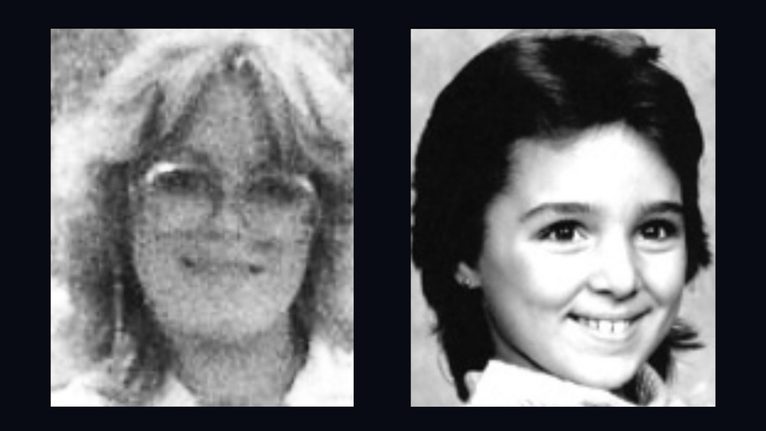
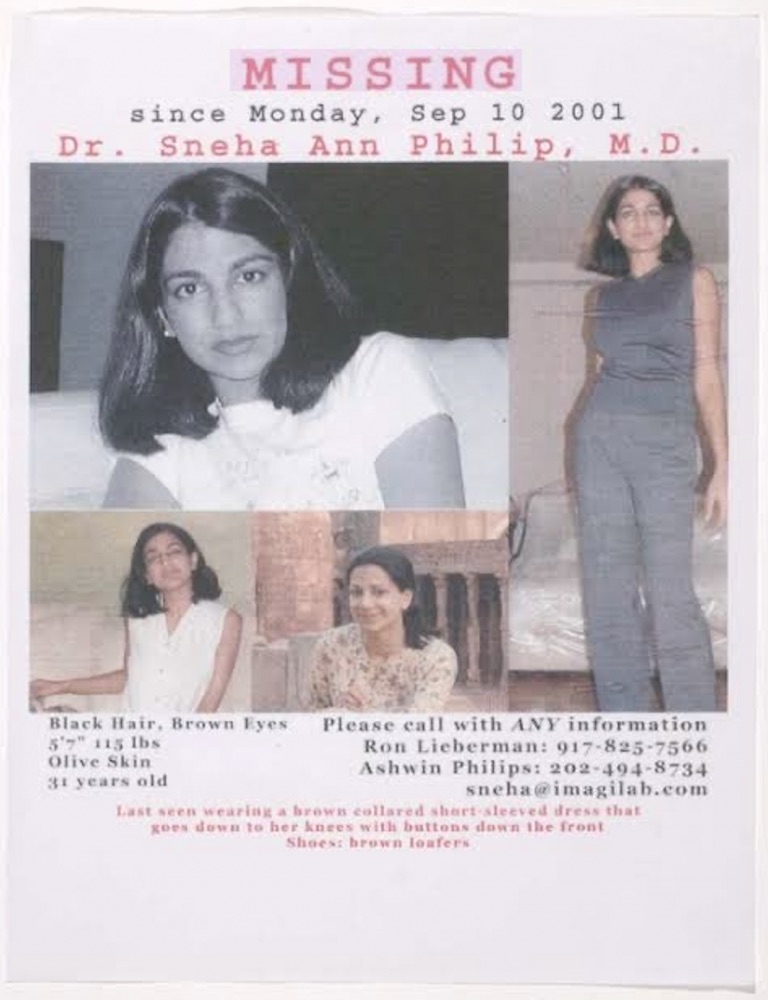
On 11th September 2001, as the world watched in horror following the terrorist attacks on New York’s Twin Towers, thousands of families desperately searched for missing loved ones. Among them was the family of 31-year-old physician Sneha Anne Philip, who lived just a few blocks from the World Trade Center.
Sneha would eventually be officially recognised as a victim of the attacks, with her family believing she had died while helping others. But there was one troubling detail. Sneha had already disappeared the previous evening, and the last confirmed sighting of her was at a nearby department store.
As investigators attempted to reconstruct her final movements, they uncovered conflicting accounts and details of her personal life that raised an unsettling question: had Sneha died in the attacks, or had something happened to her before the world changed forever?
⚠️ Content warning: This article discusses events connected to the September 11 attacks, which some readers may find distressing.
Early Life
Sneha Anne Philip was born on 7th October 1969 in Kerala, India. When she was 3, her family moved to upstate New York after her father secured a visa through a lottery programme for doctors.
In 1995, Sneha enrolled in medical school in Chicago, where she met fellow student Ron Lieberman, who was originally from Los Angeles. The two shared interests beyond medicine. Ron was a musician, while Sneha was a talented painter who spoke five languages.
Although Sneha was a year ahead of Ron in her studies, she took a year off to travel around Italy and pursue her interest in painting. As a result, the couple graduated together in 1999.
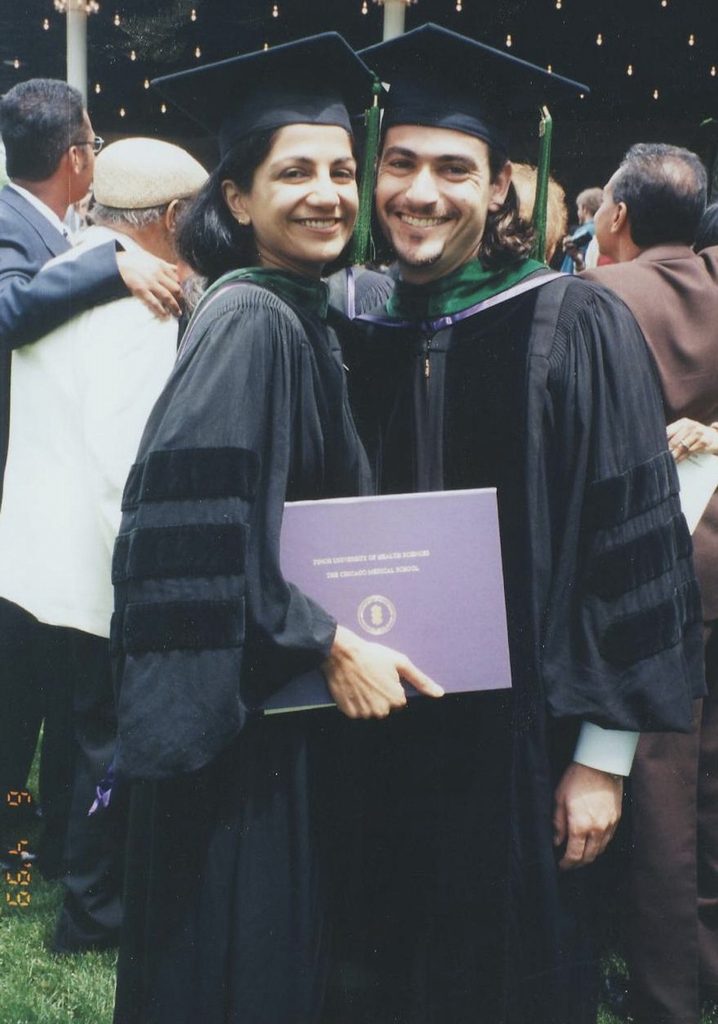
After completing medical school, Sneha and Ron moved to New York City, where they had both secured internships. Ron began working at Jacobi Medical Center in the Bronx, while Sneha joined Cabrini Medical Center, close to their small apartment in the East Village.
Their demanding schedules meant they often worked long hours, but they were happy together, and Sneha’s parents and brother also lived nearby.
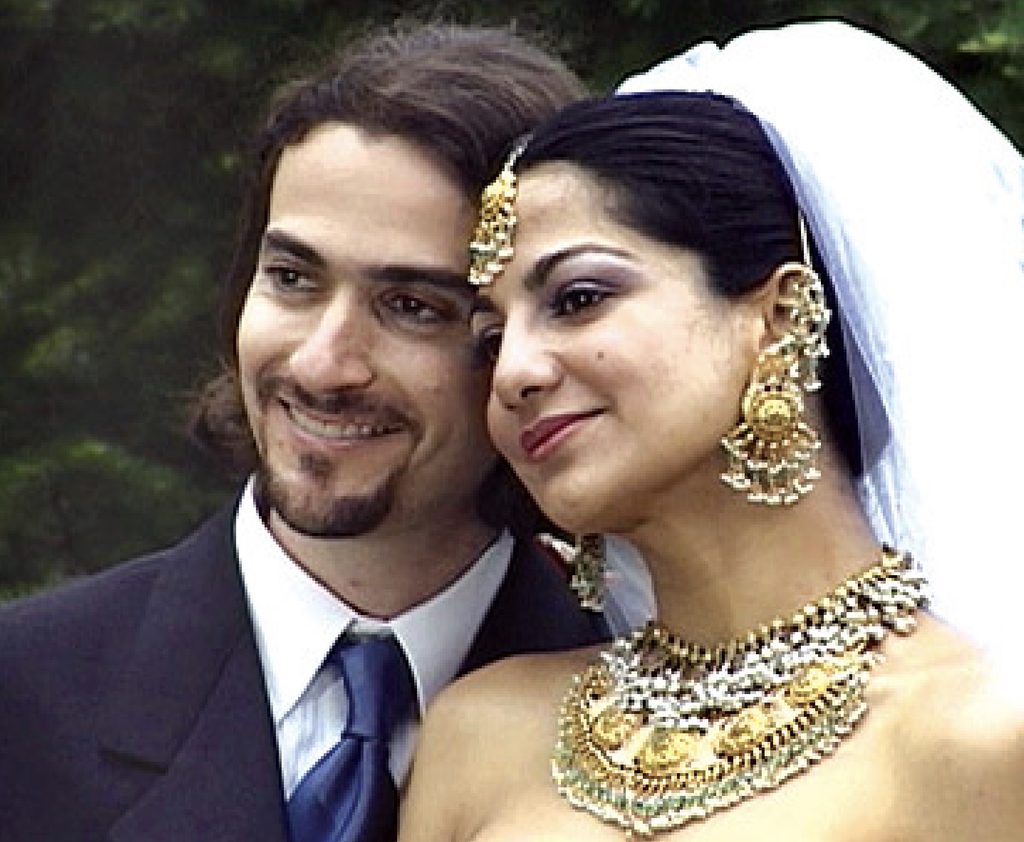
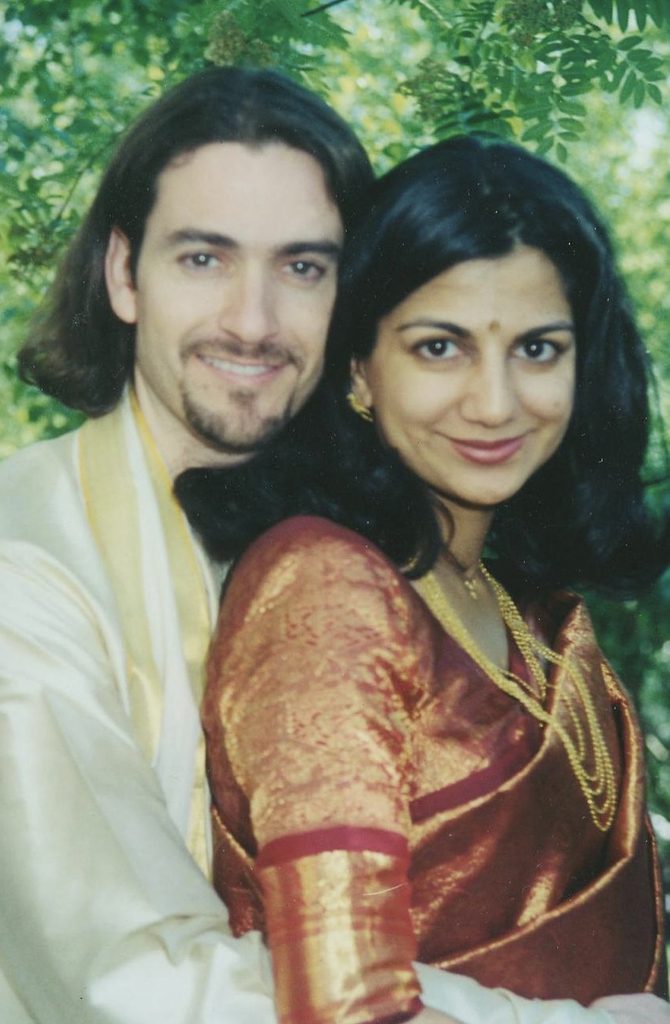
In May 2000, the couple married in Dutchess County, New York, in a ceremony that incorporated both Jewish and Indian traditions. During the ceremony, Ron placed a gold, teardrop-shaped pendant known as a minnu around Sneha’s neck. Set with a diamond, the traditional wedding necklace had been a gift from her mother.
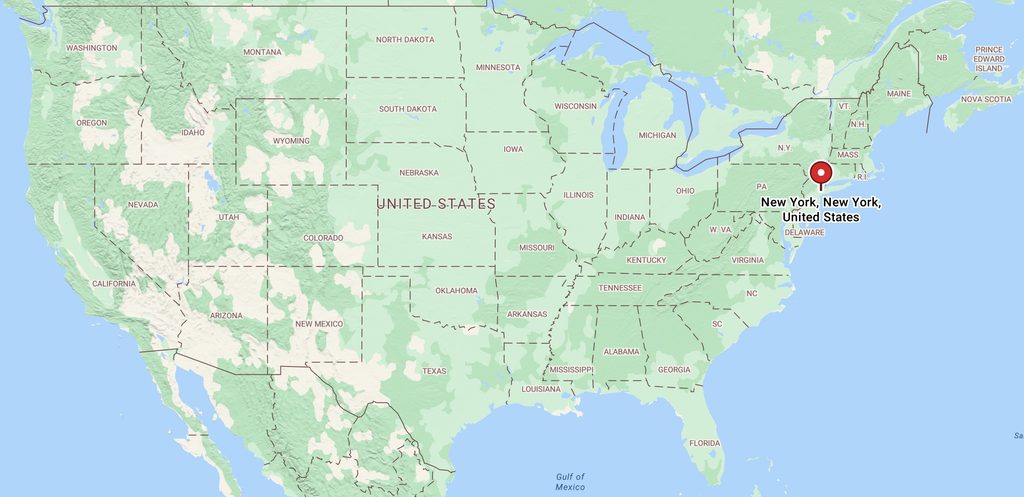
Shortly after their marriage, Sneha and Ron moved into a larger apartment in Battery Park City, just a few blocks from the World Trade Center.
Before Sneha’s Disappearance
In May 2001, just a year after her marriage, Sneha’s medical career suffered a significant setback when Cabrini Medical Center decided not to renew her contract. The hospital cited repeated lateness and alcohol-related problems, effectively ending her employment there.
Sneha was deeply upset by the decision, although she and her family would later dispute the hospital’s explanation for her dismissal.
The following month, Sneha went to a bar with several former Cabrini colleagues. During the evening, she alleged that a fellow doctor followed her into the bathroom, touched her inappropriately, and attempted to kiss her. She subsequently reported the incident to the NYPD.
However, the police account of what happened that night was considerably different.
According to the police report, Sneha went to the doctor’s apartment, sat on his couch, and refused to leave. She also allegedly telephoned his wife repeatedly, despite being asked to stop. The report further claimed that Sneha verbally abused the doctor several days later.
Five days after making her initial complaint, Sneha withdrew her allegation. Prosecutors dropped the sexual abuse charge against the doctor and instead charged Sneha with several misdemeanours, including criminal trespass, harassment, and falsely reporting an incident. She was arrested and spent a night in jail.
Meanwhile, other aspects of Sneha’s personal life were becoming a source of concern and, later, considerable speculation.
She had begun spending nights away from home, sometimes visiting gay and lesbian bars around New York City. According to a subsequent police report, Sneha occasionally left these establishments with women she had met there, leading investigators to question whether she was bisexual. Ron maintained that he had been unaware of these encounters.
There was also an allegation that Sneha’s brother had discovered her engaging in sexual activity with his then-girlfriend. However, her brother later strongly denied that the incident had ever occurred.
Despite losing her position at Cabrini, Sneha managed to secure another internship at St. Vincent’s Medical Center on Staten Island. Unfortunately, her difficulties continued. After missing a meeting with a substance abuse counsellor, she was suspended and subsequently placed on modified duties.
By September 2001, Sneha was facing criminal proceedings, uncertainty about her medical career, and growing questions about her personal life. Yet how much of what investigators would later report accurately reflected her circumstances remained a matter of considerable dispute.
September 10th – Sneha is Last Seen
On the morning of 10th September 2001, Sneha attended court for her arraignment. At approximately 10:30 am, she pleaded not guilty to charges of assault, harassment, and falsely reporting an incident. The case was then adjourned to a later date.
According to a police report compiled after her disappearance, Sneha and Ron had a heated argument outside the courthouse about her personal difficulties and frequent nights away from home. The argument allegedly ended with Sneha walking away from her husband.
However, Sneha’s attorney, who was also present that morning, could not recall any such confrontation.
Ron returned home before leaving for work at approximately 11:30 am. He later said that Sneha intended to spend the day cleaning their apartment in preparation for a dinner party they were hosting the following evening.
At around 2 pm, Sneha began an instant-message conversation with her mother, Ansu, which continued for approximately one to two hours. During their conversation, Sneha mentioned that she planned to visit Windows on the World, the restaurant at the top of the North Tower of the World Trade Center. A friend was due to be married there the following spring, and Sneha wanted to see the venue.
At approximately 4 pm, Sneha ended the conversation, changed into a brown, short-sleeved shirt dress and sandals, and prepared to go out.
Surveillance footage from her apartment building shows her leaving the lobby at around 5:15 pm. She first dropped off some clothes at a dry cleaner before visiting Century 21, a discount department store close to her apartment and the World Trade Center.
At approximately 6 pm, Sneha purchased lingerie, a dress, pantyhose, and bed linen. She then made her way to the ground floor, where she bought three pairs of shoes at 7:18 pm.
Between 7:20 pm and 7:30 pm, Sneha left the store.
Security cameras had recorded her shopping, and the footage, together with her credit card transactions, would become the last confirmed evidence of her whereabouts.
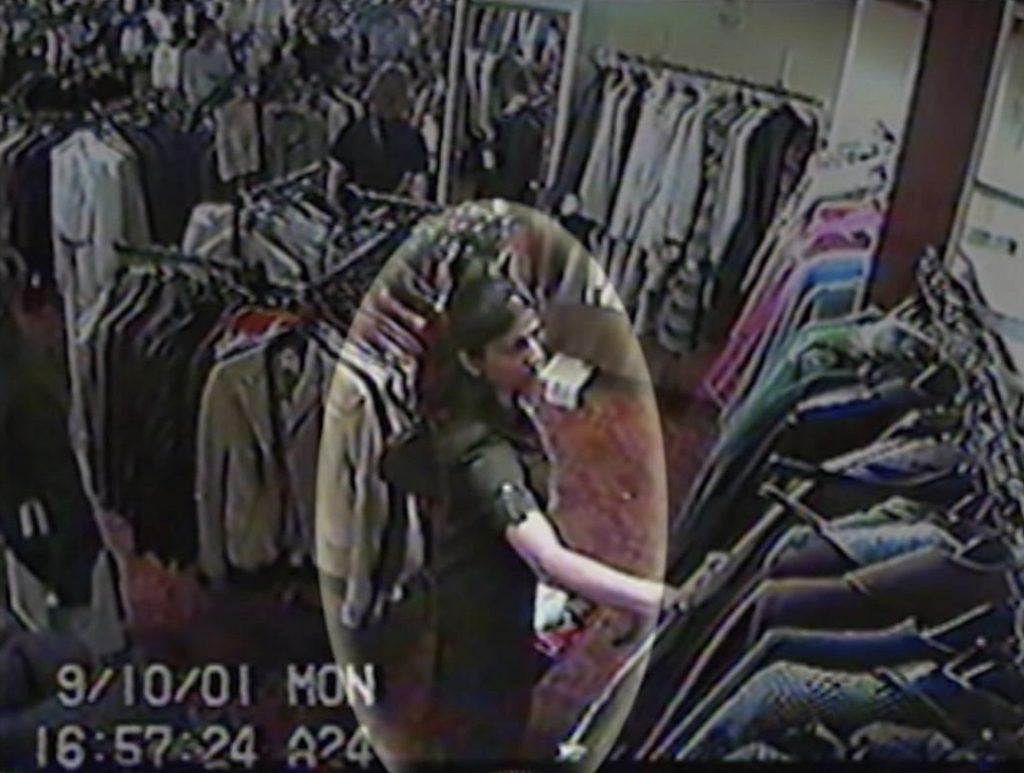
By then, a series of thunderstorms swept through New York City as Hurricane Erin remained several hundred miles offshore. Sneha had left Century 21 carrying two large shopping bags containing more than $500 worth of purchases, but where she went afterwards remains unknown.
That evening, the doorman at Sneha’s apartment building finished his shift at 11 pm without having seen her return.
When Ron arrived home at approximately 11:15 pm, Sneha was still absent. However, he was not immediately concerned. According to Ron, she sometimes spent the night at her cousin’s or brother’s home when he was working late because she disliked being alone in their apartment.
As far as anyone could establish, Sneha never returned home that evening.
And by the following morning, New York City would be devastated by a disaster that would make reconstructing Sneha’s final movements considerably more difficult.
September 11th – Was Sneha Still Alive?
At 4 am on 11th September 2001, a telephone call was made from Sneha and Ron’s apartment landline to Ron’s mobile phone. Ron had no recollection of making the call, although he suggested that he might have briefly woken and dialled his mobile to check his voicemail in case Sneha had left a message.
At approximately 6:30 am, Ron left for work to attend a meeting scheduled for 8 am. Sneha had still not returned, but according to Ron, she would typically arrive home between 7 am and 9 am after spending a night away.
Just over two hours later, at 8:43 am, a security camera recorded a woman resembling Sneha near the elevators in the lobby of their apartment building. The woman remained there for a couple of minutes before appearing to leave the building. Unfortunately, sunlight streaming through the lobby windows created a glare that obscured her features, leaving little more than a silhouette.
Nevertheless, Sneha’s family believed the woman’s appearance and mannerisms were consistent with hers. Her hair and clothing also appeared to match what Sneha had been wearing in the Century 21 footage the previous evening.
There was, however, one notable difference. The woman in the lobby did not appear to be carrying the shopping bags Sneha had taken from the store. Whether the woman was Sneha, and whether she was entering or leaving the building, would become central questions in the investigation.
At 8:46 am, just three minutes after the woman was first captured on camera, American Airlines Flight 11 struck the North Tower of the World Trade Center between floors 93 and 99. Seventeen minutes later, at 9:03 am, United Airlines Flight 175 crashed into the South Tower, striking between floors 77 and 85. At 9:58 am, the South Tower collapsed, followed by the North Tower at 10:28 am.
More than 2,700 people lost their lives at the World Trade Center complex that morning.
Meanwhile, Ron had been attending his meeting at Jacobi Medical Center. When it ended, he noticed colleagues gathered around a television watching the unfolding disaster.
Concerned about Sneha, whom he had not seen since the previous morning, Ron repeatedly tried calling their apartment. There was no answer, and eventually the telephone lines stopped working altogether.
With Lower Manhattan in chaos, public transport suspended, and access to the area severely restricted, getting home proved extraordinarily difficult. Ron eventually managed to secure a lift in an ambulance travelling downtown. It departed at approximately 3 pm, but the journey, which would ordinarily have taken around twenty-five minutes, lasted six hours. He did not reach the area until approximately 9 pm.
Still wearing his medical scrubs, Ron used his credentials to pass through the security perimeter and make his way towards their apartment building. However, the building had been evacuated, and its entrance doors were chained and padlocked. Unable to get inside to look for Sneha, Ron went to Ground Zero, where he volunteered in the relief effort.
At approximately 2 am, he made his way to a friend’s home in the West Village, where he spent the remainder of the night on the couch, still without any news of his wife.
After Sneha’s Disappearance
The following morning, 12th September, Ron returned to the apartment building and was finally able to get inside. But there was still no sign of Sneha.
The surrounding area was devastated. Power had been cut off, debris was scattered everywhere, and a piece of one of the aircraft had even entered a neighbouring apartment.
Although Sneha and Ron’s apartment did not directly face the World Trade Center, dust from the collapsed towers had entered through an open window, covering the interior. According to Ron, the only footprints visible in the dust belonged to their cats. There were no human footprints to suggest Sneha had returned since the towers collapsed.
Her glasses, passport, driving licence, and credit cards were also still inside the apartment.
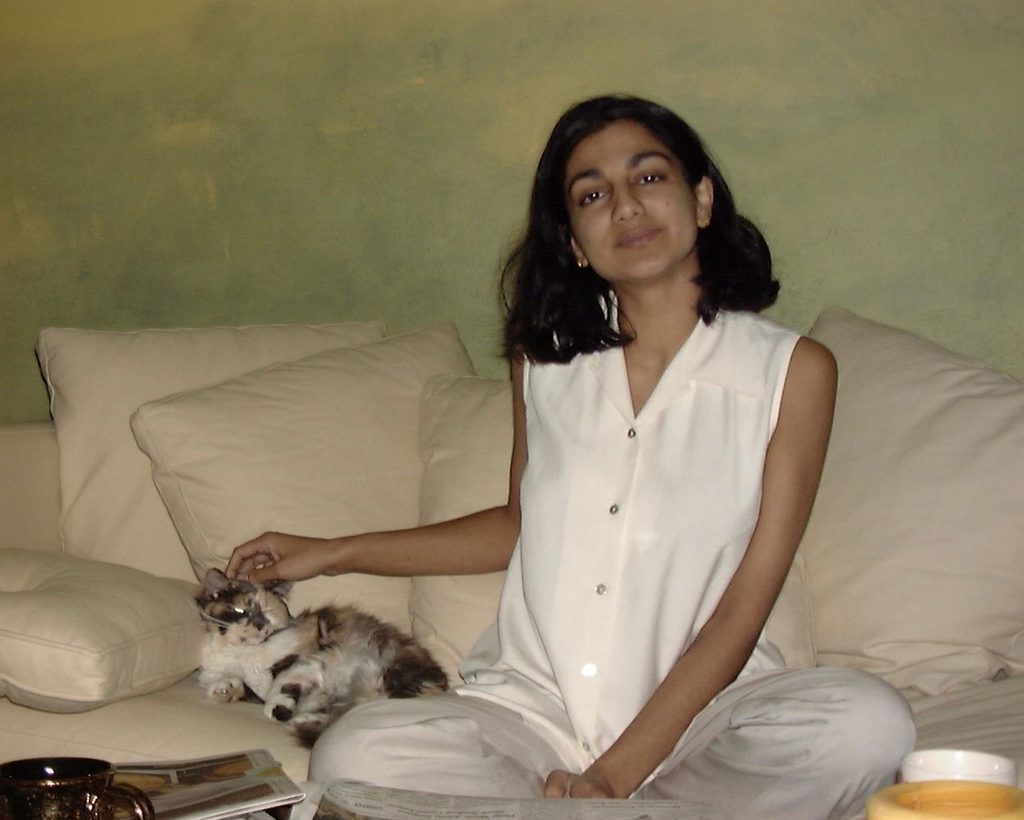
With no way of knowing whether his wife had been caught up in the attacks or had disappeared beforehand, Ron began searching for her.
He walked around Manhattan distributing missing-person flyers and attempted to attract media attention. However, with thousands of people missing or dead following the attacks, reporters were understandably focused on the disaster. The fact that Sneha had last been seen on 10th September, rather than the morning of the attacks, made attracting coverage particularly difficult.
Desperate to generate interest in his sister’s disappearance, Sneha’s brother John eventually told reporters that he had spoken to her during the attacks. He claimed Sneha had told him she was helping injured people and could not leave:
“I was on the phone with her, and she told me she couldn’t leave because people were hurt. She said, ‘I have to help this person,’ and that’s the last thing I heard from her.”
But the conversation had never happened.
John later admitted that he had fabricated the story. In reality, he had not spoken to Sneha for approximately two weeks, but he believed that presenting her as someone who had died helping others was the only way to persuade the media to cover her disappearance.
And his account had the desired effect.
News outlets began reporting that Sneha had died while assisting victims at the World Trade Center, establishing a narrative that would follow her case for years.
Meanwhile, Ron was pursuing another potential lead.
After contacting American Express, he discovered that Sneha had used her credit card at Century 21 on the evening of 10th September. The department store was situated beside the World Trade Center and had been forced to close following the attacks, so Ron distributed flyers at other Century 21 locations in the hope that an employee might recognise her.
Later that week, a shop assistant who had been temporarily transferred to another branch contacted him. She recalled seeing Sneha shopping with another woman, whom she described as being in her early 30s, small, dark-skinned, and possibly of Indian descent.
However, accounts of what the assistant actually witnessed differed.
According to some reports, she had seen Sneha talking to the woman. Others suggested that the two merely appeared to be shopping together, while another version claimed Sneha had explicitly identified the woman as a friend.
Hoping to establish whether Sneha had been accompanied, Ron reviewed the store’s surveillance footage. He found images of Sneha browsing in the coat department, but he could not clearly identify the other woman. Although the footage also showed a woman near Sneha as she left the store, there was nothing to establish that they knew one another.
Nevertheless, the possibility that Sneha had been shopping with someone raised another question. If she had arranged to meet this woman, could they have spent the evening together?
Initially, Sneha’s family had not believed she died in the terrorist attacks. Instead, they feared something might have happened to her after she left Century 21 the previous evening.
Ron filed two missing-person reports, one with detectives at the NYPD’s 1st Precinct and another with authorities investigating those missing following the World Trade Center disaster.
However, the growing assumption that Sneha had died on 11th September made it difficult to establish whether the police were adequately exploring other possibilities.
Concerned that important leads were being overlooked, Ron hired private investigator Ken Gallant to conduct an independent investigation. Gallant interviewed employees at nearby bars and hotels, spoke with Sneha’s friends, family, and colleagues, and arranged for a forensic examination of her computer. He also uncovered the surveillance footage from Sneha and Ron’s apartment building, showing the unidentified woman near the lobby elevators at 8:43 am on 11th September.
Despite his efforts, Gallant found no evidence that Sneha had been leading a double life or had made preparations to disappear voluntarily. As a result, both Gallant and Ron came to believe that the woman in the lobby footage could have been Sneha. If she had been at the apartment building shortly before the first plane struck, they reasoned, she might have gone towards the World Trade Center to help the injured. It was a possibility that offered an explanation for her disappearance, but there was still no definitive evidence placing Sneha at the scene of the attacks.
And while Ron and Sneha’s family were increasingly considering that explanation, the NYPD’s investigation was beginning to paint a very different picture.
Investigators examined Sneha’s life in the months leading up to her disappearance and uncovered a series of professional and personal difficulties that, in their view, suggested she might have disappeared voluntarily or met with harm before 11th September.
These included the loss of her position at Cabrini Medical Center, concerns about her alcohol consumption, the criminal charges she was facing, and allegations of marital problems.
Detectives also investigated reports that Sneha had been spending nights away from home, visiting gay and lesbian bars, and possibly having sexual relationships with women. They documented the alleged incident involving her brother’s girlfriend, along with the reported argument between Sneha and Ron outside the courthouse on 10th September.
However, Sneha’s husband and family strongly disputed much of what the police had uncovered.
They maintained that Sneha had not lost her position at Cabrini because of alcoholism or poor performance, but because she had complained about racial and sexual discrimination at the hospital. According to the family, Sneha had been a whistleblower whose complaints had made her unpopular with colleagues and administrators.
Cabrini denied that Sneha had made any formal complaints of discrimination, and some of her former colleagues also challenged the family’s account.
Ron acknowledged that Sneha had been drinking, but described it as a temporary way of coping with depression and the difficulties she was experiencing. He believed that once her circumstances improved, her drinking would stop.
He also rejected suggestions that Sneha was bisexual or had been engaging in sexual relationships with women she met at bars. According to Ron, Sneha had begun frequenting lesbian establishments after the alleged incident involving her former colleague because she felt safer in places where men were less likely to approach her.
Although she sometimes spent the night with women she met there, Ron maintained that these encounters were not sexual. Instead, he said Sneha would listen to music, work on art projects, or simply stay overnight. He recalled one occasion when Sneha returned home covered in paint after spending time with an artist she had met at a bar.
Ron also denied that he and Sneha had argued outside the courthouse on 10th September. He accused the police of fabricating details about their marriage to justify what he believed had been an inadequate investigation.
Sneha’s brother John was equally adamant that the allegation involving his former girlfriend was untrue. He claimed the incident had been entirely fabricated and said he had never even spoken to Detective Richard Stark, who had documented it.
The conflicting accounts left investigators with two very different portrayals of Sneha’s life.
One was of a woman struggling with her career, marriage, and personal circumstances, who might have had reasons to leave her life behind. The other was of a woman experiencing a difficult period but who remained close to her family and had no intention of disappearing.
And despite the extensive investigation, neither account established what had happened to her after she left Century 21.
Sneha’s family continued to believe that her medical training and instinct to help others would have drawn her towards the World Trade Center when the attacks began. Her mother’s account of Sneha’s intention to visit Windows on the World also raised the possibility that she had been at the complex that morning for an entirely different reason. Yet investigators found no confirmed evidence placing Sneha at the World Trade Center on 11th September.
Interestingly, Detective Stark, who had documented many of the allegations concerning Sneha’s personal life, later testified that he nevertheless believed she had probably died in the attacks.
However, the NYPD’s overall findings cast sufficient doubt on the circumstances of her disappearance that, in January 2004, the New York City Medical Examiner’s Office removed Sneha’s name from the official list of 9/11 victims.
For Ron and Sneha’s family, the decision was another setback in their efforts to establish what had happened to her.
In 2006, Judge Renee Roth considered the evidence surrounding Sneha’s disappearance and ruled that it could not be established that she had died on 11th September 2001. Instead, under New York State law, the judge set Sneha’s legal date of death as 10th September 2004, three years after her disappearance.
The ruling also affected Ron’s claim to the September 11th Victim Compensation Fund, which had been estimated at between $3 million and $4 million. Without a death certificate establishing that Sneha had died at the World Trade Center, his claim was denied.
However, Ron appealed the court’s decision.
On 31st January 2008, a panel of five appellate judges voted three to two to overturn the earlier ruling. The majority concluded that, given Sneha’s proximity to the World Trade Center and the circumstances of her disappearance, the most likely explanation was that she had died in the attacks, possibly after going to assist those who had been injured.
As a result, Sneha was legally recognised as the 2,751st victim of the World Trade Center attacks. Her name was subsequently included on the National September 11 Memorial, where she is commemorated on Panel S-66 of the South Pool.
However, the ruling came too late for Ron to receive compensation from the original victims’ fund, which had closed in 2003.
Although the courts had established Sneha’s legal status, they had not determined precisely where she had been on the morning of 11th September, or what had happened to her after leaving Century 21 the previous evening.
And those unanswered questions have continued to fuel several competing theories about her disappearance.
Theory One: Sneha Died at the World Trade Center
The first theory, and the one ultimately accepted by the courts, is that Sneha died during the terrorist attacks on the World Trade Center.
Much of this theory rests on the unidentified woman captured by the security camera in Sneha’s apartment building at 8:43 am on 11th September, just three minutes before the first plane struck the North Tower. If the woman was Sneha, it would establish that she was alive that morning and place her just a few blocks from the World Trade Center. As a trained doctor, Sneha may have felt compelled to help when she realised what was happening. Her family certainly believed that she would have responded to the emergency rather than simply leaving the area.
However, there are several difficulties with this explanation.
In an interview with podcaster Jon Walczak, one of Sneha’s former Cabrini colleagues questioned whether Sneha had genuinely wanted to pursue a career in medicine. Given her professional difficulties, the colleague doubted that she would necessarily have rushed towards the disaster to help.
Of course, dissatisfaction with a medical career does not mean someone would be unwilling to assist injured people, particularly during an emergency of that magnitude.
A more significant question is whether Sneha could have entered either tower after the attacks began. Emergency services were attempting to evacuate the buildings and surrounding area, and anyone arriving to offer medical assistance might have been directed towards a treatment or triage area rather than permitted to enter the towers. Furthermore, there is no confirmed witness account, photograph, or other evidence placing Sneha among those assisting at the scene.
If Sneha had been helping injured people outside the buildings, she could have been killed by falling debris or caught in one of the collapses. However, this raises another question: why were her remains never identified? Although many victims of the attacks have never been identified, it could be argued that someone working at ground level would have had a greater opportunity to escape than those trapped on the upper floors. Indeed, approximately 99% of those below the impact zones survived, although that figure does not tell us how likely it was that someone caught in the collapses at ground level would have been recovered. Nevertheless, the absence of identified remains raises another unanswered question in this theory.
Another possibility is that Sneha was already at the World Trade Center when the attacks began.
During her instant-message conversation with her mother on 10th September, Sneha had mentioned wanting to visit Windows on the World, the restaurant at the top of the North Tower, where a friend was due to marry the following spring. If Sneha had decided to visit the venue the next morning, she might have been inside the North Tower when the first plane struck.
However, there is no evidence that she arranged such a visit for 11th September, and questions have been raised about whether the restaurant would have been accessible to someone simply wishing to look around. Even if Windows on the World itself was closed to visitors, Sneha might have intended to visit another part of the building, although this remains speculation.
Had she been on one of the upper floors, particularly above the impact zone, the likelihood of her escaping would have been extremely low. Many victims who died in the towers have never been individually identified, meaning the absence of identified remains does not necessarily exclude Sneha from being among them.
Ultimately, the World Trade Center theory offers a plausible explanation for her disappearance, particularly if the woman in the lobby footage was Sneha. But that identification has never been confirmed, and there is no independent evidence placing her inside the towers or among those responding to the disaster.
The court’s ruling established that her death in the attacks was the most likely explanation, not that her final movements had been conclusively reconstructed.
Theory Two: Sneha Met with Foul Play
One of the central mysteries surrounding Sneha’s disappearance is where she went after leaving Century 21 on the evening of 10th September. With no confirmed sightings or communication after approximately 7:30 pm, it is possible that she encountered someone who subsequently harmed her. Sneha was known to spend time with people she had only recently met, sometimes staying overnight at their homes, which could have placed her in an unfamiliar or potentially vulnerable situation.
Although a random attack cannot be ruled out, another possibility is that Sneha encountered someone she already knew. Several people in her life have been the subject of speculation over the years, largely because of conflicting accounts, strained relationships, or circumstances that have never been fully explained. None of these possibilities establishes wrongdoing, but they raise questions worth examining.
One person whose name has featured in speculation is the doctor Sneha had accused of sexually assaulting her. The resulting dispute had led to criminal charges against Sneha, and she had appeared in court on the morning of her disappearance. Could she have confronted him again, perhaps leading to an argument that escalated? There is no evidence that such a meeting occurred, but the unresolved hostility surrounding the allegations has prompted questions about whether the dispute could have played a role.
Sneha’s brother John has also attracted speculation, particularly because he admitted fabricating the story about speaking to her during the attacks. He had also reportedly given conflicting accounts of when he last saw her, and the two were said not to have been on speaking terms when she disappeared. Given that John lived only minutes from Century 21, it is possible Sneha could have visited him after shopping. However, there is no evidence that she did so, and his decision to lie to the media, which he explained as an attempt to generate publicity, does not in itself suggest involvement in her disappearance.
There are also questions surrounding Ron’s account of his wife’s final hours. He maintained that Sneha had not returned home when he arrived on the evening of 10th September, nor was she there when he left for work the following morning. Yet the unexplained telephone call from their apartment landline to his mobile at 4 am remains curious, particularly because Ron could not recall making it. His account of finding only the cats’ footprints in the dust after the towers collapsed also relies on his recollection, although there is no evidence that his description was inaccurate.
Some have speculated that tensions within the marriage could have contributed to Sneha’s disappearance. Investigators reported that the couple had argued outside the courthouse on 10th September, although Ron denied this, and Sneha’s attorney could not recall such a confrontation. It is possible that disagreements about Sneha’s nights away from home and her professional difficulties had placed additional strain on their relationship. However, there is no evidence that an argument escalated into violence, and speculation about marital problems is not proof of a crime.
Another complication comes from Detective Richard Stark’s interpretation of the apartment building’s surveillance footage. During an interview with Jon Walczak for the Missing on 9/11 podcast, Stark reportedly stated that the footage showed Sneha leaving the building on the morning of 11th September after having spent the night in the apartment. This differs from the more familiar interpretation that the woman was returning after a night away. If Stark’s interpretation was correct, it would raise questions about Ron’s statement that Sneha had not been home that morning. However, the woman’s identity was never conclusively established, and the footage alone cannot determine where she had spent the previous night.
Indeed, the lobby footage presents one of the greatest obstacles to the theory that Sneha was murdered on 10th September. If the woman recorded at 8:43 am was Sneha, then she was still alive the following morning, making an earlier murder impossible. Conversely, if the woman was someone else, the footage tells us nothing about Sneha’s whereabouts after leaving Century 21.
Ultimately, the NYPD investigated Ron and did not consider him a suspect. His efforts to find Sneha, including hiring a private investigator and pursuing leads independently, are also difficult to reconcile with the suggestion that he was attempting to conceal her disappearance, although such behaviour cannot conclusively establish innocence. Likewise, inconsistencies in the accounts given by family members and witnesses may reflect imperfect memories, emotional distress, or attempts to protect Sneha’s reputation rather than deliberate deception.
Nevertheless, questions remain about the thoroughness of the original investigation. For example, Ron’s computer was reportedly seized by police but returned without being examined, although the private investigator later arranged a forensic examination of Sneha’s computer. With the NYPD overwhelmed by the unprecedented disaster and thousands of missing-person reports, it is reasonable to question whether Sneha’s disappearance received the same scrutiny it might have under ordinary circumstances.
Then there is the unidentified woman seen near Sneha at Century 21. If the shop assistant’s recollection was accurate and the two women were together, their relationship could be significant. Perhaps they had arranged to meet, or perhaps Sneha encountered someone she already knew while shopping. The latter possibility might explain why investigators found no evidence of a planned meeting or previous communication.
But if the woman did know Sneha, why has she never publicly come forward? One possibility is that she was involved in whatever happened to Sneha, although there is no evidence to support that suggestion. Alternatively, she may have been someone with whom Sneha was having a private relationship and did not want that relationship exposed. She might have wished to protect her own privacy or Sneha’s reputation, or she may have helped Sneha disappear voluntarily. It is even possible that the woman herself died in the World Trade Center attacks the following morning.
Of course, all these possibilities depend on the assumption that the women knew each other, something the surveillance footage has never established. The unidentified woman may simply have been another customer who happened to be shopping nearby, in which case her failure to come forward would have no particular significance.
Finally, there is the absence of Sneha’s body. If she was murdered on 10th September, her killer would have needed to conceal her remains, and the destruction caused by the attacks the following morning could potentially have complicated efforts to find them. However, there is no evidence that anyone used the disaster to dispose of her body, nor can we assume that remains concealed elsewhere would necessarily have been discovered.
The possibility that Sneha met with foul play therefore cannot be excluded, but it remains unsupported by direct evidence. What makes the theory difficult to dismiss entirely is that her disappearance began before the attacks, and the unprecedented events of the following morning may have destroyed evidence or prevented investigators from reconstructing what happened during those missing hours.
Theory Three: Sneha Took Her Own Life
Another possibility is that Sneha died by suicide, either on the evening of 10th September or during the chaos of the attacks the following morning.
In the months leading up to her disappearance, Sneha had experienced several significant setbacks. Her once-promising medical career was in jeopardy, and some of her former colleagues questioned whether she had ever truly wanted to become a doctor. She was also facing criminal charges arising from the incident with her former colleague, while allegations about her personal life and marriage suggested that she was struggling with difficulties beyond her professional career.
Sneha was reportedly experiencing depression and drinking heavily, while her frequent nights away from home raised further concerns about her wellbeing. Ron was sufficiently worried about her mental health that, during his search, he contacted psychiatric hospitals in case she had been admitted to one. Taken together, these circumstances suggest that Sneha was going through an exceptionally difficult period, although there is no evidence that she had expressed an intention to end her life.
Could the prospect of a criminal conviction, combined with her professional and personal difficulties, have led Sneha to take her own life after leaving Century 21 on 10th September? If so, the absence of her remains presents a significant unanswered question. There is also the fact that she had spent the evening shopping, purchasing clothing, shoes, and household items, which might suggest she was continuing with her ordinary plans. However, such behaviour does not necessarily exclude the possibility of suicide, as a person’s intentions cannot reliably be determined from their purchases.
Alternatively, if Sneha was still alive on the morning of 11th September, could the attacks have presented an opportunity for her to end her life by deliberately entering one of the towers or remaining in a dangerous area? This possibility has been raised in speculation about her disappearance, but there is no evidence that she deliberately placed herself in danger or intended to die that morning.
Ultimately, although Sneha was experiencing difficulties that may have affected her mental health, those circumstances alone cannot establish suicidal intent. Without evidence of her final movements, a farewell message, or identified remains, suicide remains a possibility rather than an explanation supported by any direct evidence.
Theory Four: Sneha Started a New Life
The final theory is that Sneha deliberately disappeared, leaving behind her marriage, medical career, and family to begin a new life elsewhere.
In the months leading up to her disappearance, Sneha had experienced considerable professional and personal difficulties. Her medical career was in jeopardy, she was facing criminal charges, and there were questions about her marriage and the nights she spent away from home. Some of her former colleagues had also questioned her commitment to medicine, raising the possibility that she was pursuing a career she no longer wanted. Given her longstanding passion for painting, could Sneha have felt trapped by the expectations surrounding her and wanted to pursue a different life?
During an interview with podcaster Jon Walczak, one of Sneha’s former Cabrini colleagues alleged that Sneha had behaved in a sexually inappropriate manner towards her, her husband, and other colleagues. The doctor also expressed doubts about Sneha’s allegation of sexual assault against another colleague, believing it had been fabricated. Although these were the recollections and opinions of one individual rather than established findings, they added another perspective to the accounts of Sneha’s behaviour before her disappearance.
If Sneha was having relationships with women, as investigators suspected, it is possible that she was keeping aspects of her personal life hidden from Ron and her family. Her overnight stays with people she met at bars may have involved more than the art projects, music, and conversation Ron described. Alternatively, his explanation may have been entirely accurate. Either way, the possibility that Sneha had a private life unknown to those closest to her has contributed to speculation that she might have wanted to escape the circumstances in which she found herself.
According to this theory, Sneha may have disappeared voluntarily on 10th September, or she could have survived until the following morning and recognised that the attacks offered an extraordinary opportunity to vanish without being pursued. With thousands of people missing, widespread destruction, and authorities overwhelmed by the disaster, it might have been possible for someone to leave New York and begin again under a different identity.
However, there are significant problems with this explanation. Sneha left behind her passport, driving licence, glasses, and credit cards, and investigators found no evidence on her computer that she had been planning to disappear. Her American Express account remained open because Ron hoped that any subsequent activity might provide a lead, but the card was never used again. There was also no indication that Sneha had withdrawn money, arranged accommodation elsewhere, or taken any other steps normally associated with establishing a new identity.
Those who knew Sneha also emphasised her close relationship with her family, particularly her mother, and struggled to believe she would willingly abandon them. Yet people do sometimes leave behind those they love, whether because they feel unable to continue with their existing lives or because they believe they have no other way forward. And even if someone initially intends to return, the fear of explaining their disappearance after months or years might make doing so increasingly difficult.
Then, in 2005, something appeared that gave this theory an entirely new dimension.
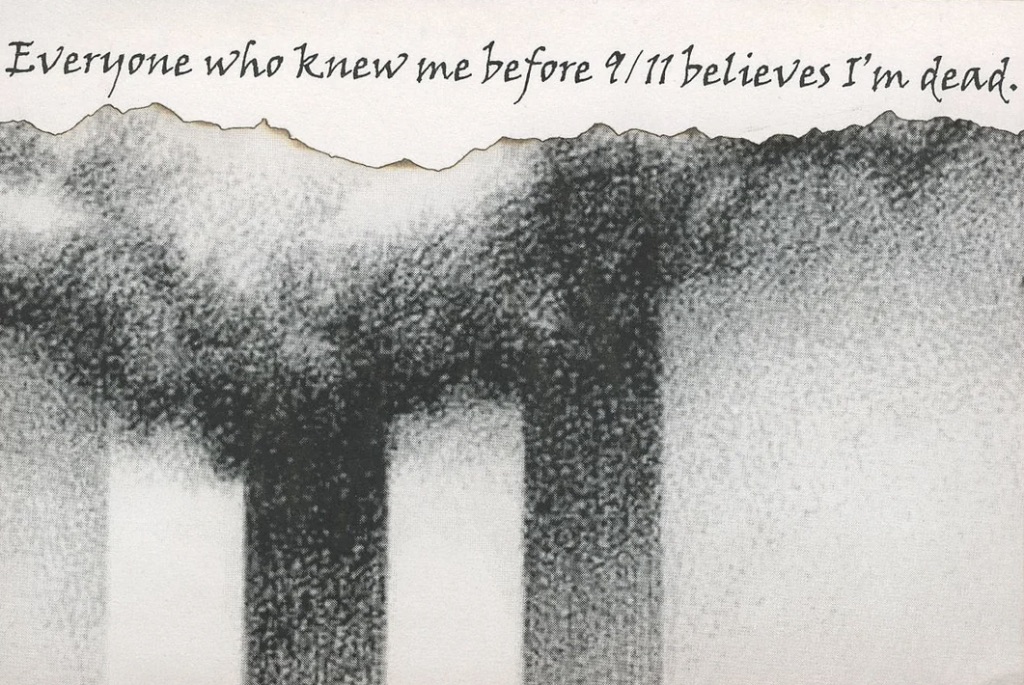
An anonymous, hand-drawn postcard was submitted to PostSecret, a project that invited people to share secrets they had never revealed to anyone. The card depicted the Twin Towers with smoke billowing from them, accompanied by a short message:
Everyone who knew me before 9/11 believes I’m dead.
The identity of the person who created the postcard has never been established, and there is no evidence connecting it to Sneha. It could have been a hoax, a fictional confession, or a genuine message from someone who had used the attacks to disappear.
But the possibility that Sneha was responsible has inevitably attracted attention. She was a talented artist who had once taken a year away from medical school to travel around Italy and devote herself to painting. Could the postcard have been her way of revealing that she had survived, without exposing her new identity?
Or was it simply an anonymous message that happened to bear an extraordinary resemblance to one of the most enduring mysteries of September 11th?
Aftermath
More than twenty-five years after Sneha Anne Philip disappeared, the precise circumstances of her death remain unknown. Although she has been legally recognised as a victim of the September 11th attacks, no remains have been positively identified as hers, and there is still no conclusive evidence establishing where she was after leaving Century 21 on the evening of 10th September 2001.
One possibility of finally establishing her fate lies in the jewellery she was wearing when she disappeared. This included her diamond-studded wedding band, diamond engagement ring, diamond earrings, and the gold minnu necklace given to her by her mother and placed around her neck by Ron during their wedding ceremony.
Her family has hoped that some of these items might eventually be recovered from the World Trade Center debris. Diamonds can survive extremely high temperatures under certain conditions, and photographs of Sneha’s jewellery were provided to the authorities in the hope that any recovered pieces could be identified. However, no confirmed match has been reported.
In the years following Sneha’s disappearance, Ron remained close to her family. With their encouragement, he remarried in 2010 and continued his career in emergency medicine in California.
For Sneha’s loved ones, the court’s decision provided official recognition that she had died in the attacks, but it could not answer the questions surrounding her final hours. Her family’s determination to preserve the image of Sneha as a doctor who died helping others is understandable, particularly given the circumstances. Yet the competing accounts of her life and the uncertainty surrounding her movements mean that other explanations cannot be entirely dismissed.
And whether or not the towers killed her, their collapse may have erased the evidence needed to understand her fate.
Information
Sneha was last seen wearing a brown, button-down shirt dress and brown sandals. If you have any information about Sneha Philip’s disappearance or her whereabouts on 10th or 11th September 2001, please contact the New York City Police Department at 212-334-0635.
Sources & Further Reading
ABC7 New York | Missing’: The Mystery of Dr. Sneha Anne Philip – The Woman Who Disappeared Night Before 9/11
AccuWeather | Haunting Short Film That Captured Extreme Weather Also Chronicled World Trade Center’s Final Hours
New York Magazine | Last Seen on September 10th
Voices Center | 9/11 Living Memorial: Dr. Sneha Anne Philip.
Court Documents:
In the Matter of a Judicial Declaration of Death of Sneha Anne Philip. Ronald Lieberman, Appellant. New York State Unified Court System. Saxe, D. (January 31, 2008)
Audio & Visual Media:
iHeart. Missing on 9/11 Podcast. Jon Walczak. 2021
Unsolved Mysteries. Season 12, Episode 3. 2001