
When we think about the safety of our homes, we often focus on locking the front door, installing security cameras, or keeping an eye out for strangers in the neighbourhood. We don’t typically worry about the people we willingly invite inside, nor do we expect a licensed professional hired to improve our living space to bring danger across the threshold.
But in the autumn of 2019, in the quiet community of Fleming Island, Florida, a disagreement over a home renovation took a devastating turn.
This is the story of Susan Mauldin, a woman who refused to back down when she believed a contractor was taking advantage of her. She stood her ground, and ultimately, she paid for it with her life.
Introducing Susan
Susan Elizabeth Mauldin was a 65-year-old British native who had immigrated to the United States decades earlier and built a fulfilling life for herself in Fleming Island. Following her husband’s passing in 2006, Susan lived on her own. Though she didn’t have any children and she had no family locally, she was far from isolated. Susan was fiercely independent, deeply social, and kept her calendar constantly full.

She had a wide network of friends and threw herself into her hobbies, whether tending to her beloved garden or meeting with her weekly knitting circle. She was also an active member of the local British club, a unique group originally founded after the Second World War for British women who had moved to the United States after marrying American servicemen.
For Susan, her house on Harbor Town Drive was not just a place to live; it was her sanctuary, and she took immense pride in it. Above all, she loved using her home to entertain her tight-knit circle of friends. When she decided in 2018 that it was finally time to update her guest bathroom, the project was less about routine maintenance and more about making her home welcoming for her guests.
To ensure the job was done properly, she hired 44-year-old local contractor Corey Binderim.
The Illusion of Professionalism
On paper, Binderim seemed a reliable choice. She believed he was a licensed contractor operating a local business and had already earned Susan’s trust through previous work on her kitchen. Given his past professionalism, she did not hesitate to hire him again for the bathroom project, making multiple payments totalling $12,000 to cover the work.
In early 2019, Binderim arrived at Susan’s house and completed the initial demolition. He tore out the old tiling, the flooring, and the walls, leaving behind a gutted shell of a room. And then, the progress stopped. Binderim stopped showing up, leaving the space completely unusable.

Susan was desperate for the work to be completed, but her calls and texts were met with countless excuses. Binderim cited family emergencies or picking his children up from school. On other occasions, he claimed there were shipping delays with materials, that his equipment had been stolen, or that he had fallen from his truck and required an MRI.
But Susan was meticulously organised, and each time Binderim offered a new justification for the delay, she carefully noted the details of the conversation. For eight months, she put up with his explanations and lived with a ruined bathroom, but as the excuses accumulated, so did the realisation that she was being scammed.
The Ultimatum
It wasn’t just the unfinished work that troubled Susan. She also felt intimidated by Binderim. She confessed to a close friend, Phyllis Yates, that she felt uncomfortable being alone with him, recalling an unsettling incident where he had turned up at her home and made inappropriate compliments about her appearance. This alone was enough to make her feel uncomfortable; however, she quickly realised the interaction was loaded with an ulterior motive when he subsequently asked her for a personal loan. Susan flatly refused. Having already paid a substantial deposit for a bathroom that remained unfinished, she had no intention of handing over further funds.
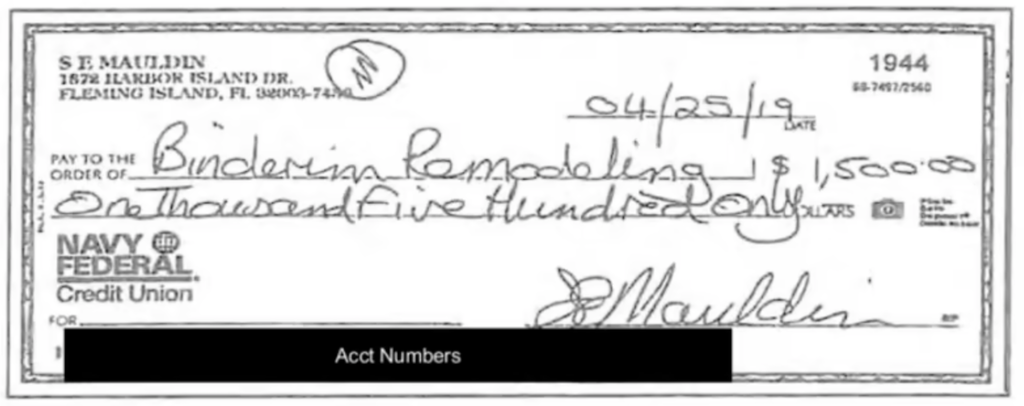
By late October, Susan decided she would no longer be taken advantage of. At around 7:30 am on Wednesday, 23rd October 2019, Binderim telephoned Susan to say he was delayed in court and could not make their scheduled meeting. It proved to be the final straw. Susan formally confronted him, demanded the return of her $12,000, and issued a strict ultimatum: if he didn’t show up with her money that day, she was going to hire a lawyer and report him to the police for fraud.
Upon receiving Susan’s ultimatum, Binderim knew she wasn’t messing around and intended to follow through on her threat. An investigation by the authorities was the last thing he wanted, but he didn’t have the cash to pay her. Scrambling to buy himself time, he promised to hand-deliver a refund cheque to her home first thing the following morning.
When Susan went to bed that Wednesday night, she was hopeful that the next day, her dishonest contractor would finally pay his debts, and she could move on with her life. She had no idea that Binderim never intended to hand over a cheque, but was already planning her murder.
Behind Corey Binderim’s Facade
To the outside world, Corey Binderim seemed like an ordinary family man. He was a long‑time Clay County resident who lived in an affluent neighbourhood with his wife, Cassidy, and their two daughters. But behind that respectable exterior, Binderim’s life was falling apart. He was struggling with a costly cocaine addiction, drowning in debt, and his contracting business was running out of money.

Other clients were already suing him for taking their cash and abandoning unfinished jobs. To keep those angry clients from going to the police, Binderim would take large deposits up front from new clients and immediately use the money to either pay off older clients who were threatening him or to fund his drug habit. The $12,000 Susan had handed over hadn’t gone towards tiles, fixtures, or plumbing supplies — it had been swallowed up instantly by his debts and substance abuse issues.
Susan’s ultimatum posed a serious threat to Binderim. A police investigation into his business would expose his drug use, empty accounts, and fraudulent practices. It would mean the end of his reputation, his career, and likely prison time.
Even worse, the exposure would destroy his family life. A decade earlier, his wife had discovered his drug use and given him a strict choice: get treatment and stay clean, or she would leave him and take their daughters. For ten years, she believed he had stayed sober, unaware he was using cocaine again. He could not risk her finding out the truth now.
Desperate to stop his life from unravelling, Binderim began taking the first steps of a dark, premeditated plan to make his problem disappear forever.
Susan Disappears
On Thursday 24th October, Phyllis tried calling Susan several times, but every call went straight to voicemail. It was completely out of character for Susan to ignore her friend’s calls. However, since they had met the previous day for their usual lunchtime catch-up, Phyllis knew Susan was expecting Binderim to return her money that morning, and assumed Susan might simply be busy searching for a new contractor to finish her bathroom.
However, by the next day, Friday 25th October, Phyllis was becoming increasingly worried about the lack of contact. At around 11:00 am, she drove to Susan’s house to check on her. From the outside, everything appeared normal. Pumpkins sat on the porch ready for Halloween, and Susan’s car was parked in the garage. But when Phyllis knocked loudly on the front door, there was no answer. She walked around to the back of the house, hoping to find some sign of her friend, but there was nothing. Phyllis needed to get back to work, so she called her husband, Dan, and told him that something didn’t feel right.
Later that afternoon, Dan drove to the house with the spare key Susan had given them for emergencies. As he approached the front door, he noticed a couple of business cards wedged into the gap of the door, untouched. He put the key in the lock, but the door only opened a couple of inches — the security chain was fastened on the inside. Dan had to reach his arm through the narrow gap to slide the chain off before he could step inside.
Once inside, he heard the television playing in the next room. Susan never left her TV on when she went out. He also noticed a light on in the kitchen — one she never used, and certainly not in the middle of the afternoon.
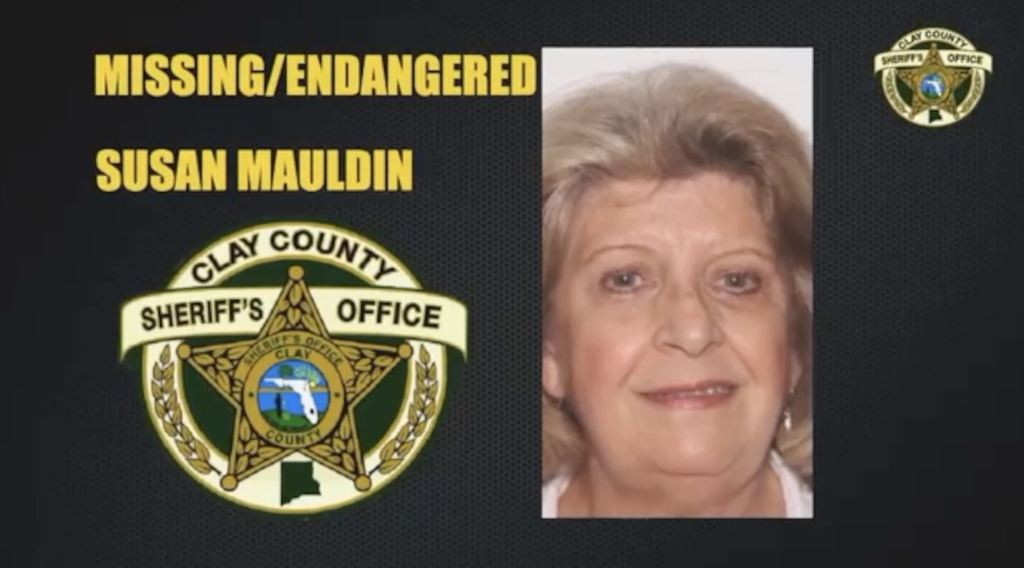
As Dan walked through the house, he called out Susan’s name repeatedly, but there was no response. Seeing her car still in the garage, he knew something was terribly wrong and phoned the Clay County Sheriff’s Office to report her missing.
When officers arrived, it wasn’t immediately clear whether a crime had taken place. There were no signs of forced entry, suggesting Susan had opened the door to someone she knew. But as they looked closer at the normally spotless house, small red flags appeared. In the hallway, a picture frame hung crookedly, and decorative figurines were knocked out of place. In the main bedroom, Susan’s normally neat bed was unmade, a rug was shifted out of position, and her trainers were sitting on the floor. In the bathroom, a damp cloth sat in a sink partially filled with water.
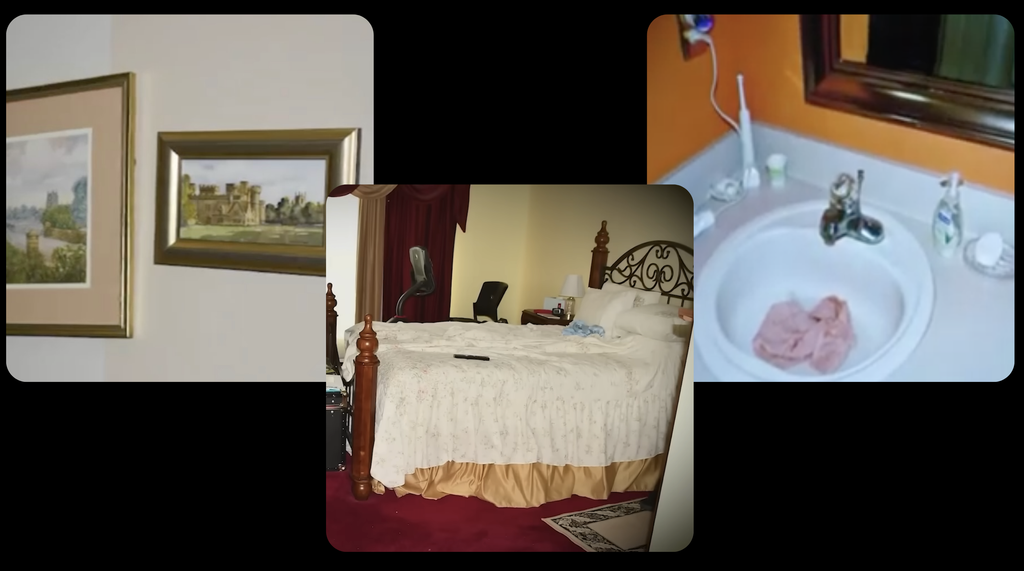
Susan’s laptop and mobile phone initially appeared to be missing. But the most revealing detail was found in her home office: inside her meticulously organised filing cabinet, the contents of a red folder labelled Binderim Remodeling were gone.
When Susan missed a doctor’s appointment scheduled for that day, officers checked her routine and discovered she had missed other commitments as well. Over the following days, there was no activity on her credit cards, no response to calls or texts, and no contact with her closest friends. Police checked whether she might have flown back to England, but passport records showed no international travel. Besides, her friends insisted she would never have gone anywhere without telling them first.
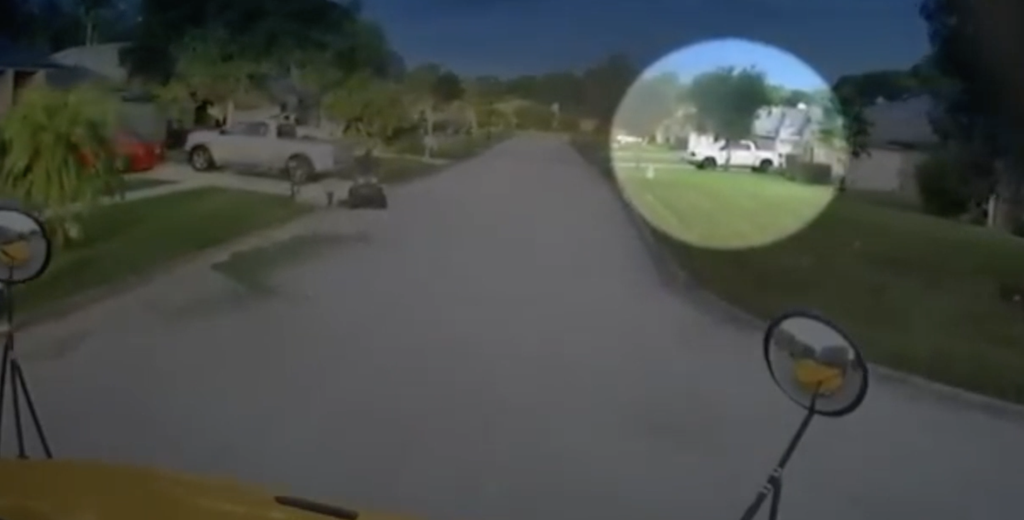
But the most crucial detail they provided was the intense dispute she had been having with her contractor. Within days, police pulled footage from neighbouring Ring doorbells and school bus cameras that drove down Susan’s street. When they saw a white pickup truck backed up to Susan’s garage on the morning she disappeared, their suspicions immediately turned to Corey Binderim.
Shattering the Contractor’s Alibi
When officers first contacted Binderim, he acted like a cooperative, innocent businessman. He painted Susan as a difficult client, claiming the bathroom project was delayed because she was indecisive and constantly changed her mind about tiles and fixtures. Ultimately, he thought it was just easier to refund her and for them to go their separate ways.
He said he had gone to her house at 8:00 am on the morning of 24th October simply to wrap up paperwork, end their contract, and hand over a refund cheque. He even showed investigators a carbon copy of a cheque for $1,200, claiming that was all she had paid him. He insisted he just collected his remaining tools and left Susan alive and well.
It seemed like a simple, clean alibi, but investigators were deeply suspicious, especially when they pulled his financial records and discovered that Binderim’s business accounts were practically empty. He had absolutely no way of covering a $1,200 payment. The cheque he claimed to have given Susan was entirely worthless. It was a mere stall tactic and made no logical sense if he was genuinely trying to resolve the dispute.
On 28th October, forensic teams returned to conduct a detailed search of Susan’s home. When an officer noticed a tiny drop of blood on the floor, they sprayed the area with luminol. The chemical reaction was immediate, revealing blood spatter on a living room lampshade, spots of blood on the floor in the living room and garage, and evidence of a clean-up near the kitchen sink. It was obvious a struggle had taken place. Someone had bled inside Susan’s home – and somebody had tried to clean it up.
As investigators scrutinised Binderim’s account, it quickly became clear that his story didn’t add up.
A warrant for his phone records revealed he had deleted all calls and texts between himself and Susan around the time she disappeared.
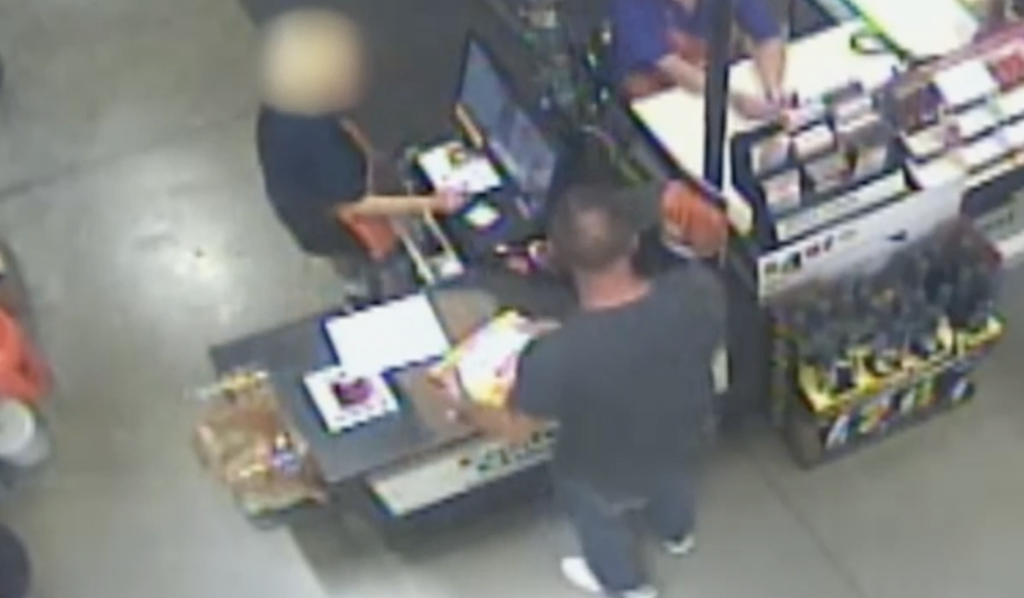
Furthermore, phone data also revealed he had completely omitted crucial timeline details about his whereabouts on the 24th. Cellular tower pings placed his truck at a local Home Depot at 7:00 am. Investigators obtained CCTV footage from the store which showed Binderim buying two 60-pound bags of concrete mix and a roll of heavy-duty demolition sacks before he had even arrived at Susan’s house.
Additionally, phone records revealed he had the Life360 location tracking app installed on his mobile phone. Because of his past drug issues, Binderim had agreed with his wife, Cassidy, to keep the tracking app turned on at all times so she could monitor his whereabouts. However, investigators noticed he had manually turned the app off for about an hour starting at 8:45 am on the morning of Susan’s disappearance. Cell tower activity showed that during this exact blackout period, Binderim visited the local solid waste facility and spent several minutes dumping ‘something’ at the site.
Detectives then searched his unit at the SecurCare Storage Facility in Eagle Harbor, where CCTV showed him unloading items at 9:50 am. A cadaver dog brought to the unit gave a positive alert for human decomposition on the tool bag Binderim had taken from Susan’s home.
With evidence Binderim had something to hide, detectives headed to his home with a warrant to seize his truck. As they chatted to Binderim, they noticed he had a fresh scratch on his arm. Binderim claimed it was from working in construction, but detectives documented its significance anyway.
Throughout the interview, Binderim insisted he was innocent and claimed the police were picking on him because of his criminal record. When Binderim was 17 years old, he had taken part in an armed robbery involving a shooting, which led to a conviction for aggravated battery with a firearm and a prison sentence with a minimum term of three years. He argued that, because of this, detectives had developed tunnel vision and were targeting him simply because of his past. However, their vision was not as impaired as Binderim suggested because shortly after forensic teams seized his truck, Binderim went on the run.
On the Run
Just four days after his truck was seized, Binderim’s wife contacted the police to report that she didn’t know where he was and that he wasn’t answering her calls. Binderim knew investigators weren’t buying his story and could feel the net tightening. Instead of facing the consequences, he chose to run.
Desperate for money to flee the state, Binderim stole a $5,000 cheque from a client in Jacksonville, threw away his mobile phone, bought a burner, and left Florida. He showed a complete lack of remorse — not only for his clients, but for his family. Binderim put himself first, driving thousands of miles across the country and fleeing to Colorado.
His wife cooperated fully with police and passed along the burner phone numbers he was using. As wanted posters went up and the pressure increased, Binderim eventually turned himself in. On 3rd December 2019, he was arrested and held in Duval County Jail on unrelated theft and fraud charges, continuing to deny any involvement in Susan’s disappearance.
Finding Susan
With Binderim behind bars on fraud charges, police continued investigating Susan’s disappearance and building a case for murder. But if they were going to keep him there, they needed to charge him. There was just one major problem: they still didn’t have a body.
During an interview with Binderim’s co‑worker, Leigh Locklear, officers learned that he had been acting erratically and using cocaine again. She also recalled a chilling moment when Binderim joked that a landfill would be the perfect place to hide a body. Leigh insisted he wasn’t being serious, but investigators took his comment very seriously.
Hoping he might reveal more, they arranged a recorded conversation between him and Leigh. In the call, Binderim claimed that he had thrown away the two bags of concrete he had bought at Home Depot on the morning he went to Susan’s house, disposing of them at the landfill because they had got wet in the back of his truck. Investigators immediately flagged this as suspicious. They needed to know what he had really done with that concrete.
They went to the Rosemary Hill Solid Waste Management Facility and obtained Binderim’s check‑in records from the morning of Susan’s disappearance. The records showed that when he drove his truck out of the facility, it was 300 pounds lighter than when he entered. The two bags of concrete accounted for 120 pounds, leaving an unexplained difference of 180 pounds. That discrepancy quickly took on a sickening meaning: 180 pounds was very close to Susan Mauldin’s body weight.
Investigators realised Binderim had bought the concrete as a cover. He knew the landfill weighed every vehicle entering and leaving. If he dumped a human body on its own, a sharp investigator would notice a 180‑pound drop on the receipt. By mixing Susan’s body with the concrete, he hoped the numbers would blend together on paper, disguising the disposal as a routine trip to dump building waste.
The police now had a good idea where Susan was. But by the time they made the connection, the rubbish from the Rosemary Hill transfer station had already been loaded onto haulage lorries and transported across state lines to the Chesser Island Landfill in Folkston, Georgia. Susan was buried somewhere in a massive, active landfill receiving thousands of tonnes of waste every day.
Searching a landfill of that size was almost impossible, but the Clay County Sheriff’s Office and the FBI refused to give up. By cross-referencing transport logs, investigators were able to narrow the search to a specific area of the landfill where they believed Susan might be. Fortunately, it contained only two days’ worth of waste, but it was still enormous: roughly the size of a baseball diamond and between four and twenty-five feet deep. Investigators would have to work through tons of compacted household waste, surrounded by towering rubbish mountains nearly thirty feet high. It was a daunting task, but they went ahead anyway.
On 21st January 2020, in freezing winter weather, the search began. Every morning, dozens of searchers wearing white protective suits, heavy boots, and respirators climbed onto the rubbish mound and prepared for the day’s work.
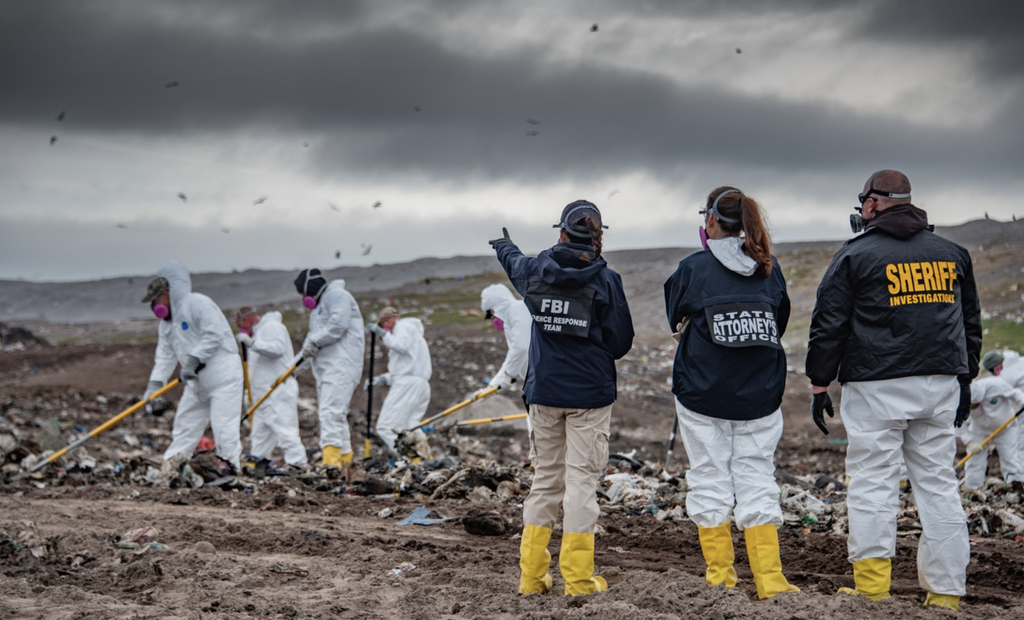
The process was simple but physically punishing. Excavators broke apart the compacted section and removed the rubbish bucket‑by‑bucket. Each bucket was taken to a designated working area and spread out in thin layers, known as decks, only a few inches deep. Searchers then formed a line and worked from the outside perimeter inward, combing through every deck with rakes, shovels, and their gloved hands, examining each item piece by piece.
The conditions were brutal: the smell was overwhelming, the winds were bitter, and steam rose from the garbage in the early morning cold while thousands of seagulls circled overhead. Day after day, the teams sifted through countless decks, finding nothing but endless layers of household waste. With each passing day, hope began to fade.
Then, on the ninth day of the search, a searcher spotted something. The area was immediately cordoned off, and forensic specialists stepped in. Buried deep within the waste, pieces of Susan’s skull had been found. As the search continued, more human remains were uncovered — wrapped inside the same heavy‑duty plastic contractor bags Binderim had bought at Home Depot, complete with matching manufacturer barcodes.
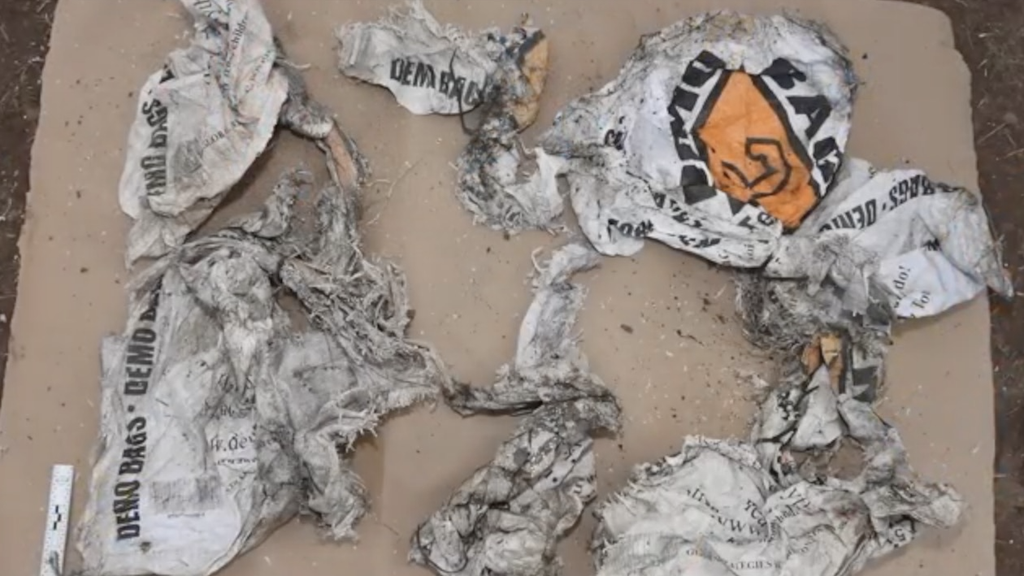
Dental records confirmed the remains belonged to Susan Mauldin. An autopsy revealed she had died from blunt force trauma and strangulation. Her hyoid bone had been fractured at or near the time of death, and not as a result of landfill compression. There was no doubt Susan had been murdered.
On 31st January 2020, Corey Binderim — already in jail on the unrelated fraud charges — was officially charged with first‑degree murder.
Reconstructing the Day Susan Died
With the evidence finally in place, investigators were able to build a reconstruction of what happened to Susan Mauldin on the morning of Thursday 24th October 2019.
While Susan was getting ready for her day, expecting her contractor to arrive with the refund she’d been fighting for, Corey Binderim was already setting a different plan in motion.
At 7:04 am, Binderim walked into Home Depot with purpose, heading straight for the aisles that held quick‑drying concrete mix and heavy‑duty contractor sacks. He had no other job planned that required those materials. This was preparation — not for work, but for disposal.
After a brief stop at home, he drove to Susan’s house, pulling into her driveway at 7:48 am after calling her landline twice to ensure she was awake and alone.
Susan opened her front door, believing the dispute was finally about to end. Instead, Binderim confronted her. He didn’t have the $12,000 she was owed — not even a fraction of it. When she refused to back down, the argument escalated. Binderim attacked her, overpowering the 65‑year‑old widow, pursuing her through the house as she tried to flee. He struck her, knocked her to the ground, and ultimately strangled her to death in her kitchen before attempting to clean up the scene.
At 8:15 am, a passing school bus safety camera captured his truck backed up tight against Susan’s garage door with the tailgate open. Inside, Binderim was wrapping Susan’s body in the contractor sacks he had bought just over an hour earlier. He loaded her into the truck and left the house through the garage at around 8:25 am.
He returned home at 8:45 am, switched on his location‑sharing app, changed his clothes, and headed back out.
At 9:12 am, he drove through the gates of the Rosemary Hill Solid Waste Management Facility and unloaded the concrete — and Susan’s body — before leaving at 9:19 am. At 9:33 am, believing he had covered his tracks, he turned his location app back on.
He dropped his tools at his storage unit at 9:47 am. By 11:00 am, CCTV at Home Depot captured him returning to the store on an unrelated errand, now wearing his fresh set of clothes. Then, at 11:25 am, he briefly visited another job site, claiming he was too sick to work before returning home.
From there, he carried on with his day as if nothing had happened.
Legal Proceedings
Although investigators had now uncovered the truth about what had happened to Susan, the path to justice would be far slower. Binderim was charged with her murder in January 2020, but it would be almost five years before he ever faced a jury. The COVID‑19 pandemic brought Florida’s courts to a standstill, and once the state announced it would seek the death penalty, the case slowed to the heavy, grinding pace that comes with capital trials — long waits, endless reviews, and every detail picked apart before it could move forward.
In October 2024, the trial of Corey Binderim finally began. When he stepped into the courtroom, he pleaded not guilty to all three charges: first‑degree murder, burglary with assault or battery, and tampering with physical evidence. As a capital case, his life was literally at stake.
Although the evidence against him was largely circumstantial, the prosecution presented it with meticulous precision. They showed the jury CCTV footage of Binderim buying concrete and demolition bags on the morning Susan was killed. They walked the jury through the digital trail on his mobile phone, mapping his movements from Home Depot to Susan’s home and then directly to the waste transfer station. And despite Binderim’s attempt to hide Susan’s body in a landfill, the medical examiner was able to determine she had been strangled — her hyoid bone fractured at or near the time of death.
Over the course of the trial, thirty‑three witnesses took the stand. Binderim’s ex‑wife, Cassidy, testified that on the morning of Susan’s murder, he was seen on their Ring doorbell arriving home, backing his truck into the garage, and closing the door — something she had never known him to do before and found unusual.
The jury also heard from Thomas Smith, an inmate who shared a cellblock with Binderim. Smith testified that Binderim confessed to hitting Susan and choking her to death. Smith said Binderim told him Susan had threatened to call the police and hire a lawyer over the stolen $12,000, and that he attacked her to protect his business and reputation. Smith also recalled Binderim saying he felt “something break” when he strangled her — a detail that matched the autopsy finding of Susan’s fractured hyoid bone. The defence tried to undermine Smith’s credibility, pointing out his eight felony convictions, but Smith had not arranged any deal for his testimony.
The defence meanwhile centred its case on a single piece of forensic evidence: two of Susan’s fingernails recovered at the landfill contained trace DNA belonging to Susan and an unknown male — but not Binderim. They argued that if Susan had fought for her life, she would have scratched her attacker, trapping his skin cells under her nails. Because Binderim’s DNA was not present, they claimed he could not have been the killer and accused investigators of having tunnel vision.
The prosecution countered by explaining that one of the nails containing the unknown DNA had been found loose in the landfill rubbish, outside the contractor bags that held Susan’s remains. In that environment, it could easily have picked up random environmental DNA from surrounding waste.
The defence also argued that the thirty‑seven minutes Binderim spent at Susan’s home was not enough time to murder her and clean up the scene. They argued that the evidence was largely circumstantial and there were no direct eyewitnesses.
However, circumstantial evidence, when woven together tightly enough, becomes a chain that cannot be broken. And on Monday, 14th October 2024, after just four hours of deliberation, the jury returned a guilty verdict on all three counts.
Because first‑degree murder is a capital offence in Florida, the trial moved into a penalty phase a few days later.
The prosecution argued the killing was cold, calculated, and entirely premeditated. The defence countered by presenting evidence of Binderim’s history of severe head trauma, including multiple concussions from his high‑school football years, which they said affected his impulse control.
A victim‑impact statement written by Binderim’s adult daughters was read aloud, pleading with the jury to spare his life:
“We cannot imagine dad hurting anyone. He has been a protective and loving father to us throughout our lives. We love our father very much and ask you to show mercy when considering his sentence.“
It was the only moment in the entire trial when Binderim showed any emotion.
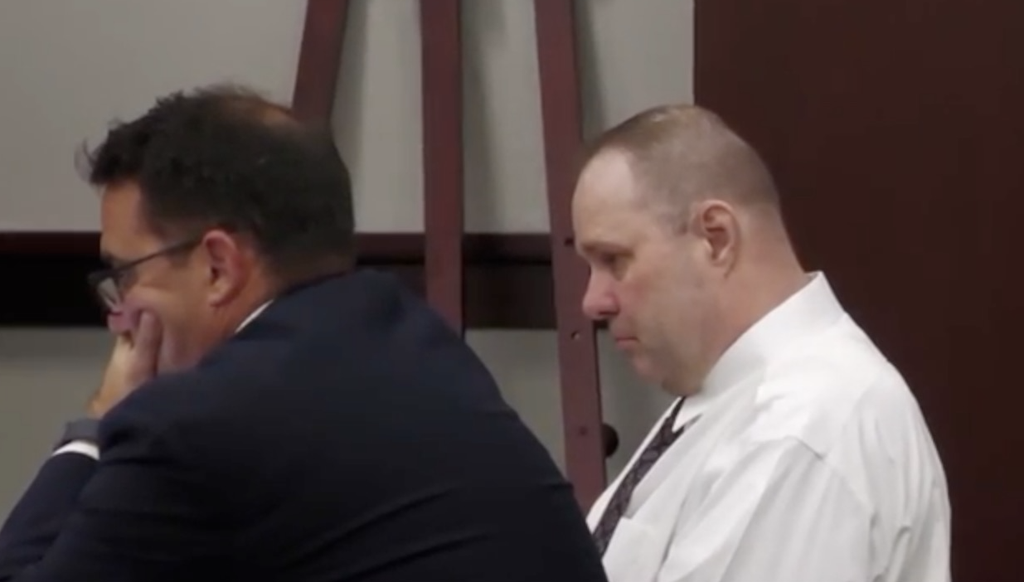
Under Florida’s sentencing laws, a recommendation for the death penalty requires at least eight out of twelve jurors to vote in favour. When the votes were cast, the jury split seven in favour of the death penalty to five in favour of life imprisonment. With just one single vote shy of the death penalty threshold, Binderim’s life was spared.
On 29th October 2024, the judge formally sentenced Corey Binderim to life in prison without the possibility of parole. He will spend the rest of his life behind bars.
Sources
Websites
Court TV. FL v. Corey Binderim: Home Renovation Murder Trial.
FBI.gov. FBI Jacksonville’s Historic Search for Justice.
Office of the State Attorney. Jury Finds Corey Binderim Guilty of Murdering Susan Mauldin.
News4Jax. Corey Binderim.
TV Shows
Killer Investigations. S1,E2.