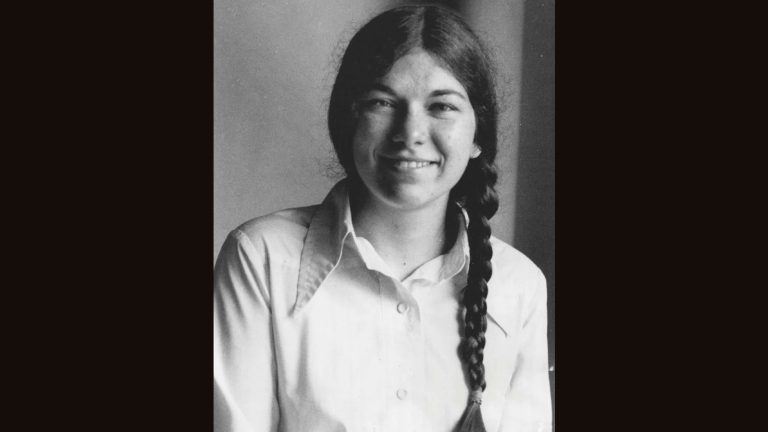
The Christmas period is usually a time of celebration for families, but in 1987, it marked a devastating chapter in Arkansas’s history. Over several days, Ronald Gene Simmons murdered fourteen members of his own family, including his wife, children, and grandchildren.
After the family massacre, Simmons turned his attention to people he believed had wronged him, carrying out a series of shootings in Russellville that claimed two more lives and left several others wounded. In total, sixteen people were killed, making it the largest family mass murder in U.S. history and one of the deadliest mass killings in Arkansas’s history.
What should have been a season of joy instead turned into a nightmare.
⚠️ Content warning: This article contains descriptions of violent or distressing events. Reader discretion is advised.
Early Life
Ronald Gene Simmons Sr. was born on 15th July 1940 in Chicago, Illinois. When his father, William Simmons, died from a stroke in 1943, the family lost its financial stability, leaving his mother, Loretta Simmons, struggling to care for her three-year-old son. Within a year, she remarried William Griffen, a civil engineer with the U.S. Army Corps of Engineers. In 1946, the Corps transferred Griffen to Little Rock, Arkansas, marking the beginning of a series of moves the family would make over the following decade.
The constant upheaval appears to have affected Ronald, who struggled to form lasting friendships and often felt socially disconnected. His behaviour became increasingly disruptive, with frequent temper tantrums and growing friction between him and his mother and stepfather. His parents attempted to address his behaviour by enrolling him at a Catholic boarding school near Searcy, Arkansas, but his behavioural difficulties persisted. In September 1957, at age 17, Ronald dropped out of high school and enlisted in the U.S. Navy, beginning a military career that would span more than two decades.
New Mexico
Ronald was first stationed at Bremerton Naval Base in Washington, where he met and fell in love with 18-year-old Bersabe Rebecca ‘Becky’ Ulibarri. After he was redeployed to New Mexico, Becky followed. They married in July 1960 and went on to have seven children together. Before their marriage, Ronald’s mother cautioned Becky against her future husband, describing him as controlling and temperamental. However, Becky was too consumed by her love for Ronald to heed these concerns.
A year into their marriage, Becky gave birth to their first child, Gene Jr. A couple of years later, in 1963, they had their second child, Sheila. Around this time, Ronald left the Navy, and his abusive behaviour worsened. He liked to maintain complete control, dictating how Becky dressed and styled her hair. Ronald also specified the household chores he wanted done and expected them to be carried out to his satisfaction. He limited the time Becky spent with her friends and isolated her from her family. Ronald stripped Becky of her independence and even denied her access to her own mail.
A couple of years after leaving the Navy, Ronald joined the U.S. Air Force. In 1965, Becky gave birth to their third child, Billy, and over the next decade, she had three more children: Loretta in 1970, Eddy in 1973, and Marianne in 1976. During this time, Becky became increasingly submissive to her husband, but she made every effort to protect her children from their father’s anger.
By the spring of 1976, Ronald was a non-commissioned officer (NCO) in the U.S. Air Force and had risen to the rank of master sergeant. He had just completed a three-year posting in England, where he had moved with his wife and children. Upon returning to the United States, Ronald was stationed at a Space and Missile Systems Organisation observatory in Alamogordo, New Mexico. As the highest-ranking NCO at this facility, Ronald often took charge during the absence of the commanding officer and thrived in this role.
Ronald considered the area around Alamogordo a suitable place to settle down. He soon found a house to rent, but it would only be temporary because he didn’t like the neighbours being too close by. He eventually found a more isolated home in a remote community near Cloudcroft, Otero County. This three-bedroom house sat on three acres, which, while not as large as Simmons desired, provided enough space to keep the neighbours at a distance.
Ronald was such a stickler for privacy that he built a ten-foot-tall stone wall around the entire property. He required his children to help with its construction, making them spend weekends and after-school hours searching for rocks to use. The children became so exhausted from hauling rocks and performing other manual labour around the property that they began struggling in school.
In June 1978, Ronald learned that the Air Force was deactivating the observatory where he worked, and he would be transferred to Holloman Air Force Base in Otero County. The stress of this transition exacerbated his already volatile behaviour, and that summer, Ronald lost control and struck his wife in front of the children. The older children were aware of their father physically abusing their mother, but this was the first time it happened in front of them.
Gene Jr., who was 16 years old by then, refused to stand by and watch. The teenager tried to protect his mother, but he was physically no match for his father, who beat him to the floor and continued the assault as he lay there. The family looked on in horror. Gene ran away from home but was brought back by his parents. However, Gene knew his family would never be safe while living under their father’s control and longed to leave as soon as he could.
That August, Ronald notified the Air Force of his intention to retire. By the time he eventually retired in 1979, he had accumulated several honours for his military service, such as the Bronze Star Medal and the Republic of Vietnam Gallantry Cross. However, perhaps the most foreboding of his awards was the Air Force Small Arms Expert Marksmanship Ribbon, recognising a skill he would come to use again, with tragic consequences.
Ronald struggled to adapt to life outside the military, and by December 1979, his behaviour toward his wife had worsened significantly. By then, Becky had given birth to their seventh child, Rebecca Lynn, but as their marriage became more strained, Ronald’s desire for his wife decreased.
Ronald had always treated his eldest daughter, Sheila, affectionately. She was his favourite among his seven children, and he fondly referred to her as ‘his little princess’. In July 1980, Ronald took 16-year-old Sheila on a road trip to California for a coin show. Sheila only pretended to share her father’s interest in coin collecting to please him. While her siblings elicited his anger and frustration, she had access to his softer side. She did not understand why this was, but it was better than the side her siblings and mother endured.
During the long drive from their home in New Mexico to California, Ronald’s conversation with his daughter took an uncomfortable turn. They stopped in Phoenix along the way and spent the night in a hotel. It was there, according to the authorities, that Ronald raped his daughter for the first time. He sexually assaulted her on at least two further occasions that September, and in March 1981, Sheila told him she was pregnant.

Ronald sat down with his wife and eldest son to deliver the news. He told them that the baby would be loved just like the other children in the household and that there would be no further discussion about it. Ronald did not reveal the identity of the baby’s father, but he didn’t need to, as Becky already suspected him. She had seen the way he looked at Sheila and the way they kissed on the lips rather than on the cheek, as other fathers and daughters did. However, as disgusted as Becky was, she complied with Ronald’s wishes.
In contrast, Gene Jr. was not as submissive. He was still resentful towards his father for the beating he had received, but he also knew what his father was capable of, so he would not confront him directly. He decided the only course of action left was to report his father. Becky urged him not to, as she was terrified the family would be torn apart if the authorities found out. However, Gene Jr. did not listen, and on 17th April 1981, he anonymously reported Sheila’s pregnancy to the school counsellor.
At first, Sheila denied being pregnant, but eventually, with a lot of coaxing, she broke down and admitted everything. The school notified the authorities, and an investigation was launched. Under the threat of prosecution, Ronald agreed to a five-week family counselling program. However, counselling did not guarantee that he would avoid prosecution, and any incriminating admissions he made could potentially be used against him in court. The caseworker had already requested the District Attorney’s office to remove Ronald’s daughters from the home and place him on pre-prosecution probation, but the request was never acted upon, and no explanation was provided.
On 17th June 1981, Sheila gave birth to a daughter, Sylvia Gail. On 20th June, a sheriff’s deputy interviewed Sheila, but she refused to cooperate. She was eventually compelled to testify before a grand jury, and in early August 1981, the jurors heard Sheila admit that her father had raped and impregnated her.
Through it all, Ronald blamed Sheila for everything. He blamed her for ruining his life, for tarnishing the family’s reputation, and for destroying the relationship they once had. In one of the letters he wrote to Sheila during this time, he even told his daughter, “I will see you in hell.”
Around this time, Gene Jr. decided to move out of the family home. For Ronald, who had spent years exerting strict control over every aspect of his household, his family was beginning to come apart. With his eldest son leaving and the authorities investigating his abuse of Sheila, the control he had maintained for so long was slipping away. Knowing an indictment was imminent, Ronald took his family and fled to Arkansas in an attempt to avoid prosecution. Four days later, on 10th August, the Sheriff’s Office arrived at Ronald’s house in Cloudcroft with an arrest warrant, but they found the home empty.
Once it became clear to the District Attorney’s Office that Ronald had fled the state, they dropped the case. In March 1982, seven months after the family had left, the authorities in New Mexico notified the Department of Human Services in Arkansas that Ronald had been indicted on charges of incest. However, the Arkansas Human Services Department lacked the authority to make an arrest, so even if they did manage to locate Ronald, there wasn’t anything they could do. Meanwhile, for the following six years that the family lived in Arkansas, Ronald continued to abuse his daughter.
Arkansas
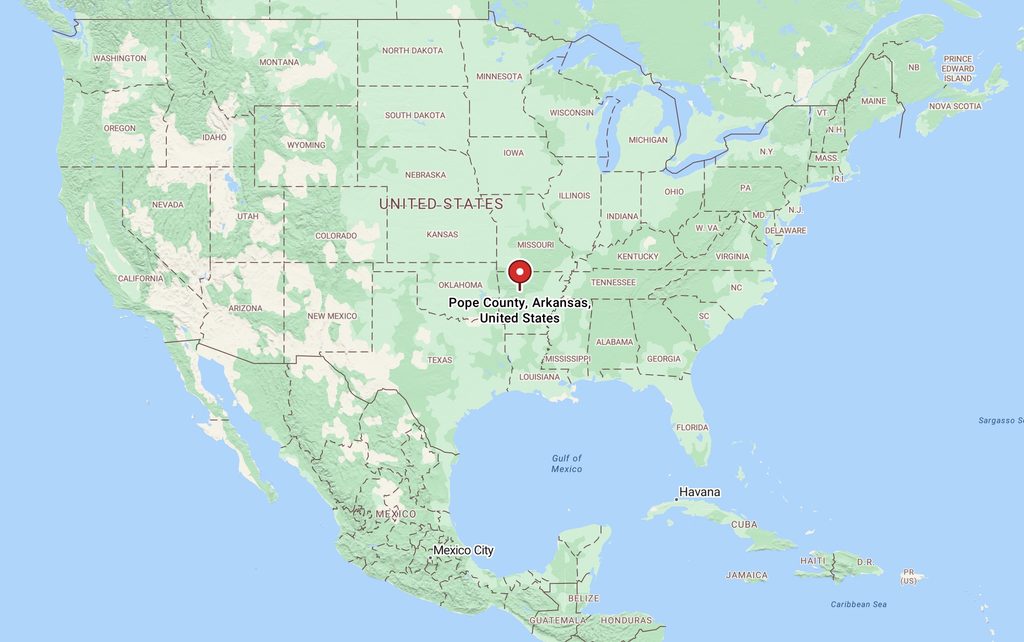
The family spent a couple of years moving between various residences, echoing the instability Ronald had experienced during his childhood. However, in the summer of 1983, they moved into what would become their final home. They settled on a thirteen-acre property known as ‘Mockingbird Hill,’ a remote hilltop property in the pine-studded Ozarks in Dover, Pope County.
The house was constructed by joining together two older mobile homes to create a single, large, five-bedroom dwelling that lacked basic amenities such as indoor plumbing and a telephone. The grounds were littered with empty beer bottles, and abandoned, rusting vehicles were scattered about, filled with buckets of firewood, soiled clothing, and a jumble of assorted junk.
Several ‘No Trespassing’ signs lined the long, winding path to the property, a warning to outsiders that they weren’t welcome. Ronald did not want a repeat of what happened in New Mexico and could not risk raising any suspicions with the outside world. Thus, his children had a perfect school attendance record. Their strict schedules left little to no time for visiting friends or socialising, but that was acceptable to Ronald, as there were plenty of jobs that needed doing around the house. He needed to reassert his authority and ensure his family gave him the respect he believed he was entitled to.
When the children returned home from school in the afternoons, they were made to do various chores, such as cleaning, mowing the grass, building a chicken coop and constructing a dog kennel. They dug drainage ditches, a large hole for a family outhouse, and a cesspit because the house did not have a toilet. Ronald also had them construct a shed, with his son Billy doing most of the work. They were forced to work in all weather, and during the summer months, they had to watch out for scorpions and venomous snakes. Additionally, a wall made of cinder blocks and barbed wire was built around the property, adding an extra layer of protection from prying eyes. The children would go to bed at night with bloody hands and feet, and any cries of pain were ignored, even by their mother, who was too afraid to defy her husband.
In the community itself, Ronald had a bad reputation for being unfriendly and rude to people. There were even reports that he threw rocks at the school bus.
While living in Arkansas, Ronald no longer had access to his military pension and was forced to take a series of low-wage positions in the nearby town of Russellville. His military training had made him a diligent and hard-working employee, and he received no complaints about his performance in any of the various roles he held. However, in the military, he had held a position of authority and the respect of his peers, something he now lacked in his civilian roles, making it difficult for him to adapt to regular working life. Furthermore, his attitude and behaviour towards his female co-workers also came under scrutiny.
In the spring of 1984, Ronald’s daughter Sheila, who was now 20, announced she was getting married to Dennis McNulty, whom she had met in business school. Ronald was deeply upset over the news that his favourite daughter was leaving home and starting a family of her own. Despite Sheila being his daughter, he appeared to react as though she had been unfaithful to him, swinging between depression and intense anger. So when Ronald began developing feelings for one of his female co-workers, she provided just the distraction he needed.
Ronald noticed Kathy Kendrick while working at a company called Woodline Motor Freight in 1985. However, Kathy was a married woman and made it clear that she was not interested in Ronald’s advances. He ignored her protests, showering her with flowers and gifts and making her feel increasingly uncomfortable. Ronald’s boss, Joyce Butts, reprimanded him for his inappropriate sexual behaviour towards Kathy. Angered by the humiliation, especially from a woman, Ronald resigned from his job in November 1986, telling Joyce, “You can take this job and shove it.” As he stormed out of the building, he walked up to Kathy while she was on the phone with a customer, pressed down on the hold button, and told her, “I hope you’re happy now.”
Even after resigning, Ronald remained fixated on Kathy, often stalking her and parking outside her Russellville home in hopes of seeing her.
Ronald had been forced to take low-paying, thankless jobs among people who showed him little respect. Rejected by one woman and humiliated by another, Ronald was losing control both at work and at home, and his resentment towards those he believed had wronged him appeared to be growing.
For Becky and the children, the somewhat positive aspect of Ronald being employed and out of the house was that the family had a bit more freedom. When Ronald was around, Becky was not allowed out of the house without him, except to do laundry. She was also prohibited from driving, despite knowing how. Becky had little contact with the outside world unless Ronald was with her, and their home had no telephone, so she could not call anyone for help. Furthermore, the household did not receive mail, nor was anyone allowed to send any.
However, Becky was now coming to recognise her husband for the controlling man he was and had been saving money and gathering the courage to leave him. But leaving was not an easy task. Ronald had an income, whereas Becky did not, and she needed to find a way to support the children when she left. However, three of her children – Gene Jr., Sheila, and Billy – had now moved out, making the prospect of divorcing her husband more realistic. She just needed the confidence to do it.

The older children were desperate for their mother to leave Ronald. Because Ronald did not allow letters or read the ones that did arrive, Gene Jr. got her a secret PO Box so she could communicate with him and other family members without Ronald knowing. They hoped by keeping in contact with her, they could convince her to leave him.
Shortly before her death, Becky wrote to her son, Billy:
Dear Bill, Renata and Trae,

Loretta, may be staying in town Friday night, so I’ll have her mail this. I’ve been thinking of all you said Bill and I know you are right, I don’t want to live the rest of my live with Dad, but I’m still trying to figure out how to start, what if I couldn’t find a job for some time. You have to remember I’ve never had a job since I’ve been married, or before that either. I now I have to start some where…

…I’ve remembered a lot what you said Bill, I am a prisoner here and the kids too. I know when I get out, I might need help, Dad has had me like a prisoner, that the freedom might be hard for me to take, yet I know it would be great, having my children visit me anytime, having a telephone, going shopping if I want, going to church. Every time I think of freedom I want out as soon as possible. I don’t want to put any burden on my children, and I think its best while or before I get out too old. I want out, but its the beginning, once I get a job and place than I can handle it with the mental support of my children I can do it…

…Hope Loretta can mail this Fri. or Sat., on her way home.

Love you very much.

Mom.
Becky and Ronald’s fourth oldest child, Loretta, was also forming her own exit plan. She was excelling academically and wanted to go to modelling school as soon as she graduated. Loretta was hoping to secure a scholarship, as she was desperate to get away from her home environment. When her father was at work, she and her mother were happy. However, when he was home, they tiptoed around him and had to keep quiet. Ronald ignored his wife and children and lay on the couch drinking beer and watching television.
On the rare occasions that Loretta had friends over, they noticed the deadbolts on the inside of her bedroom door. When asked about this, Loretta looked saddened and implied that things were not as they appeared. It isn’t known whether Loretta experienced the same sexual abuse as her older sister, Sheila, although relatives had expressed concerns that Ronald might have sexually abused other children in the family.

In fact, according to Becky’s sister, Viola, all the children would recoil anytime their father came near them. When Viola and her husband visited Becky, she could see the tension in the house. One time, Becky opened up to Viola, confessing to the spousal abuse and the dysfunction in her family. She often had bruises on her face and arms, but never reported Ronald to the authorities.
Ronald had his own bedroom that he rarely left, except to go to work. This room was always kept locked, and no one was permitted to enter, not even Becky, his wife of 27 years, who slept with their younger children. Unbeknownst to the rest of the family, Ronald had been hoarding luxury grocery items for himself while his family struggled with the basics. He had shelves full of gourmet food, including canned oysters and imported beer, which he drank alone in his locked room, isolated from the rest of the family.
By December 1987, Ronald was constantly paranoid and suspicious of any outside interference. He knew he was losing control of his family, with some of his children having already moved out and the rest likely to follow as they gained social lives. Meanwhile, Becky was quietly making plans to leave him.
However, Ronald had no intention of allowing them to create new lives that did not include him. On 18th December 1987, he picked up his final pay cheque from the Sinclair Mini Mart, where he had worked for the last year and a half. He hated the job, disliked working with the public, and found the pay insulting. He was scheduled to start his next shift that day, but instead, he resigned.
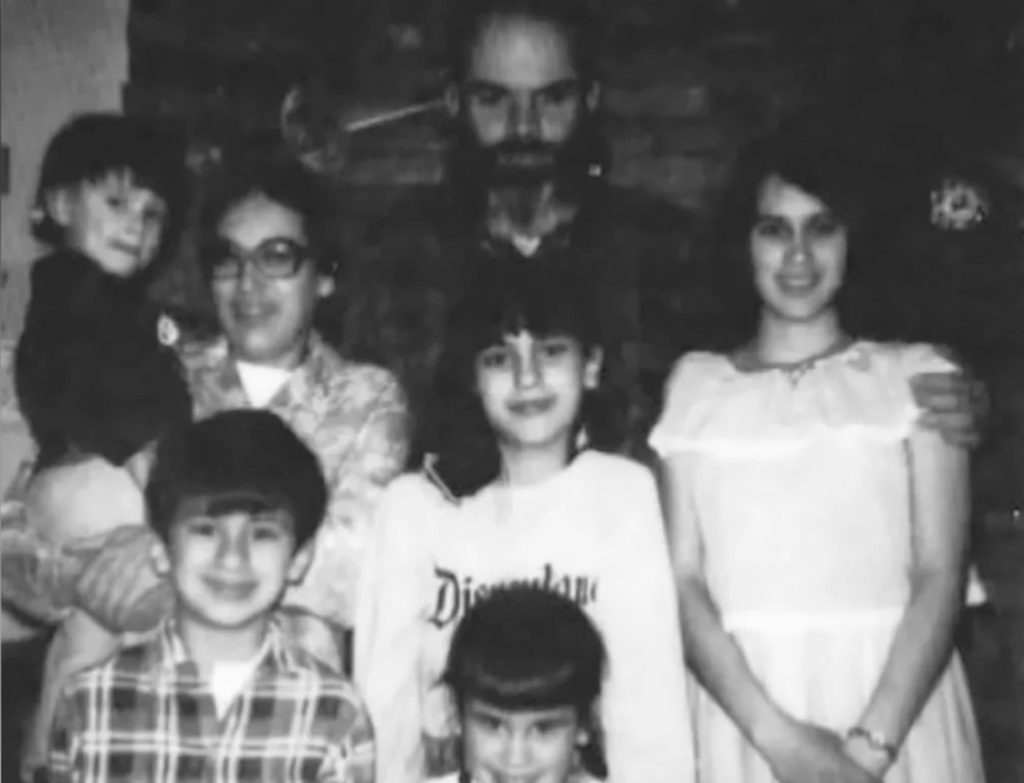
When Becky made plans to bring the family together for Christmas, Ronald did not try to stop her. He helped her decorate the house and allowed her to purchase gifts for everyone, which she wrapped and placed under the tree. Becky was excited and couldn’t wait to see her family reunited under one roof again. Ronald, too, was eager for his family to be together, although his intentions were entirely different. He was planning to ensure they would never be separated again, and that ultimately, none of them would live to see the new year.
A Family Massacre
On the morning of 22nd December 1987, Ronald Gene Simmons drove to the local Walmart and purchased a .22 calibre handgun. He then returned home and armed himself with his guns and a blunt weapon, such as a crowbar. There were three members of his family in the house that Tuesday morning. The precise sequence of events that followed is unknown, but he murdered each one of them.
His 46-year-old wife, Becky, was brutally bludgeoned. Each powerful blow to her body was his way of ensuring she would never leave him. He then shot her twice in the head. She had deep lacerations in her head, a bullet wound to her right cheek, and another bullet wound to the left of her nose. The pillow in the bedroom was soaked with her blood.
Ronald’s eldest son, 26-year-old Ronald Gene Simmons Jr., had come home for Christmas and was asleep in bed when his father approached and struck him on the head and neck. Gene Jr. threw himself out of the bed, ready to fight back. The bloody palm prints and blood spatter on the bed, walls, furniture, and closet door show there was a struggle between father and son. Ronald then shot Gene Jr. a total of five times in the head and face. He had bullet wounds to the left side of his forehead, the middle of his forehead, to the left of his nose, his right eye, and the left side of his chest. Ronald had never forgiven Gene Jr. for reporting his abuse of Sheila to the authorities. Despite his injuries, Gene Jr. appears to have struggled towards the hallway, but he never made it through the door.
Neighbours who heard shooting coming from the property that day thought little of it. It was hunting season in rural Arkansas.
Little Gene’s 3-year-old daughter, Barbara, was not spared from the horrors that had befallen her father and grandmother. She had been asleep in the same room as Becky when her grandfather walked in, wrapped fishing wire five times around her neck, and strangled her to death. When her body was found, Barbara still had the nylon string tied around her throat.
Ronald carried all three bodies to one of the holes that the children had dug outside. He then doused the bodies with kerosene and laid barbed wire over them to stop animals from scavenging the remains. This was a trick he had learned during his deployment to Vietnam. Afterwards, he returned to the house, turned on the television, and waited for his four youngest children to return home from school.
That afternoon, the school bus dropped off 17-year-old Loretta and her three younger siblings at their home. It was the last school day before Christmas, and while other children were excited about the holiday, the Simmons children were not. School was a respite from their depressing home, and they dreaded having to spend the holidays with their father. Loretta, in particular, was aching to begin a new life away from Mockingbird Hill as soon as possible. But at least their older siblings, Billy and Sheila, would be visiting in four days, and they were very much looking forward to that.
When the children approached the house, they were surprised to see their father waiting for them. He was usually drinking or alone in his room, and it was normally their mother who greeted them after school. What was even stranger was that Ronald said he had presents for them, but he wanted to give them out individually. The children were excited about their gifts, but equally apprehensive because their father was the one handing them out. Still, they did what he said and waited patiently outside while he took them one by one into the house.
Ronald started with Loretta, leading her into a bedroom. He then attacked her, striking her in the face at least twice. She had cuts on her lips consistent with being punched. Loretta desperately tried to escape, struggling against her father, but he was too strong and overpowered her. He was also angry. He resented any sign of independence from his children. He pinned her to the bed, grabbed some fishing wire, and wrapped it around her neck, strangling her. To make certain she was dead, he dragged her to a water barrel and submerged her head underwater.
Ronald repeated this horrific process with the remaining three siblings: 14-year-old Eddy, 11-year-old Marianne, and 8-year-old Becky. He took them into the house one at a time, strangled them with fishing wire, and then held their heads underwater to ensure they were dead. Ronald then took their bodies to the same pit where the remains of their mother, brother, and niece already lay. The children had no idea that the hole they had dug would become their own grave.
Ronald sat in the house for the next four days as the bodies of his wife, children, and grandchildren lay rotting in a pit outside. However, he still had two surviving children to see, and all he could do was wait for their arrival on the 26th. But as a military man with an award for exceptional marksmanship, he was trained to lie in wait for his target.
The first to arrive were Ronald’s 23-year-old son, Billy, his 21-year-old wife Renata, and their 20-month-old son, Trae. Billy was hopeful his mother was making progress towards leaving his father. Based on the secret letters she had sent him, she seemed to have more confidence than she ever had before. He just prayed that his father did not suspect anything.
Billy and Renata were sitting at the kitchen table when Ronald attacked. The table and chairs were overturned in the ensuing struggle. According to the medical examiner’s report, the muzzle of Ronald’s gun was about a foot away from Billy’s head when he was shot twice, once in the right cheek and again in his skull just above his right ear. Renata was shot seven times, five times in the head and twice in the neck. Ronald then turned his attention to his terrified grandson, strangling him and then drowning him in the barrel of water.
With his favourite daughter due to arrive soon, Ronald dragged the bodies of Billy and Renata into the living room and covered them with winter coats. He then wrapped Trae in a trash bag and placed his tiny body in the trunk of a car behind the house.
Sheila, 24, arrived at her family home with her 33-year-old husband, Dennis McNulty. Dennis knew what his wife had endured at the hands of Ronald and despised what he had done to her. Sheila’s daughter, 6-year-old Sylvia, was the product of Ronald’s abuse, but Dennis loved her as if she were his own child. Together with their 21-month-old son Michael, they were a close-knit family.
Sheila entered the house first. Without warning, Ronald shot her six times in the head and covered her body with a tablecloth. Investigators later discovered her body in the living room, lying next to the Christmas tree.
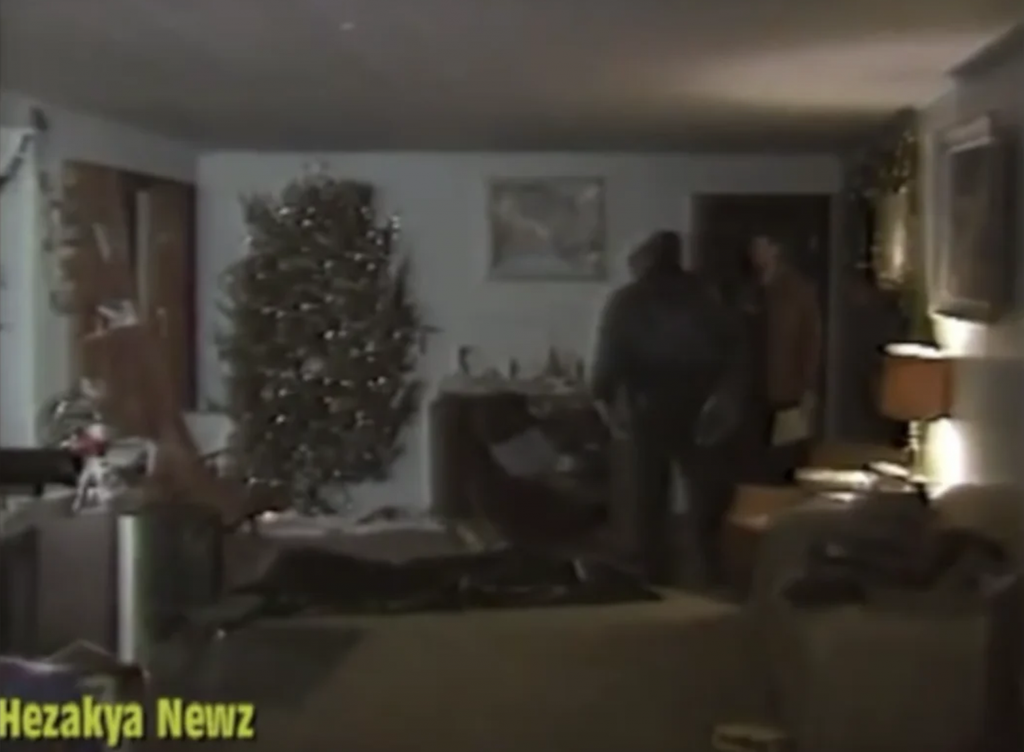
Dennis then entered the house, where Ronald shot him once in the head at close range. The bullet entered his brain, and he died instantly.
Baby Michael was strangled, and his head dunked underwater to make sure he was dead. His body was then wrapped in a trash bag and stuffed into the trunk of another car on the property.
Sylvia ran to hide in one of the bedrooms, terrified, but Ronald followed her. He used his knees to pin down her arms, wrapped a cord around her neck, and strangled her, leaving her lying face down on the bed.
After murdering fourteen members of his family, Ronald drove to Russellville, where he stopped at a Sears store and picked up the gifts Becky had ordered before Christmas. It is believed Ronald thought he would get away with the murders, but worried that leaving the gifts uncollected at the store would look suspicious. He then went to a local bar, ordered a couple of drinks, and made a toast to Sheila. In his view, her betrayal had been the most devastating of all.
When he returned home, he watched TV, drank beer, and went to sleep, indifferent to the dead bodies surrounding him. However, he still had unfinished business. It was a Saturday, and once more, he had to bide his time. On Monday morning, his killing spree would resume. He was not done yet.
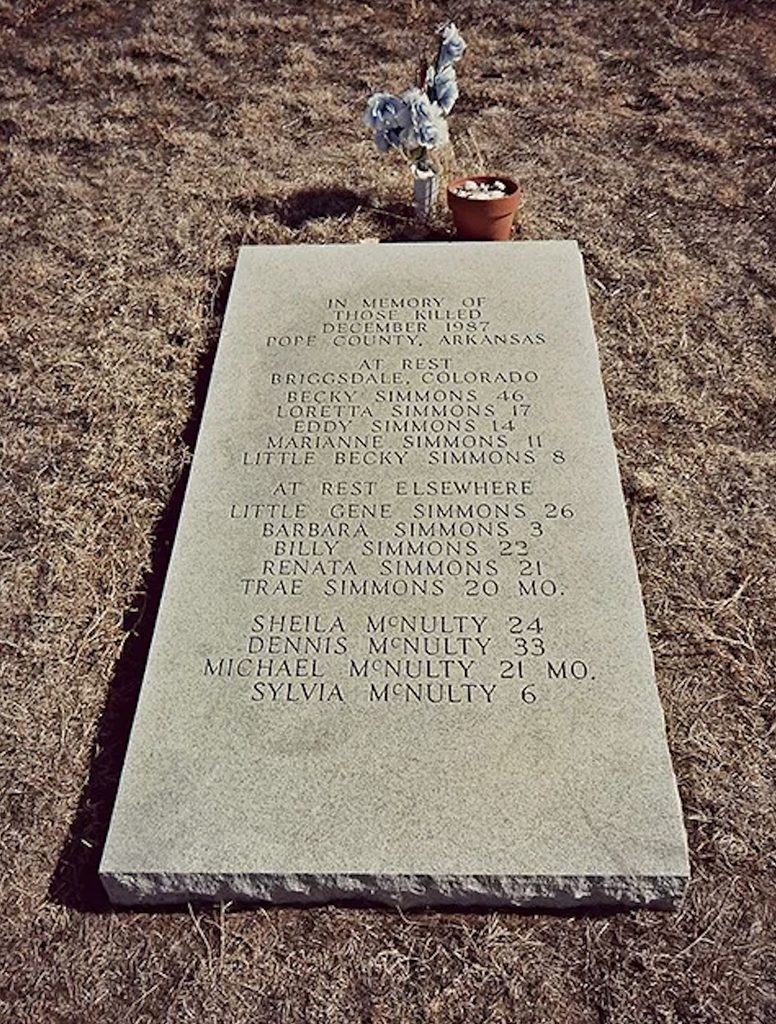
Russellville Revenge
On 28th December 1987, Ronald drove his son’s car to Russellville, where he stopped by Walmart to restock his ammunition. It was Monday morning, and he was prepared for round two.
Ronald’s initial target was the law office of Peel, Eddy and Gibbons, where 24-year-old Kathy Kendrick worked as a secretary. He shot her four times in the head as revenge for rejecting his advances and humiliating him.
Next, Ronald went to the Taylor Oil Company, where he shot and injured 38-year-old Rusty Taylor, the owner of both Taylor Oil and the Sinclair Mini-Mart, where Ronald had been a part-time clerk. Taylor, who was Ronald’s primary target, survived a gunshot wound to the chest. However, 34-year-old Jim Chaffin, a part-time firefighter and truck driver for Taylor Oil, was not so lucky. He had just finished his shift as a firefighter when he entered the Taylor Oil premises and encountered Ronald. The second he opened the door, he was shot in the face and died at the scene. Chaffin did not know Ronald and was simply in the wrong place at the wrong time. Ronald also fired at another employee, Julie Money. As the bullet scraped across the top of her head through her hair, Julie believed she had been shot and fell to the ground. Ronald also thought he had shot her, so he walked away. Fortunately, the bullet had missed her.
Ronald then made his way to the Sinclair Mini Mart, where he shot and wounded the manager, David Salyer, and an employee, Roberta Woolery.
While Ronald carried out his attacks, frantic emergency calls were being made to the police dispatcher. The community was gripped by fear, with a shooter seemingly firing indiscriminately across town. The only information provided up to this point was of a man wearing a hat and driving a Toyota Corolla. Initially, Ronald wore a cowboy hat, but then he switched it to a baseball cap. Regardless, the disguise didn’t work because when Ronald got to the Sinclair Mini Mart, Woolery recognised him and was able to give the shooter’s identity to the dispatcher.
However, Ronald’s 45-minute rampage was not over yet. He had one final workplace to visit – Woodline Motor Freight, where his former supervisor, Joyce Butts, worked. She had previously reprimanded him for his romantic advances towards Kathy Kendrick. Ronald shot her in the head and chest.
After shooting Joyce, Ronald took a terrified employee, Vicky Jackson, hostage at gunpoint and led her into the computer office. He instructed her to call the police, saying:
“I’ve come to do what I wanted to do. It’s all over now. I’ve gotten everybody who wanted to hurt me.”
Ronald then sat in the office, chatting with Vicky as he waited for the Russellville Police to arrive. He surrendered with little resistance and was subsequently held at a local detention centre.
Ronald’s original intention was to end his own life. However, during his rampage, he realised that a single bullet had not been enough, with it taking multiple shots to kill many of his victims. He did not trust the guns he was using, so decided to let the State kill him. He would later tell his brother-in-law:
“Do you know what kind of ammunition I was using?.22 calibre hollow points. They don’t penetrate. They splatter. I did not want to shoot myself and become a vegetable.”
Later that day, officers went to Ronald’s property and discovered the bodies of Billy, Renata, Sheila, Dennis, and Sylvia inside the house. They knew Ronald had a large family, and fearing the worst, a search then began for the remaining missing family members.
The following morning, one of the investigators spotted some sheet metal on the ground near the woods. As the investigators approached it, they noticed the smell of kerosene. They started digging, and that’s when they found the bodies of seven more family members. The barbed wire was piled so thickly in the grave that a towing winch cable, attached to a four-wheel drive, was required to pull the wire out.
A little later, the detectives opened the trunks of two vehicles parked about 100 yards from the grave and found the bodies of Trae Simmons and Michael McNulty.
Ronald Gene Simmons took the lives of fourteen members of his own family. He also killed two of his co-workers and wounded several others. In total, sixteen innocent lives were lost all because of one man’s need for control and his desire for revenge when he believed he was losing it.
Legal Proceedings
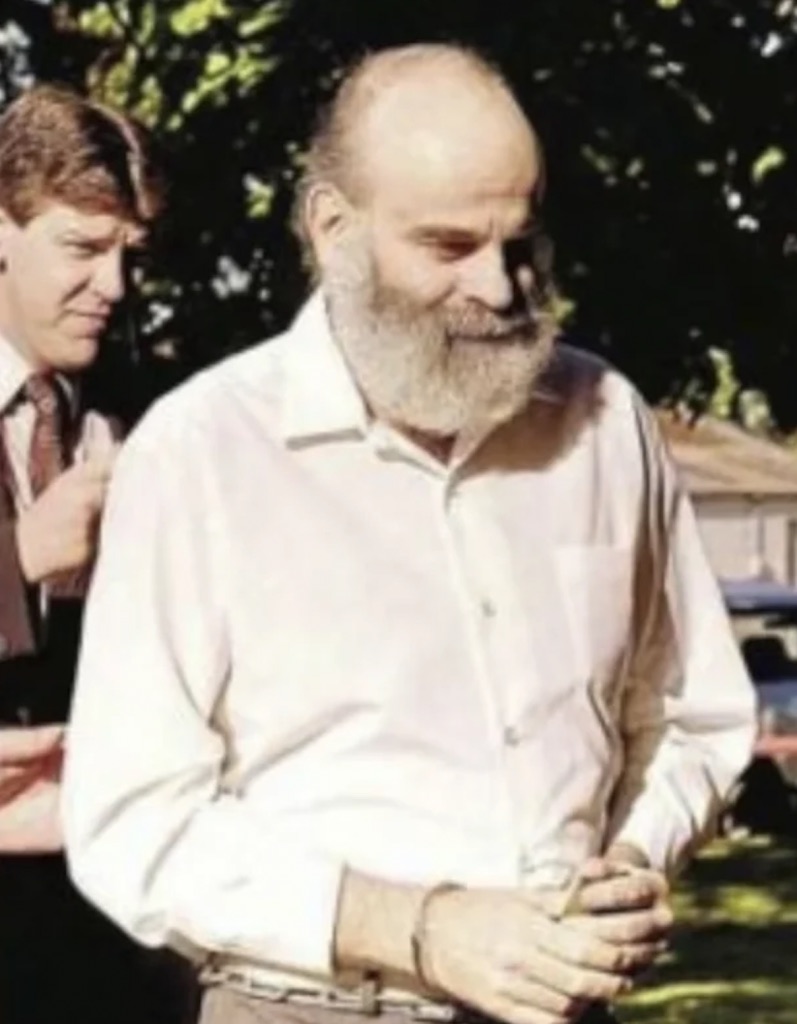
On 30th December, Ronald was transferred from the county jail in Russellville to a psychiatric unit at the Arkansas State Hospital. After a month-long psychiatric evaluation, Dr Irving Kuo determined that Ronald was mentally competent to stand trial. Ronald also informed his attorneys, Robert E. ‘Doc’ Irwin and John Harris, that he was guilty and wished to be convicted and executed.
Ronald was to face two trials, the first one beginning on 9th May 1988, in Franklin County Circuit Court about 45 miles west of Russellville. It would not have been possible to select an unbiased jury in Pope County, so the defence’s request for a change of venue was granted. During this trial, Ronald was tried for the murders of Kathy Kendrick and James Chaffin, the attempted murders of Julie Money, Rusty Taylor, David Salyer, Roberta Woolery, and Joyce Butts, as well as the kidnapping of Vicky Jackson.
On 12th May 1988, Ronald was convicted, and four days later, Judge Patterson sentenced him to death by lethal injection plus 147 years. Ronald expressed satisfaction with the verdict and requested to read a prepared statement, in which he asked that the sentence be carried out expeditiously.
My statement is that if the jury renders the most proper and just and wise sentence of death in this case, I, Ronald Gene Simmons, Sr., want it to be known that it is my wish and my desire that absolutely no action by anybody be taken to appeal or in any way change this sentence…
It is further respectfully requested that this sentence be carried out expeditiously.
He concluded his statement by saying:
I only ask for what I deserve. Let the torture and suffering in me end. Please allow me the right to be at peace.
At the time, Arkansas had no mandatory appeal of death sentences, though Ronald waived his right to appeal.
His execution date was scheduled for 24th June 1988, about six weeks after his conviction, which is an extremely short amount of time and prevented him from facing trial for the massacre of his family. While some supported the quick execution, others believed he should face justice for a little longer first. Ronald’s fellow death row inmates in particular resented his pursuit of a speedy execution, fearing it would hasten their own executions. In fact, Ronald had to be closely monitored while on death row, as there were multiple attempts on his life because of this.
However, on 20th June, the execution was stayed following a legal challenge by Arkansas Churches for Life, an organisation opposed to the death penalty, which questioned Ronald’s right to waive his appeal. Three weeks later, the Arkansas Supreme Court upheld Ronald’s original sentence again, and Governor Bill Clinton signed the death warrant. A new execution date was set for 9th August.
However, one week before this new execution date, a U.S. District Court judge issued another stay, ordering further psychiatric evaluations before accepting Ronald’s decision to waive his right to an appeal. Ronald was not compliant during the interviews and actively sought to sabotage them. The judge ruled on 29th December 1988 that Ronald was competent to waive his appeal. However, the delays now meant that Ronald would have to stand trial for the murders of his family.
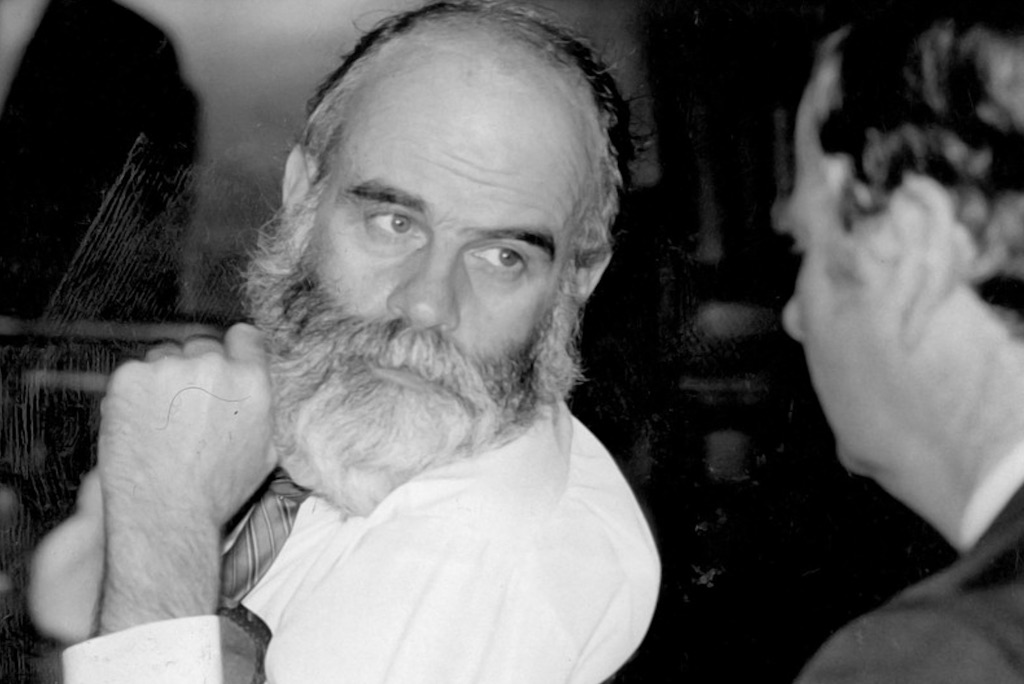
Ronald’s second trial commenced on 9th February 1989, in Johnson County, approximately 25 miles northwest of Russellville. The atmosphere was tense, necessitating the need for extra security at the courthouse, including armed state troopers inside the building and more on the roof.
When the jurors viewed photos of the crime scene, they were appalled and enraged. Similarly, the video evidence evoked strong emotional reactions, with some jurors weeping and family members asking the reporters who were sitting in the front row to shield them from the gruesome content. In contrast, Ronald remained emotionally detached, despite the disturbing footage.
The prosecutor, John Bynum, attempted to establish a motive for Ronald’s actions and presented evidence in the form of notes between Ronald and Sheila, which Ronald had kept in a safe deposit box. One of the notes read:
You have caused me a great deal of pain, suffering, sorrow, and loneliness. You claim Dennis won't let you talk to me alone. Well, he is going to regret that and so will you. I told you that your lack of communicating with me is going to be your downfall. You have destroyed me, and in time you will destroy yourself. In over 968 days I have kissed you only once. I adored you. I cared for you so much, and it really hurts. I miss you so very much too. You've turned your back on me and pushed me out of your life. Listen very carefully to what I am saying. I do not want Dennis to set foot on my property. He turned you against me. You want me out of your life. I will be out of your life. I will see you in hell.
One day during the trial, Ronald unexpectedly lunged forward and punched John Bynum in the jaw. He then tried to grab one of the bailiffs’ guns but was tackled to the ground and removed from the courtroom. Ronald was doing everything in his power to secure a death penalty ruling. He did not want his defence attorneys humanising him and persuading the jurors to recommend a life sentence over death. His attack on the prosecutor also ensured that the jury witnessed another display of his violence before beginning their deliberations.
Ronald’s plan seemed to work. After just four hours of deliberation, the jury returned with a guilty verdict on all fourteen counts of murder. On 11th February, the judge sentenced Ronald to death. His new execution date was set for 16th March.
Ronald was scheduled to be executed at the Cummins Unit in Jefferson County on the afternoon of 16th March 1989. He was eating his final meal – which consisted of filet mignon, onions, sliced tomato, six rolls, and a couple of 7-Ups – and was hours away from death when he received news that the U.S. Supreme Court had granted another stay of execution. This latest delay was the result of an appeal filed by a fellow death row inmate, Jonas Whitmore, who argued that Ronald’s imminent execution was negatively impacting his own chances of having his sentence overturned on appeal. At the time, Arkansas and Ohio were the only states that allowed death row inmates to waive their right to an appeal.
The Supreme Court’s ruling to grant another stay postponed the proceedings for thirteen more months until they ultimately decided 7-2 that Whitmore had no legal standing to intervene. On 31st May 1990, Governor Bill Clinton signed Ronald’s final execution warrant, setting the new date for 25th June 1990, nearly two years after the originally scheduled execution. This time, there would be no more delays. Ronald was going to die.
On the day of his execution, Ronald was served the same final meal he had requested for his initially scheduled execution. He was the second inmate to be executed in Arkansas since 1964, and he chose to die by lethal injection.
The first solution was administered at 9:02 pm, and Ronald was pronounced dead seventeen minutes later. His final words were:
“Justice delayed finally be done is justifiable homicide.”
No family members claimed Ronald’s body. On 27th June 1990, he was buried in a pauper’s grave at Lincoln Memorial Lawn in Varner, Lincoln County.
Ultimately, the fact that Ronald Gene Simmons was able to pull the trigger on other people but not himself shows he was nothing more than a coward and a bully. Rotting alone in a pauper’s grave was a fitting end. It is just a shame he wasn’t forced to dig the hole first.
Sources and Further Reading
BBC News | Criminologists Identify Family Killer Characteristics
Encyclopedia of Arkansas | Ronald Gene Simmons (1940–1990)
Murderpedia, the Encyclopedia of Murderers | Ronald Gene Simmons
UPI | Arkansas daughter’s letters reveal unhappy home life
Books:
Ryan Green. Obeying Evil: The Mockingbird Hill Massacre Through the Eyes of a Killer (Kindle Edition)
Court Documents:
Franz ex rel. Ronaldv.State, 754 S.W.2d 839 (Ark. 1988)
Newspaper Articles:
Gadsden Times. Defendant in Slayings had Scores to Settle. Page A2. May 12, 1988. (Available on Google Books)
The Bryan Times. Judge Stays Execution. Page 12. August 4, 1988. (Available on Google Books)
The Victoria Advocate. Simmons Convicted of 2 Slayings. Page 9A. May 13, 1988. (Available on Google Books)
Audio and Visual Media:
Arkansas Democrat Gazette. The Devil of Pope County: America’s Worst Family Massacre. Tony Holt. (Available on YouTube)
ⓘ If you or someone you know has been affected by the issues raised in this article, support is available. You don’t have to carry it alone. Find free, confidential helplines and guidance on the Help & Support page.