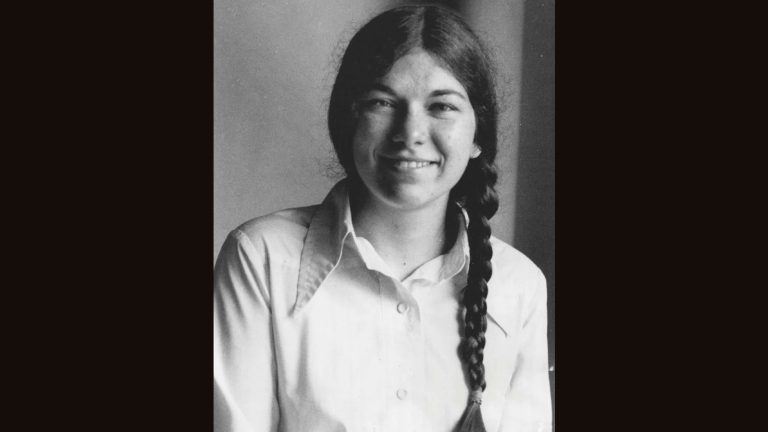
Have you heard of Anthony Arkwright?
Most people haven’t. Yet in the late summer of 1988, he carried out one of the most disturbing and theatrical killing sprees in modern British history. Arkwright didn’t just murder — he performed. He staged scenes, adopted personas, boasted in pubs, and treated the unfolding investigation as if it were his own twisted production.
He wanted infamy. He wanted a legacy. But instead of becoming a household name, he slipped into obscurity — remembered only by those whose lives he destroyed.
⚠️ Content warning: This article contains descriptions of violent or distressing events. Reader discretion is advised.
Act 1: The Troubled Path to Murder
Anthony Arkwright was born in 1967 to parents Zoe and Dick. He was the middle child of five and grew up in the mining town of Wath upon Dearne in Yorkshire. His early life was marked by instability. When he was 4 years old, his parents divorced, and his mother left the family. With his father working long shifts as a miner and unable to care for the children, Arkwright spent much of his childhood in children’s homes.
During these years, rumours circulated that he was the product of an incestuous relationship between his mother and her father, Stasys Puidokis. Zoe later denied that Stasys was Arkwright’s biological father, but the rumours persisted and would become a significant part of the grievances Arkwright expressed in later life.

Arkwright’s behaviour became increasingly disruptive. He struggled academically and was eventually expelled from school. He was already well known to the police, with his offending escalating from vandalism and burglary to theft and arson. In one incident, he broke into an elderly man’s home and threatened him with a toy pistol.
He spent thirty months in borstal, followed by eight months in prison at the age of 18. Reports of his behaviour during these periods described him as difficult to manage, and neither detention appeared to deter him from further offending.
While incarcerated, Arkwright developed a fascination with notorious killers. He spent long periods in prison libraries studying cases such as Peter Sutcliffe and Jack the Ripper, taking a particular interest in their methods and the attention their crimes attracted. He reportedly told fellow inmates and acquaintances that he intended to become notorious himself.
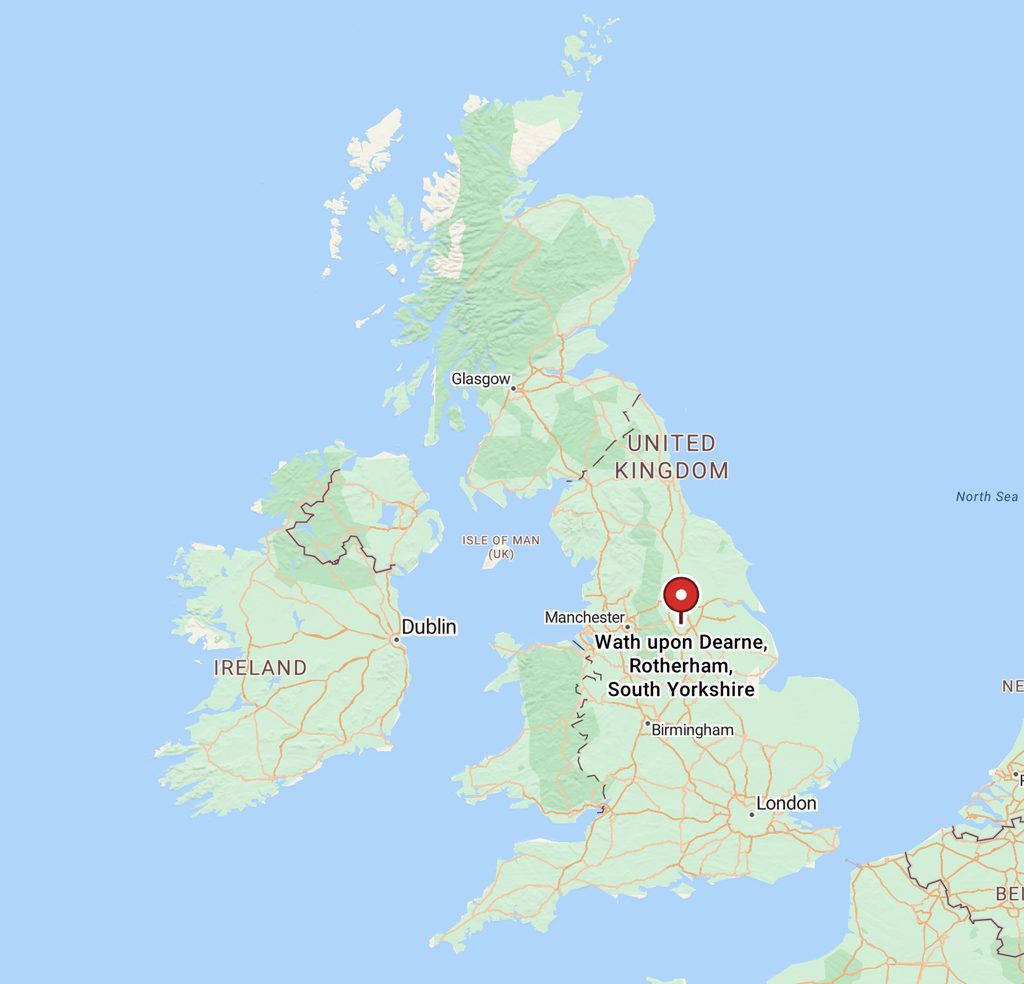
By the age of 21, Arkwright was living in a council flat on Denman Road in Wath. He continued to engage in petty crime and had developed a reputation locally for sudden outbursts and disputes with neighbours.
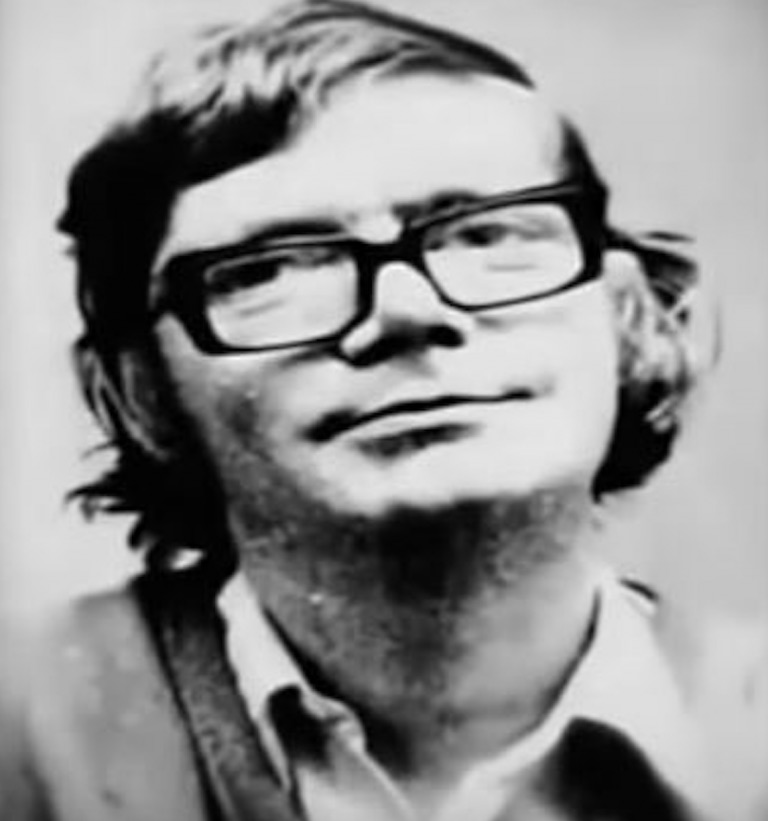
Fascinated by survivalism and the military, he fantasised about joining the SAS and accumulated a collection of weapons, which he kept in his flat. He also constructed concealed dens around the area, where he reportedly spent hours dressed in military clothing and carrying a hunting knife. Among those he harboured resentment towards were his grandfather, whom he suspected was his biological father, and two neighbours, Marcus Law and Raymond Ford.
Marcus Law, a 25-year-old wheelchair user, had been paralysed in a motorcycle accident at the age of 19. He lived in a specially adapted bungalow on Denman Road. By late August 1988, tensions between Marcus and Arkwright had escalated, reportedly fuelled by Marcus’s frequent requests for cigarettes and culminating in a dispute over a packet.
Raymond Ford was a 45-year-old former teacher who lived in a flat just forty yards from Marcus’s bungalow. He had previously worked overseas, but declining health had left him unable to continue working. Increasingly isolated and struggling with depression, Raymond lived alone in poor conditions, drank heavily, and rarely ventured outside except to buy alcohol and a newspaper.
Arkwright repeatedly harassed Raymond, smashing his windows and pushing dog excrement through his letterbox. He eventually broke into Raymond’s flat and stole an antique clock and a microwave.
Raymond reported the burglary and named Arkwright as the offender. In doing so, he unknowingly signed his own death warrant.
Arkwright’s employment history had always been unstable, marked by short spells in low‑paid jobs and frequent absences, and his aggressive behaviour made him difficult to employ. As a result, he rarely held a job for long, relying instead on petty crime and benefits to get by. On 26th August 1988, he was dismissed from his job at a scrapyard in Mexborough, where he worked nights constructing railway tracks.
Within hours of losing his job, Arkwright embarked on a fifty-six-hour killing spree that would claim four lives, shaped by the theatrical methods he had studied and internalised.

Act 2: The Killing Spree
On the afternoon of Friday, 26th August 1988, freshly dismissed from his job and simmering with resentment, Arkwright collected his severance pay and began drinking heavily in Mexborough. By 4:15 pm, intoxicated and brooding over a range of grievances — his neighbours, the likelihood of being arrested for burglary, and persistent rumours about his mother’s supposed relationship with his grandfather — his anger had reached a volatile peak.
For years, Arkwright had fantasised about achieving notoriety similar to the offenders he studied in prison. Within hours, he would act on those ambitions.
Stasys Puidokis and Elsa Konradite
*Please note: Stasys Puidokis’ name appears in multiple spellings due to transliteration variations, including Stanislav Pudoikas and Stasys Puidokas. I have chosen one form for consistency.
Arkwright’s first target was his 68‑year‑old grandfather, Stasys Puidokis, who had moved to England from Lithuania in the 1950s. Arkwright had long held the belief that Stasys was his biological father — a notion rooted in childhood taunts and rumours.
Unable to find Stasys at his home on Ruskin Drive, Arkwright walked to his grandfather’s allotment a mile away, where he found him tending to his vegetables.
Without warning, Arkwright attacked, stabbing his grandfather in the neck with sufficient force to sever his spinal cord. He dragged him into a nearby shed, bound and gagged him, before grabbing one of Stasys’s own axes and embedding it in his chest. Arkwright followed this with blows from a lump hammer, shattering his skull. Locking the shed door, Arkwright walked away, leaving his grandfather’s body inside.
Desperate for money and filled with rage, Arkwright returned to Stasys’s house intending to steal his grandfather’s savings of £3,000. Instead, he found 72‑year‑old Elsa Konradite, quietly ironing in the kitchen. Elsa had lived with Stasys for twenty-four years, and the pair kept two Yorkshire terriers.
What happened next was never proven in court, but Arkwright allegedly attacked Elsa, striking her head with an axe and causing catastrophic skull fractures. He then ransacked the property, taking money, valuables, his grandfather’s pocket watch, and other personal items before leaving.
Arkwright spent the rest of the evening drinking, his behaviour increasingly erratic. Witnesses described him as aggressive and confrontational. He made several remarks hinting at what he had done, telling one barman:
“It’s been murder on the allotment today.”
Another witness recalled Arkwright boasting:
“I’ll see you in 25 years. I’ve just done two murders.”
Arkwright was not attempting to conceal his actions. Instead, he appeared to be provoking shock and seeking a reaction. He even told his neighbour, Neil Hirst, that he intended to kill Marcus Law.
At around 3 am, Arkwright returned home, intoxicated. He had already murdered two people, but the violence wasn’t over yet.
Raymond Ford
Arkwright was still angry that his reclusive neighbour had reported him to the police for burglary, and decided that Raymond Ford would be his next victim.
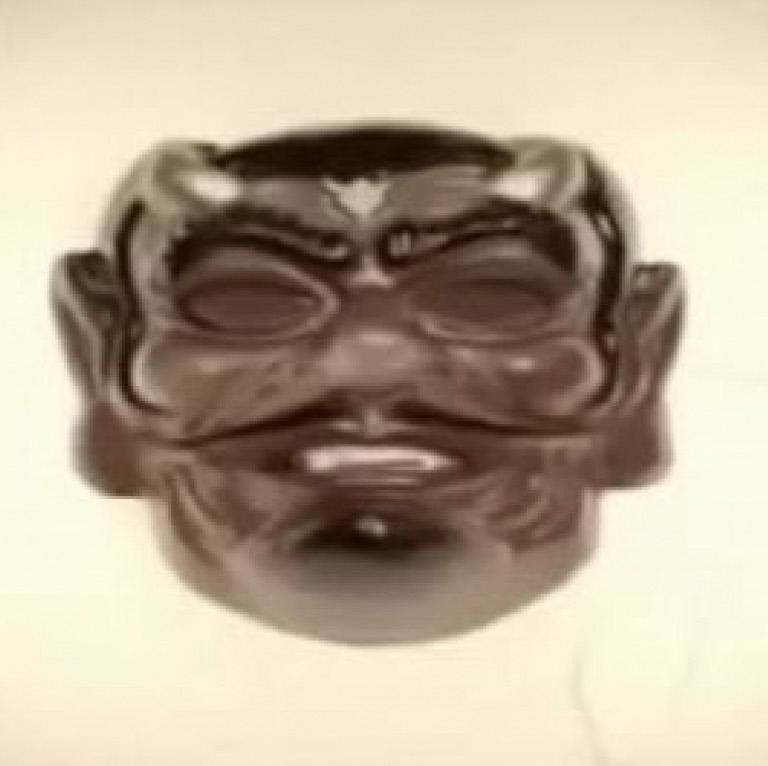
In the early hours of 27th August, he entered Raymond’s flat through a broken window — one he had smashed days earlier by throwing a dustbin through it. He stripped to his underpants, allegedly to avoid leaving forensic evidence, and put on a macabre devil mask before creeping through the property.
Arkwright came across Raymond heavily intoxicated and slumped in an armchair in the living room. He then proceeded to stab Raymond between 250 and 500 times. The knife broke during the assault, and an undeterred Arkwright retrieved another blade to continue. Raymond stood no chance.
Arkwright, however, wasn’t done. In a deliberate imitation of his idol, Jack the Ripper, he proceeded to gut and disembowel Raymond, scattering internal organs around the room like macabre decorations.
This was an extended and extremely violent assault, the severity of which left seasoned detectives struggling to process what they saw. Retired Detective Inspector Bob Meek later said:
“It was the most brutal act of slaughter I have ever seen. It’s all the more chilling when you realise he must have spent at least half an hour inflicting those wounds.”
This wasn’t a frenzied killing, but calculated, methodical, and deeply sadistic.
After murdering Raymond, Arkwright calmly returned home, showered off the blood, and went to bed.
Four hours later, the police arrived to arrest him — but not for murder. The police were unaware of Raymond’s death, and had turned up to arrest Arkwright for Raymond’s burglary. After several hours of questioning, Arkwright was released on bail and instructed to appear in court the following week.
The officers had no idea they had just released a killer.
Marcus Law
Arkwright spent Saturday drinking, his mood swinging between agitation and self‑satisfaction. By the early hours of 28th August — barely twenty‑four hours after killing Raymond Ford — his attention shifted to another neighbour he had long resented: 25‑year‑old Marcus Law.
Marcus lived in a specially adapted bungalow. As a wheelchair user, he was particularly vulnerable to an attack, and Arkwright knew this — and used it.
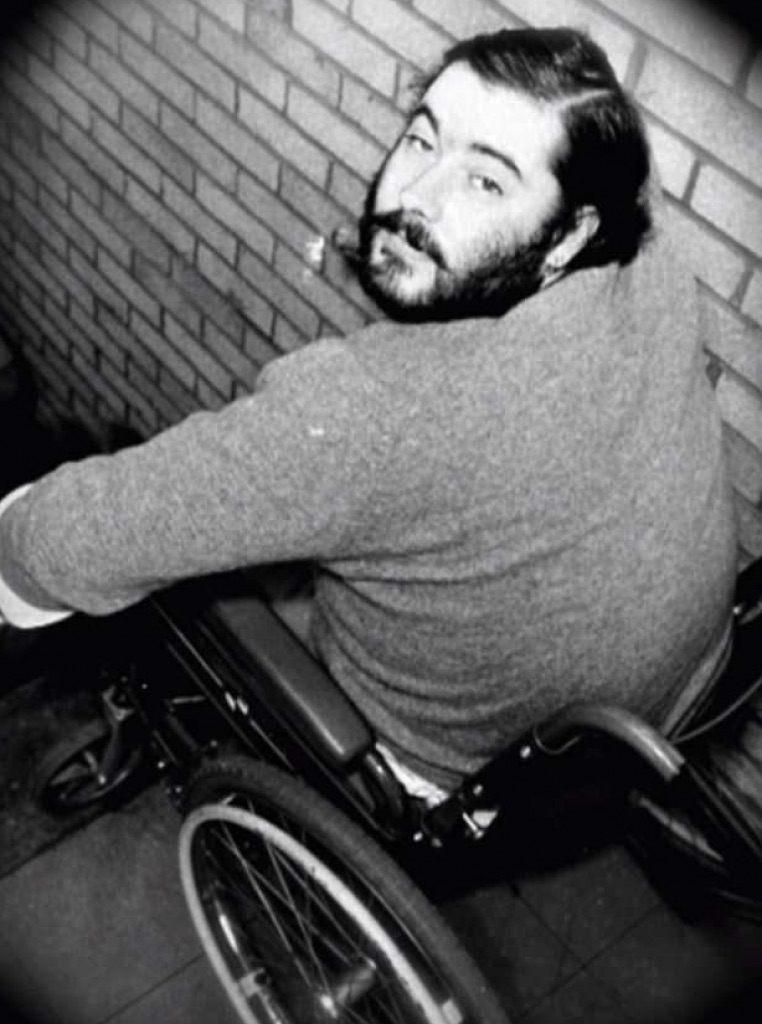
In the early hours, he broke into Marcus’s home. Moving through the bungalow with the same cold purpose he had shown the night before, Arkwright approached Marcus and launched into a sustained attack, stabbing him more than seventy times. Marcus had no chance of defending himself; trapped and unable to move, he could only endure what was happening to him.
But Arkwright’s violence did not stop at killing. Still fixated on mimicking the theatrical brutality of Jack the Ripper, he attempted to disembowel Marcus. When his crude efforts failed, frustration took over. He grabbed one of Marcus’s own crutches and forced it into the abdominal wound, an act that spoke directly to the performative cruelty he had spent years fantasising about.
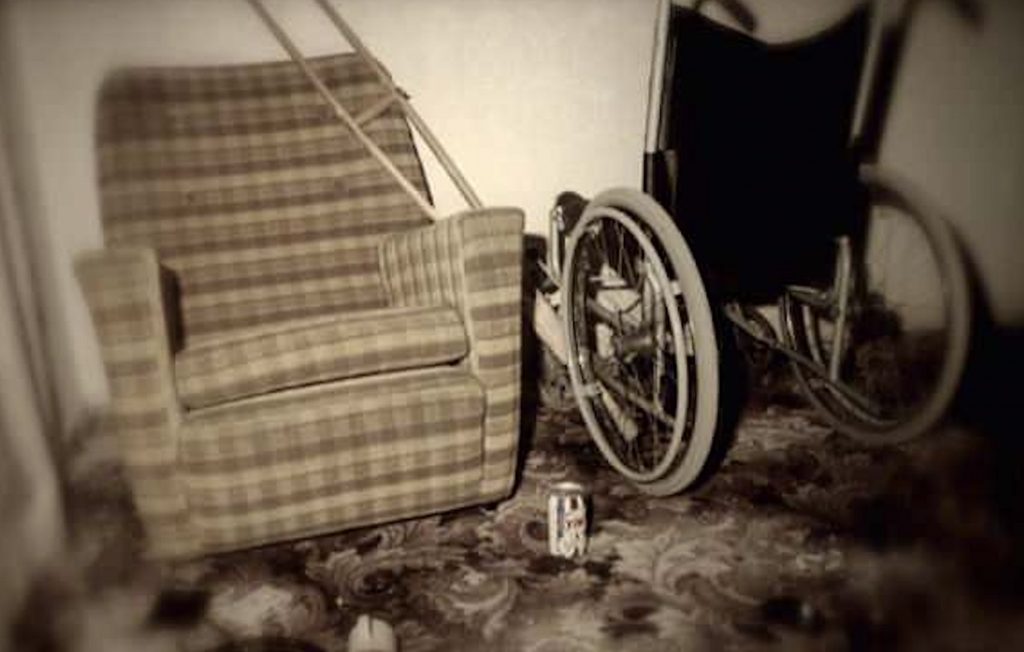
The staging continued. Arkwright placed unlit cigarettes in Marcus’s nostrils, ears, and mouth. He then gouged out Marcus’s eyes and inserted more cigarettes into the empty sockets. Officers later described the appearance as resembling ‘a grotesque birthday cake’ — a phrase that captured both the horror of the scene and the deliberate, almost theatrical arrangement Arkwright had created.
The macabre showmanship he had absorbed from the killers he idolised was now unmistakable. Arkwright wasn’t simply murdering; he was performing.
The next morning, he encountered Marcus’s mother, Peggy Tavender, and smirked as he told her, “Sorry about poor old Marcus. He’s killed himself.”
Peggy rushed to the bungalow and found her son’s mutilated body. By boasting to Peggy, Arkwright had already set the stage for his own downfall.

Act 3: The Investigation
It didn’t take long for the police to realise Arkwright had implicated himself. He was arrested within hours, though he denied killing Marcus Law. During questioning, he appeared entirely unfazed by the gravity of his situation. He enjoyed the attention, leaning into the interrogation as though it were another performance. With little evidence to work from, officers held him in custody while they urgently pursued leads.
The Grim Discovery of Raymond Ford
As part of their inquiries, officers visited Raymond Ford’s flat, aware that Arkwright was due in court for burglary charges. They knocked, but when Raymond didn’t answer, they left — despite a broken window and a television still playing inside. Both were clear signs that something was wrong, yet this initial opportunity to investigate further was missed.
It would be another two days before officers returned and finally climbed through the shattered glass. The corridor was littered with empty cider bottles and discarded rubbish, signs of Raymond’s declining mental health. But among the disorder lay evidence of something far more disturbing.
A devil mask lay abandoned on the floor, discarded where Arkwright had thrown it. Blood spattered the walls, and Raymond’s internal organs were scattered around the room, arranged in a grotesque display that reflected the theatrical brutality Arkwright had embraced.
The central heating was on full, filling the sweltering flat with the stench of decay. In the bedroom, officers found Raymond’s mutilated body buried beneath a pile of clothes in the corner.
PC David Winter later recalled:
“There was blood on the walls. I opened the bedroom door, and I thought there was this pile of clothes in the corner but there was this body underneath this and all the bits and pieces I’d seen in the hallway, that was all his all his organs. He’d removed just about every organ in his body.“
Raymond had not only been murdered — he had been butchered, his body systematically dismembered in an act of calculated cruelty.
Arkwright’s Chilling Revelation
Back in custody, Arkwright maintained his calm, mocking demeanour. But then, the interrogation took a surreal turn.
Unaware that the police had found the body of Raymond Ford as well as Marcus Law, he shuffled a deck of playing cards and claimed to be psychic. With unsettling composure, he flicked through the deck, drew the four of hearts, and announced:
“This is the master card. It means you have four bodies and a madman on the loose. You’ve found one of these, but there are three more. I can see Marcus Law, but the others are indescribable. They are just too horrible to describe.”
The detectives stiffened. Four bodies? They had only found two bodies. If Arkwright was telling the truth, two more victims were still out there.
The Search for More Victims
Officers went first to the home of Arkwright’s grandfather, Stasys Puidokis, intending only to ask about his grandson’s movements. They had no reason to expect what awaited them inside.
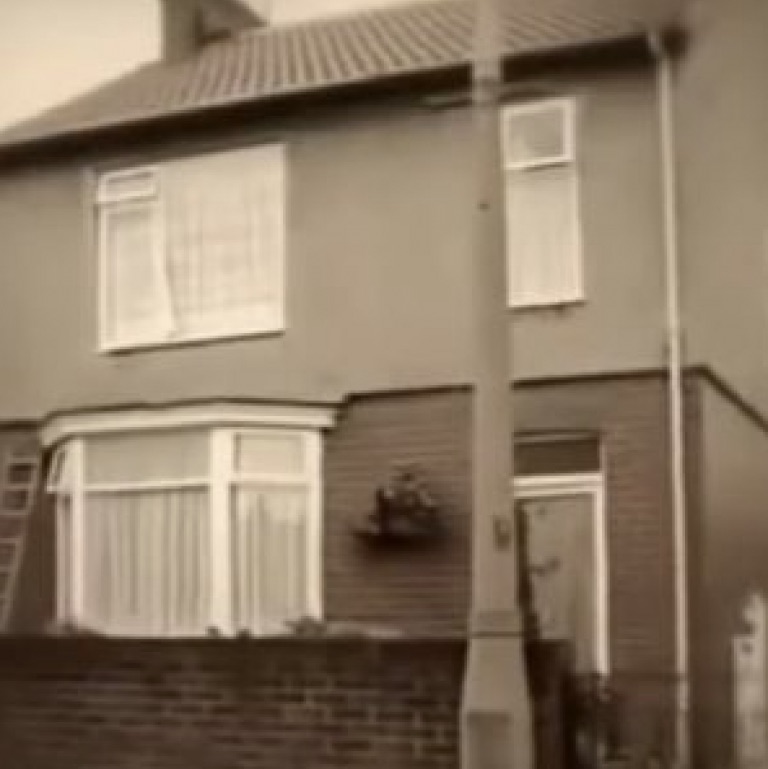
In the kitchen, they found Elsa Konradite, the 72‑year‑old housekeeper, bludgeoned with an axe. One of her Yorkshire Terriers lay faithfully by her side.
Following a tip from neighbours, officers then searched Stasys’s allotment. Inside his shed, they discovered his butchered remains. The second dog was found trapped inside but unharmed.
Arkwright’s tally stood at four victims. But he wasn’t finished playing.
A Twisted Game of Cat and Mouse
With all four bodies discovered, most killers would have begun to crack. Arkwright did the opposite. He revelled in the attention, treating the investigation as a stage.
Not wanting the game to end, he invented a fifth victim. Officers spent hours searching abandoned buildings and waterways, chasing a phantom. It was nothing more than a taunt — there was no fifth body.
He continued to toy with detectives. At one point, he hummed a tune and demanded an officer identify it. When the officer hesitantly replied, “Strangers in the Night,” Arkwright smiled and said he was now prepared to cooperate. Every interaction was about control.
Confession and Theatrics
After days of interrogation, Arkwright confessed to killing Stasys Puidokis, Raymond Ford, and Marcus Law. He admitted standing over Elsa Konradite with an axe in his hand, but never explicitly confessed to murdering her.
Charged with four counts of murder, he was remanded to HMP Hull. Even in custody, his craving for notoriety persisted. He smeared his cell walls with faeces in a bid for attention, demanding recognition as a notorious killer.
He was transferred to Rampton Hospital in Nottinghamshire, where forensic specialists began assessing him. Their findings would later be outlined in court, when Mr Justice Boreham revealed that three psychiatrists had examined Arkwright and all agreed he posed a severe and lasting threat to the public.
Despite extensive evaluation, he was not diagnosed with a psychotic disorder. Instead, experts described him as an ‘evil fantasist,’ a man consumed by a pathological hunger for notoriety.
His theatrical boasts, the grotesque staging of his crime scenes, and his fixation on infamy suggested a profound personality disturbance rather than psychosis. Ultimately, he was described as “the sanest person in the building” and deemed fully fit for trial.
Act 4: Legal Proceedings
Arkwright treated both the pre‑trial hearings and the trial itself as opportunities to feed his ego. Outside the courtroom, he smirked for cameras and taunted bystanders who shouted for him to be hanged. Their hatred didn’t intimidate him — it entertained him.
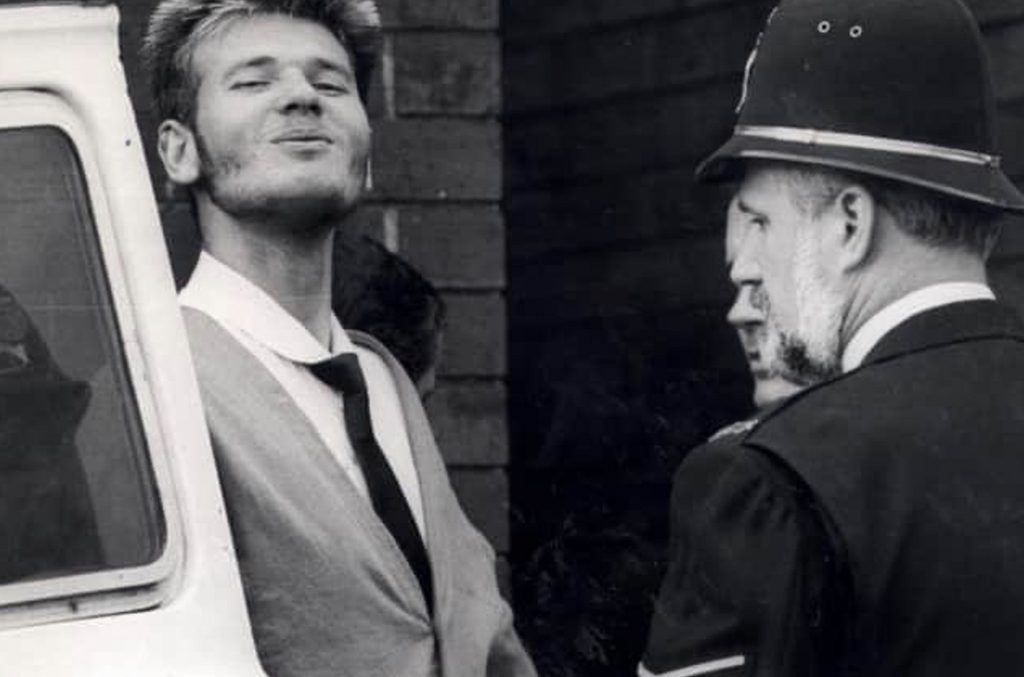
Inside, he crafted his own performance. He arrived dressed in white socks, cut‑off jeans, a dinner jacket, and a red bow tie, an outfit chosen purely for effect. His behaviour throughout was so mocking that many in the legal profession found it deeply insulting.
In July 1989, Anthony Arkwright stood before Sheffield Crown Court. He initially pleaded not guilty to four counts of murder, but later changed his plea to guilty for three of the killings, continuing to deny responsibility for the murder of Elsa Konradite. Ultimately, Mr Justice Boreham ordered the charge to lie on file — meaning it would remain unresolved but could be revived if new evidence ever emerged.
Sentencing
During sentencing, Arkwright’s defence counsel, James Chadwin, argued that his client was mentally unstable, pointing to his chaotic upbringing as a contributing factor.
“Arkwright is a young man who suffers from severe personality damage and disorder. He has shown signs of disturbance since the time his mother left him when he was four years old.”
Arkwright agreed with this portrayal. In a rambling fifteen‑minute speech, he attempted to justify his actions by blaming his childhood, ending with the incongruous line:
“We were born to live in a world of love.”
However, it wasn’t an apology. It wasn’t an explanation. It was another act — a final attempt to bask in the attention he craved.
The court remained unmoved. With his guilty pleas entered, proceedings moved swiftly to sentencing.
Arkwright was sentenced to life imprisonment with a recommended minimum term of 25 years.
Following his sentencing, the Home Secretary intervened. Viewing the original sentence as dangerously lenient, he upgraded Arkwright’s punishment to a whole-life tariff — a sentence reserved for Britain’s most dangerous offenders. It meant Arkwright would never be eligible for parole. He would never be released.
Arkwright had been just 21 at the time of the murders, making the decision unusually severe. Most young offenders are considered capable of rehabilitation, but his crimes were too calculated, too theatrical, and too devoid of remorse. Authorities concluded he posed a permanent danger to the public.
Had the original sentence stood, Arkwright could have become eligible for parole in 2013. Instead, he remains behind bars, his craving for notoriety reduced to a footnote in British criminal history.
Aftermath
Years before Arkwright’s arrest, Zoe had re‑established contact with her son, though their relationship remained volatile. During one visit to her father’s home, Arkwright threatened Zoe’s young daughter with a dagger. When she ordered him to leave, he turned on her, vowing to kill his own mother. Zoe later said she believed that, had he not been caught, she would have been his next victim.
After his conviction, Zoe spoke publicly to address rumours that her father, Stasys Puidokis, was also Arkwright’s biological father. She confirmed that Stasys had sexually abused her as a child, beginning when she was 5 and continuing until he was imprisoned in 1960 for indecent assault. Despite the trauma, she later reconciled with him, choosing to forgive and move forward. But she insisted that Arkwright was not the product of incest — his father was her first husband, Dick Arkwright.
Zoe recalled that two months before the murders, police had visited her home asking about Arkwright’s father. She was stunned when they explained that her son had filed a report claiming Stasys was his biological father. She said the allegation humiliated her and believed Arkwright fabricated it to deflect responsibility for his own behaviour.
In 2002, fourteen years after the murder of Marcus Law, tragedy struck the Law family again. Marcus’s father, Tony Law, took his own life. He was found in the garage of his home, having poisoned himself with car exhaust fumes.
Tony had already endured the loss of another son — Marcus’s brother — who died by suicide in 1973 at just 13 years old. The cumulative grief of losing both children became impossible to bear. His death was another consequence of Arkwright’s actions, a reminder that the devastation extended far beyond the victims he directly killed.
Today, Arkwright remains incarcerated, serving a whole‑life tariff with no possibility of release. His pursuit of notoriety never materialised. He imagined himself as a feared figure in British criminal history, yet he has faded into obscurity, remembered only by those whose lives he destroyed.
What matters now is ensuring the focus remains on his victims. They deserve remembrance far more than the man who sought infamy, only to become nothing more than a forgotten prisoner who will die behind bars.
Sources
Murderpedia | Anthony Arkwright
Sky TV | Britain’s Most Evil Killers | Season4, Episode 9
They Walk Among Us Podcast | UK True Crime: Spree Killer / Anthony Arkwright, 17 May 2023
Tivyside Advertiser | Tragic dad haunted by son’s murder
True Crime Enthusiast | When Life Means Life – The “Four Of Hearts” Murders
Yorkshire Live | The twisted Jack the Ripper fantasist who went on a 56-hour killing spree in South Yorkshire
Yorkshire Post | Evil Doncaster serial killer who murdered three people in 56 hours is focus of new TV documentary