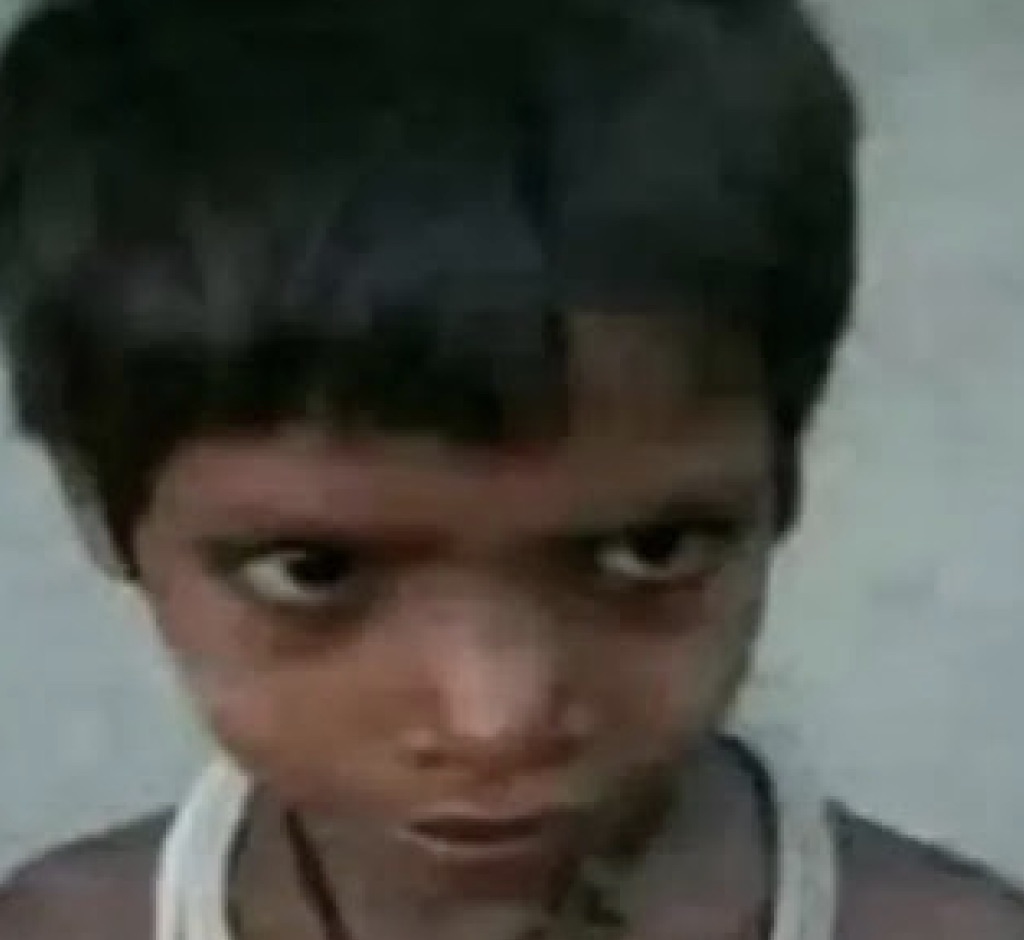
In 2007, police in Bihar, India, sat across from an 8-year-old boy named Amarjeet Sada. He spoke very little, smiled often, and at one point asked for a biscuit. There was something strangely ordinary about the behaviour of a child sitting in a chair, waiting for something to eat. But Amarjeet was not there because of some childhood mischief. Police were questioning him about the disappearance and death of 6-month-old Khushboo Devi.
And as they began to investigate what had happened to Khushboo, another story started to emerge, one that had remained within Amarjeet’s own family for almost two years.
⚠️ Content warning: This article contains descriptions of violent or distressing events. Reader discretion is advised.
A Family Matter
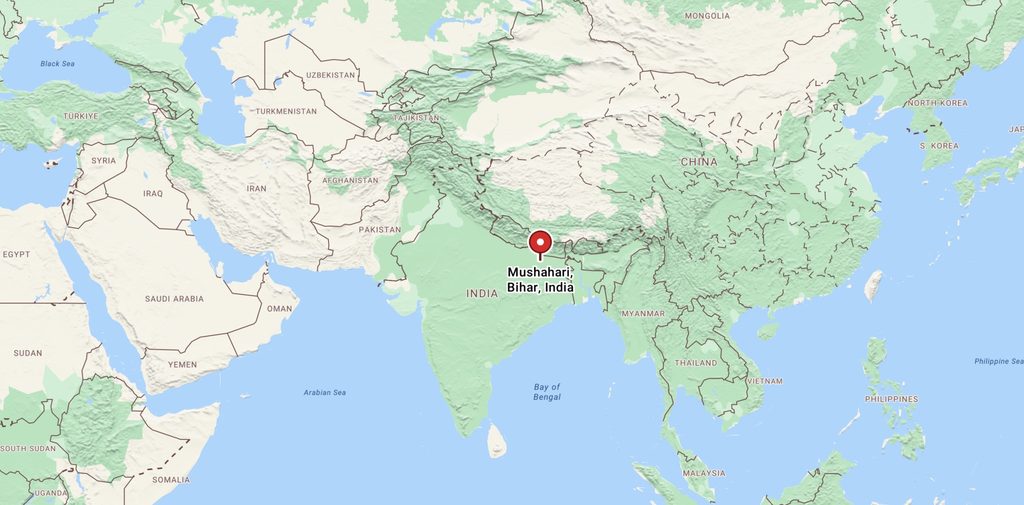
Amarjeet Sada was born in 1998. When he was 6 years old, his family relocated to the village of Mushahari in Bihar, eastern India. Poverty and unemployment were widespread in the area, and Bihar remains one of India’s poorest states.
Amarjeet’s mother stayed at home to look after him and the household, while his father worked as a farm labourer. The work was not guaranteed, and he would travel between local farms hoping to find someone who needed help for the day. As a result, money was a constant concern for the family.
Despite their financial difficulties, Amarjeet’s parents doted on their only son. Each day, his mother would draw a black dot on his forehead, traditionally intended to protect a child from the evil eye. Within a few years, however, it would be other children who needed protecting from Amarjeet.
Amarjeet’s parents also tried to provide him with the things he wanted whenever they could. Like many children, Amarjeet could be temperamental, sometimes accepting that the family could not afford new toys, while at other times sulking or throwing tantrums. Over time, however, his behaviour reportedly became more difficult, and it began to affect his relationships with other children.
Mushahari was a close-knit community, where children, including members of Amarjeet’s extended family, played together in the streets and nearby fields. Amarjeet was sometimes physically aggressive towards them, hitting and kicking other children, and he began to develop a reputation for causing trouble. Eventually, he withdrew from the group altogether and increasingly preferred to play by himself.
Shortly after the family moved to Mushahari, Amarjeet’s mother became pregnant. Although another child would place additional financial pressure on the household, the family were excited about the new arrival.
Around this time, Amarjeet’s aunt asked his mother to care for her 6-month-old baby for a month while she took temporary work in the city. Amarjeet’s mother was initially reluctant. She was pregnant, and the family were already struggling financially, but her sister offered to contribute some of her wages towards the baby’s care. Eventually, Amarjeet’s mother agreed, and his young cousin came to stay with the family.
One day, Amarjeet’s mother needed to go to the market for food. Before leaving, she placed the baby in its cot and told Amarjeet to watch his cousin until she returned.
While his mother was away, Amarjeet approached the sleeping baby and began hitting, pinching, and scratching the child. He then strangled his cousin until the baby lost consciousness before carrying the child outside to a nearby field, where he struck the baby with a rock. Afterwards, he buried the body in a shallow grave and covered it with grass and leaves.
Amarjeet Sada had just committed his first murder. He was 7 years old.
When his mother returned and discovered that the baby was missing, she questioned her son. Amarjeet admitted what he had done and told her where he had concealed the body. Accounts of the case describe him as showing little apparent remorse or understanding of the consequences of his actions.
When Amarjeet’s father returned home and learned what had happened, he reacted violently and beat his son. Despite this, the family did not contact the police. Instead, they attempted to deal with what had happened within the family.
When the baby’s mother returned to collect her child, Amarjeet’s parents told her what had happened and persuaded her not to involve the authorities. According to accounts of the case, the death was instead treated as an accident, with concerns about the family’s reputation and financial circumstances contributing to the decision to keep the matter private.
The death therefore remained what the family considered a family matter, and Amarjeet got away with murder.
Not long afterwards, Amarjeet’s mother gave birth to a baby girl. The family doted on the new arrival, although Amarjeet reportedly struggled to form a bond with his younger sister.
Eight months later, while his parents were sleeping, Amarjeet approached his sister as she lay alone in her cot and strangled her. He then returned to playing with his toys.
When his parents awoke and found their daughter dead, they suspected Amarjeet. His mother was devastated, while his father again responded by beating his son. As before, accounts describe Amarjeet as showing little apparent remorse and seemingly struggling to understand his parents’ reaction to the death.
Exactly how much the wider community knew at this point is unclear. Some accounts claim that villagers had already become wary of Amarjeet and kept their children away from him. Others say neighbours came to the Sada home after hearing the disturbance following his sister’s death and became aware of what had happened.
Whatever the extent of that knowledge, two babies connected to the Sada family had now died or disappeared, and suspicions about Amarjeet were beginning to circulate within the village.
Once again, however, the death was treated as a private family matter rather than being reported to the authorities. Amarjeet remained at home, without any formal intervention.
It would not remain a family matter for much longer.
Khushboo
In May 2007, a local woman, Chunchun Devi, needed to run some errands and left her 6-month-old daughter, Khushboo, in the childcare facility at the local primary school. When she returned to collect her, however, Khushboo was gone.
The school had no security, none of the staff knew where the baby was, and at 6 months old, Khushboo could not have wandered away by herself. Chunchun frantically began searching the village for her daughter and, during the search, encountered a member of the Sada family who indicated that they might know what had happened.
Suspicion soon turned to Amarjeet. When confronted, he admitted killing Khushboo and led villagers to the shallow grave where he had concealed her body beneath dirt and leaves.
Once again, accounts describe Amarjeet as showing little apparent remorse as he explained what he had done. This time, however, the victim was not a member of his family, and Khushboo’s death could not be dealt with privately in the same way as the previous two.
The police were called, and Amarjeet was arrested.

The Confession
According to Bihar police, Amarjeet appeared calm during questioning. He spoke very little, “but smiled a lot,” and reportedly asked for biscuits. Officers believed that he showed little understanding of the seriousness of what had happened or the distinction between right and wrong.
During questioning, Amarjeet admitted taking Khushboo while she was sleeping at the school. He told police that he had initially tried to strangle her but, according to his account, wanted to see more fear in her reaction. He then struck her repeatedly with a stone before burying her body in a shallow grave and covering it with grass and leaves.
Amarjeet also admitted killing his cousin and younger sister.
Psychological assessments were subsequently carried out. One assessment described Amarjeet as “a sadist who derives pleasure from inflicting injuries,” and interpreted his apparent lack of remorse and reported enjoyment of causing pain as evidence of psychopathy.
He was also reportedly diagnosed with conduct disorder, a behavioural disorder in children and adolescents characterised by a persistent pattern of behaviour that violates the rights of others or major social rules. This can include aggression, fighting, stealing, lying, and rule-breaking, while some children with the disorder may display limited guilt or remorse.
Verdict
In June 2007, Amarjeet Sada appeared in court in connection with the murder of Khushboo Devi. Although he had also admitted killing his cousin and younger sister, those deaths did not result in separate murder charges.
Accounts differ considerably over what happened to Amarjeet after his arrest. Because of his age, he could not be dealt with in the same way as an adult offender, and reports variously describe him as being placed in a juvenile institution or psychiatric facility. He was later reportedly transferred to a children’s home in Munger, where he received treatment.
Some accounts state that three years was the maximum period for which he could initially be detained under the law at the time, although reports of the exact nature and length of his detention are inconsistent.
What is generally reported is that Amarjeet remained within the juvenile system for almost ten years until he reached adulthood. He was released in 2016, at the age of 18, and was reportedly given a new identity.
His whereabouts have not been publicly confirmed.
Alternative Theories
The gaps and inconsistencies surrounding Amarjeet Sada’s case have inevitably led to alternative explanations of what happened. The most significant is the suggestion that Amarjeet may not have been responsible for all three deaths.
There are several variations of this theory. One proposes that an older member of Amarjeet’s family killed all three children and that Amarjeet was subsequently persuaded or coerced into taking responsibility. Another suggests that a family member was responsible for the deaths of Amarjeet’s cousin and younger sister, but that Amarjeet later killed Khushboo himself, having learned from the earlier deaths how to kill and conceal a body. Under this version, he was responsible for Khushboo’s murder but later confessed to all three.
Part of the speculation surrounding the theory has drawn upon the documented preference for sons and discrimination against girls that has existed in parts of Indian society, particularly in communities where dowry costs and economic expectations have historically contributed to daughters being regarded as a financial burden. From this, some have suggested that financial hardship could have provided a motive for a member of the Sada family to kill the children.
There is no evidence, however, that Amarjeet’s family held those beliefs or that they provided a motive for any of the deaths. The theory is further complicated by conflicting reports about the sex of Amarjeet’s cousin, with sources variously describing the baby as male or female.
Khushboo’s murder also makes the theory harder to explain. She was not a member of the Sada family. If an adult relative had killed the first two babies because of the family’s financial circumstances or attitudes towards girls, why would that same person then abduct and murder another family’s child? The alternative explanation is that they didn’t: Amarjeet killed Khushboo himself after learning from the earlier deaths. That is possible, but it still leaves us with a theory built largely on speculation.
There is also Amarjeet’s confession to consider. For the theory to work, an 8-year-old would have needed to take responsibility for murders committed by an adult and maintain that account through police questioning and subsequent psychological assessments. Children can, of course, be manipulated or coerced, and without detailed records of Amarjeet’s interviews, the reliability of those confessions cannot simply be taken for granted. But there is no evidence that this happened either.
And that is really the problem with the alternative theory. The gaps in this case are genuine, particularly when it comes to the first two deaths, which were never investigated in the same way as Khushboo’s murder. But filling those gaps requires us to make one assumption after another: that somebody else committed the earlier killings, that Amarjeet knew enough about them to copy what had happened, and that he then falsely took responsibility for all three.
Perhaps part of the reason alternative explanations have persisted is that the accepted version of events is itself so difficult to comprehend. Amarjeet was only 8 years old when he was arrested. Looking for an adult behind the killings offers an explanation that may seem easier to understand than accepting that a child could have deliberately killed three other children.
But Amarjeet’s age is not, by itself, evidence that somebody else was responsible. Children are capable of serious violence, however rare and difficult such cases may be to understand. What we do know is that Amarjeet admitted killing Khushboo and also confessed to the deaths of his cousin and younger sister. There are enough inconsistencies in the surviving accounts to justify caution about some of the finer details, particularly surrounding the first two deaths, but uncertainty does not automatically point to an alternative perpetrator.
There is another part of the case that is harder to dismiss as speculation. According to the accounts available, Amarjeet’s family knew about the death of his cousin and chose not to involve the authorities. After his younger sister died, the matter was again kept within the family. Whatever their reasons for those decisions, two opportunities for outside intervention passed before Khushboo was killed.
Had the first death been reported, nobody can know what would have happened next or whether either of the later deaths would have been prevented. What can be said is that Amarjeet’s alleged violence was known within his family long before it became known to the authorities.
For almost two years, it remained a family matter.
Khushboo’s death ensured that it could not remain one.
Sources and Further Reading
Crime Wire | Amarjeet Sada: The World’s Youngest Serial Killer
Guardian | Eight-Year-Old Boy Accused of Three Murders
Gulf News | Boy Accused of Killing Three Babies
Mamamia | At 10, Armarjeet Sada Was The World’s Youngest Serial Killer. No One Knows Where He Is
Mathrubhumi | Amarjeet Sada: India’s 7-Year-Old Serial Killer
Onmanorama | Know The Terrifying Real Life Stories of Child Serial Killers Mentioned in Forensic
Postmortem | Where Are They Now? Amarjeet Sada, The World’s Youngest Serial Killer
Times of India | Eight-Year-Old ‘Serial Killer’ Held After Third Murder
*Note on the Sources
This case was particularly difficult to research because the surviving accounts contain significant gaps and inconsistencies. Much of the available English-language reporting is secondary, and some details appear differently across sources.
For example, Amarjeet is variously referred to as Amarjeet, Amardeep, or Amar, while accounts also disagree about the ages and sex of two of the victims. His younger sister is described in some reports as 6 months old and in others as 6 years old, while his cousin is variously described as male or female.
Where sources conflict, I have used the details that appear to be most consistently supported by the available reporting. Where the evidence does not allow a firm conclusion, I have tried to make that uncertainty clear rather than present one version as established fact.