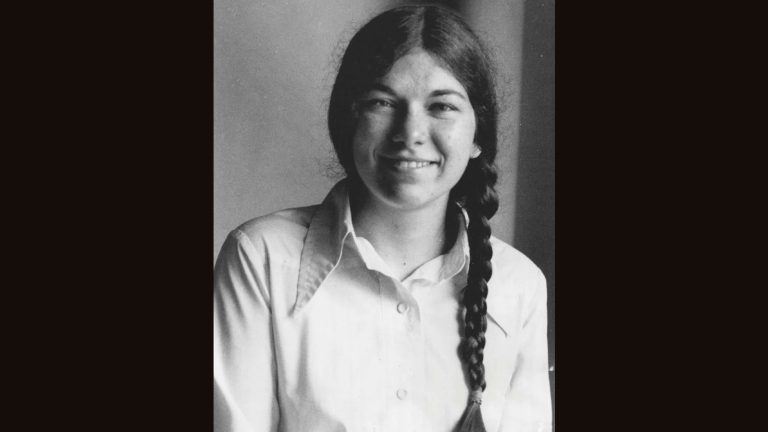
In the summer of 1984, Alton Coleman and Debra Brown travelled across the American Midwest, leaving a succession of violent crimes in their wake. Over fifty-four days, their movements took them through six states, as police struggled to piece together a growing series of murders, abductions, and attacks. By the time their journey came to an end, the scale of what had happened would make their names notorious across the country.
⚠️ Content warning: This article contains descriptions of violent and distressing events, including crimes involving children. Reader discretion is advised.
Alton Coleman and Debra Brown
Alton Coleman was born on 6th November 1955 in Waukegan, Illinois, the third of five children.
Accounts of his childhood describe a deeply unstable and abusive home. His mother, Mary Bates Coleman, reportedly used drugs and alcohol while pregnant with him, and according to later accounts, abandoned him in a rubbish bin when he was a baby. He was retrieved by his grandmother, Alma Hosea, who was said to have repeatedly reminded him of the incident by telling him that he was “trash.”
Mary struggled with gambling and worked as a sex worker, and witnesses later described serious physical abuse within the home. Coleman was reportedly struck with objects including a chair and a baseball bat, as well as with his mother’s fists.
Much of his childhood was spent in the care of his grandmother, but this did not provide the stability he lacked elsewhere. Alma was also reportedly physically and verbally abusive, whipping him with extension cords and mocking him for wetting the bed by calling him “Pissy.”
His grandmother reportedly practised voodoo and involved Coleman in rituals that included the killing and dismemberment of animals. Sexual exposure was also a feature of his childhood. While living in public housing with his mother, he witnessed her having sex with clients, while later accounts alleged that he was forced to participate in sexual acts involving both his mother and grandmother.
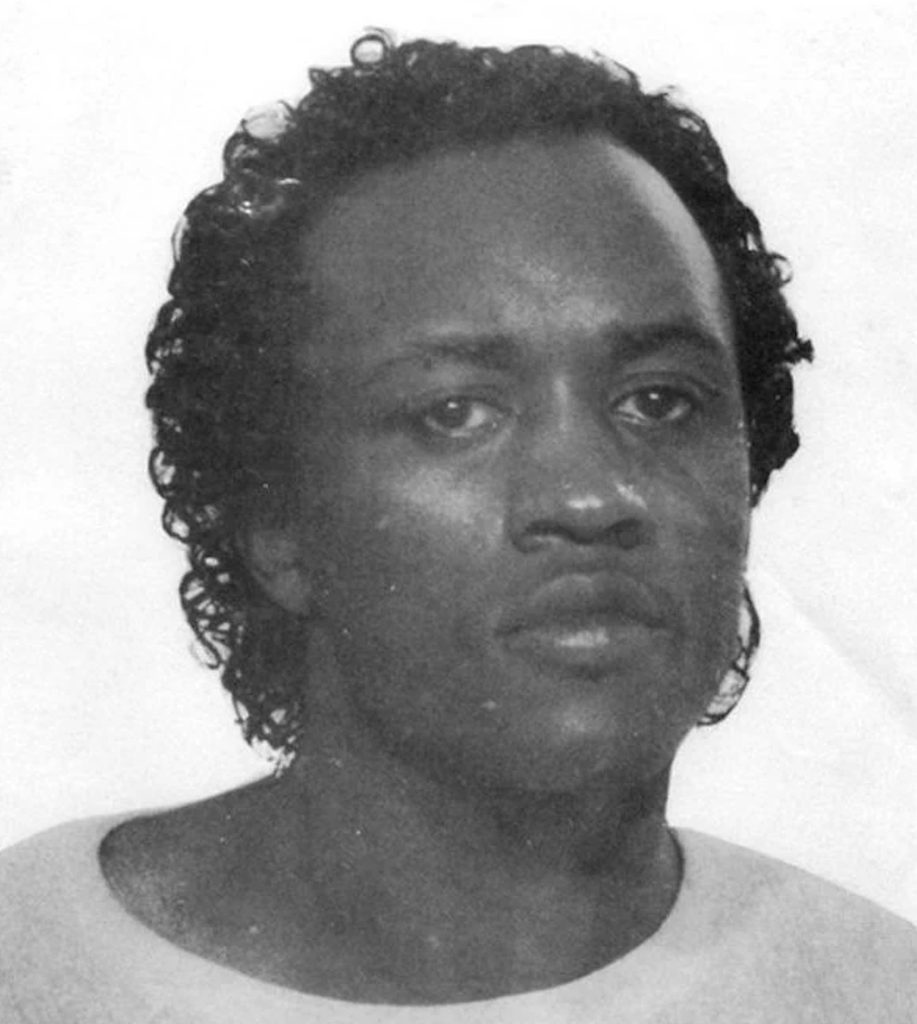
The humiliation and sexual trauma he experienced at home extended into his social life. He entered adolescence with considerable instability in his life. He was bullied over his bedwetting, left school during the ninth grade, and began using alcohol and drugs.
He also became involved with a street gang and increasingly came into contact with the criminal justice system. According to accounts of his early life, his first encounter with the police came extraordinarily young, at the age of 5, after he stole a wallet from one of his mother’s clients.
As he grew older, however, his offending became considerably more serious.
On 27th December 1973, when Coleman was 18, he and an accomplice abducted 54-year-old Eleanor McIntire at gunpoint. McIntire reported that she had been raped before the men took her money and car. As part of a plea agreement, the rape charge was dropped, and Coleman was convicted of armed robbery. He served two years at Joliet Penitentiary before being paroled in 1976.
Just three months after his release, on 13th September, Coleman was accused of another sexual assault. Seventeen-year-old Sherri Patterson said that he had lured her to a remote location under false pretences before dragging her into an abandoned building and raping her. Coleman maintained that the encounter had been consensual, and a jury acquitted him.
While awaiting trial at Lake County Jail, Coleman was also charged with sexually assaulting three fellow inmates, all young men aged 18 or 19. He was ultimately convicted of battery and sentenced to six months.
In 1980, Coleman married 25-year-old Beverly Perkins following a two-year relationship. The marriage lasted just six months. Perkins later testified that Coleman physically abused her, including before sex. She also made another disturbing allegation about his interest in children. She claimed that before their marriage, Coleman had lived with his grandmother and a 12-year-old girl with whom he was sexually involved. According to Perkins, Coleman said that he preferred young girls because they were “pure and had never been touched.”
That same year, on 11th July, Coleman met 22-year-old Dorothy Hawkins at a disco. Dorothy, who was serving in the U.S. Navy, mentioned that she was looking for somewhere to live off base. Coleman offered to help her find accommodation and took her to an industrial area in Waukegan, where Dorothy said he raped her. She identified Coleman as her attacker, but once again, a jury acquitted him.
In 1981, Coleman was implicated in the sexual assault of a 14-year-old girl. That case was eventually dropped because of insufficient evidence.
By the time Debra Brown entered his life in 1983, Coleman had already spent a decade moving in and out of the criminal justice system. Brown, by contrast, had no criminal record.
Debra Brown was born on 11th November 1962 in Waukegan, Illinois, and grew up as one of eleven siblings.
Although her upbringing appeared relatively stable from the outside, court records later revealed serious problems within the family. Her father reportedly struggled with his mental health and alcohol use and was physically abusive towards his wife and children.
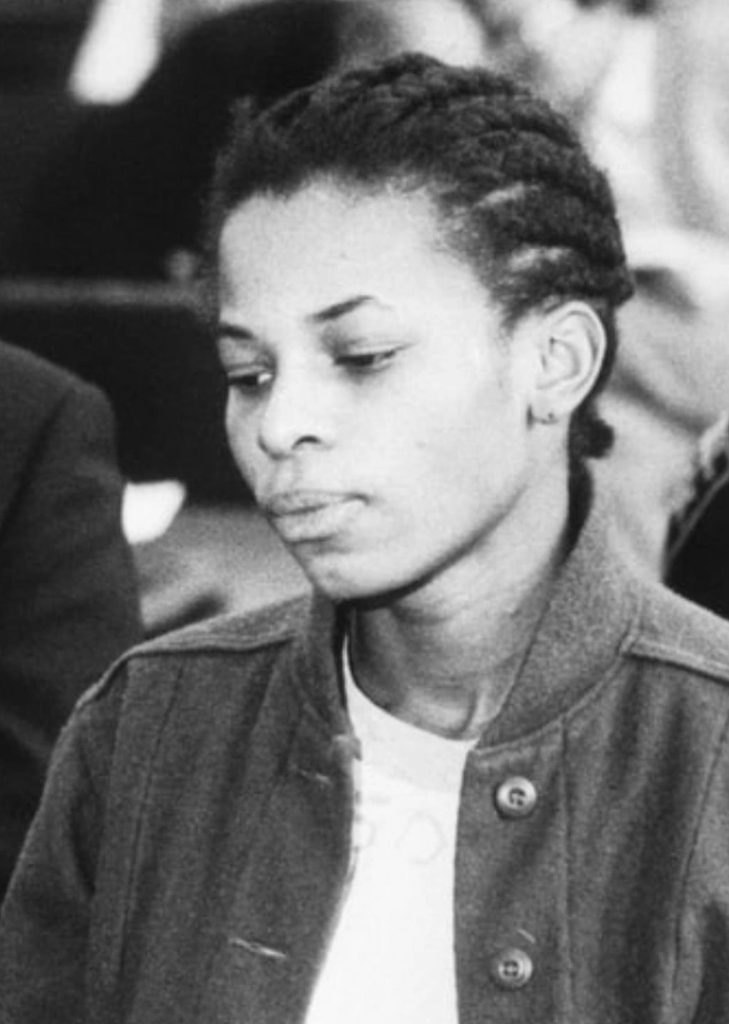
Brown also appears to have experienced problems of her own as she grew older. There were indications that she regularly used drugs, and in 1980, she was hospitalised following an overdose.
Brown met Alton Coleman while she was engaged to another man. Their relationship developed quickly, and before long, she had left both her fiancé and her family to live with Coleman and his grandmother, for whom she provided care.
Over time, Coleman appears to have increasingly isolated Brown from her family. Her mother later recalled seeing injuries on Brown’s face and suspected that Coleman was also exploiting her through prostitution.
Those who later examined their relationship described Coleman as the dominant partner. Authorities would characterise the dynamic between them as a “master-slave relationship”, while Brown was described as a slow learner whose intellectual limitations affected her judgement and may have made her more susceptible to manipulation.
Meanwhile, allegations against Coleman continued. In July 1983, he was accused of sexually abusing his 8-year-old niece, Melinda Snow, on two separate occasions.
In the first, he was accused of kissing and fondling her over her clothing, reportedly in the presence of Brown. In the second, he was alleged to have followed Melinda into the bathroom, where he fondled and penetrated her with his fingers. However, three weeks after the allegations were reported, the case was dropped because of insufficient evidence.
Then, in February 1984, another allegation followed.
On 26th February, Coleman approached Dorthea Thompson in Chicago as she waited for her 14-year-old daughter, Chalandra, to finish work. During their conversation, they discussed employment, and Dorthea gave Coleman her contact details.
Two days later, Coleman arrived at the family’s home claiming to have brought a job application. Dorthea was out, but Chalandra was home and allowed him inside. Chalandra later reported that Coleman threatened her with a knife and raped her.
Afterwards, Coleman attempted to create evidence suggesting that the encounter had been consensual. He forced Chalandra to write a journal entry:
Al, I really enjoyed tonight, and we must do this again real soon.
Love Chalandra Thompson.
P.S. Let this be our little secret.
On 30th May 1984, Coleman was arrested and arraigned for the rape of Chalandra Thompson.
The case would never reach trial.
Within hours, Alton Coleman was on the run.
The Crime Spree
Until this point, Coleman had repeatedly avoided serious consequences for the sexual offences of which he had been accused. Some charges had been dropped, others had ended in acquittal, and the sentences he had received were relatively short.
By May 1984, however, he was once again facing the prospect of imprisonment. Rather than remain and face the case against him, Coleman fled. What followed was a seven-week crime spree across six Midwestern states, with Debra Brown travelling alongside him.
His first known victim during the spree was the child of a family he had already befriended in Kenosha, Wisconsin. To them, he wasn’t Alton Coleman. He was Robert Knight.

Illinois and Wisconsin
Juanita Wheat had welcomed Coleman into her family’s life, believing him to be a positive role model for her two children, 9-year-old Vernita and 5-year-old Brandon. On 29th May, the night before Coleman was due in court, he accompanied the family to a local carnival.
Later that evening, at around 10:30 pm, Coleman told Juanita that he had a gift for her, a stereo, and asked whether Vernita could help him carry it from his apartment. Juanita agreed.
Vernita never came home.

When the 9-year-old failed to return, Juanita went to the address Coleman had given her, only to discover that the building was abandoned. At around 1:00 am, she contacted the police and identified Coleman from photographs. Until then, she had known him only as Robert Knight.
The FBI became involved in the search, and agents visited the home of Coleman’s grandmother in Waukegan, Illinois, where he had been living. Debra Brown answered the door. She confirmed that Coleman had been out all night and had returned only briefly to collect a suit for court. More significantly, she said he had told her that he had done something “really bad,” although he had not explained what.
Police canvassed local taxi drivers and offered a $5,000 reward. On 31st May, a driver reported receiving a call from Coleman requesting a pick-up. Officers pursued the taxi, but Coleman escaped on foot.
For almost three weeks, Vernita remained missing.
Then, on 19th June, her body was discovered inside the bathroom of an abandoned building in Waukegan. Her hands and feet had been bound with electrical cord, and wire had been used as a ligature around her neck. Evidence indicated that she had also been sexually assaulted. Coleman’s fingerprints were recovered at the scene.
Because Vernita had been taken across state lines, the FBI issued a federal warrant for Coleman’s arrest on a kidnapping charge.
By then, however, he was already elsewhere. The day after murdering Vernita, Coleman had befriended Robert Carpenter and stolen his car. He now had transportation, and Debra Brown had joined him.
Over the following weeks, the pair would move repeatedly between states, often using false names and relying on people they had only just met for food, accommodation, or transport.
Indiana
On 18th June, 7-year-old Tamika Turks and her 9-year-old aunt, Annie Hilliard, were walking to a sweet shop in Gary, Indiana, when they encountered Coleman and Brown riding bicycles. The couple began talking to the girls and offered them new clothes.
There was little reason for Tamika and Annie to immediately feel uneasy. Coleman and Brown appeared friendly, and the presence of a woman may have made the situation seem safer. The girls followed them to a secluded wooded area.
Once there, Coleman tore strips from Tamika’s shirt and used them to bind and gag both girls. When Tamika began to cry, Brown held her down, covering her nose and mouth, while Coleman repeatedly stomped on her chest and face. The attack fractured Tamika’s ribs and caused serious internal injuries. Coleman warned Annie that if she looked at what was happening, he would do the same to her.
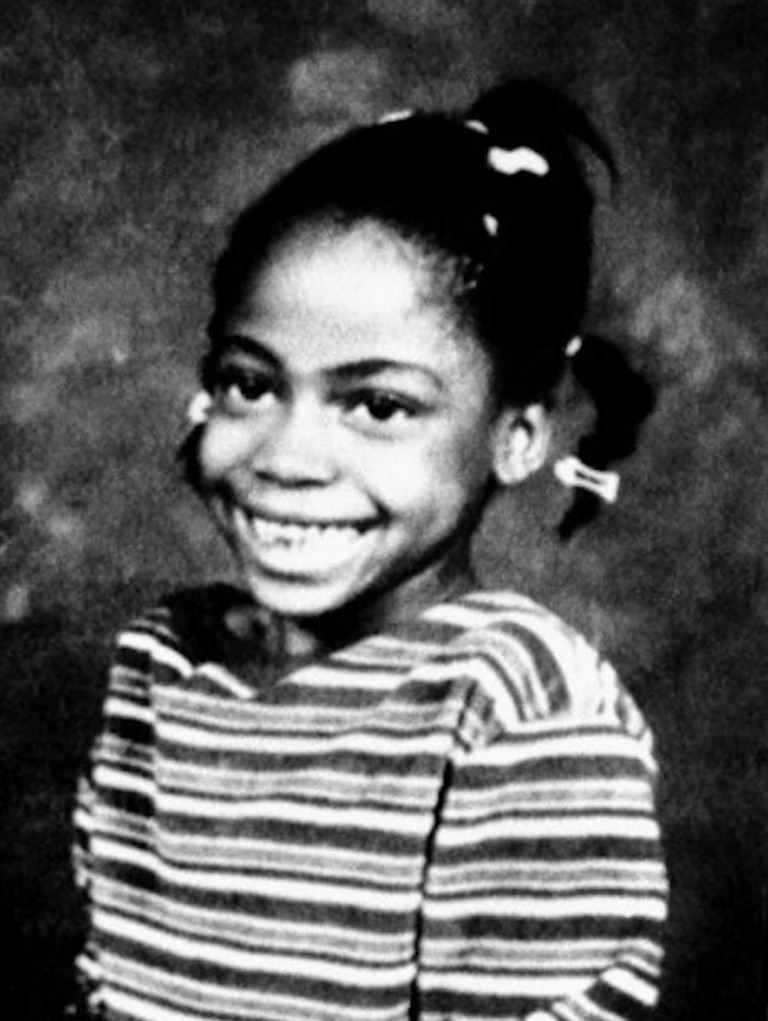
Believing Tamika was dead, Coleman and Brown then turned their attention to Annie. She was forced to perform oral sex on both of them before Coleman raped her.
When they heard Tamika moaning, they returned and strangled her with a belt. They attempted to do the same to Annie, but she survived and was later discovered by a passerby. Tamika’s body was found in the woods the following day.
Annie had been raped with such violence that the injuries left deep lacerations, and her intestines were protruding into her vaginal canal. Annie continued to experience long-term physical and psychological trauma, including post-traumatic stress disorder, severe headaches, and episodes of screaming. Despite everything she had endured, she was able to identify both Coleman and Brown and later testified against them.

Following this attack, the FBI recognised that Debra Brown was not merely a witness to Coleman’s crimes but an active participant. One profiler noted that Coleman’s behaviour was driven by stress related to the impending rape trial of Chalandra Thompson, and warned that his anger was likely to escalate further.
Indiana and Michigan
The following day, on 19th June, Coleman and Brown approached 25-year-old Donna Williams in Gary, Indiana.
Donna was a devout Christian, and the couple, now introducing themselves as “Phil and Pam” from Boston, spoke to her about her church and suggested that they might like to join the congregation.
Donna was last seen leaving church to collect her new acquaintances.
She did not return.

A week later, on 26th June, her car was discovered in Detroit, Michigan. Inside, investigators found false identification carrying Brown’s photograph under the name “Lisa Fisher.” Coleman’s fingerprints were also recovered from the vehicle.
Donna remained missing until 11th July, when her body was discovered in an abandoned building near where her car had been found. She had been strangled with a stocking. Because of decomposition, investigators were unable to determine whether she had also been sexually assaulted.
Michigan
While Donna was still missing, Coleman and Brown continued moving through Michigan.
On 24th June, they abducted a 28-year-old Detroit woman at knifepoint outside her home and demanded that she drive them to Ohio. Instead, she deliberately crashed her car into a parked truck and escaped. Coleman and Brown fled in the damaged vehicle.
Four days later, on 28th June, they entered the Dearborn Heights home of 62-year-old Palmer Jones and his 59-year-old wife, Marge. Both were beaten, robbed of $90 cash, and their car was stolen.
Marge suffered a broken arm and required twenty stitches, while Palmer sustained extensive injuries that left him experiencing long-term dizziness.
On 30th June, Coleman and Brown carjacked two men at gunpoint. One was thrown from the moving vehicle, while the other was eventually released.
On 2nd July, they met 55-year-old Mary Billups on a Detroit street corner.
Mary invited the couple into her home, shared dinner with them, and allowed them to stay overnight. The following day, she introduced them to her friend, 55-year-old Marion Gaston, who offered them a lift.
In response to their kindness, Coleman attacked Mary, knocking her unconscious. Mary and Marion were then taken to the basement, where they were restrained and beaten with a wrench. Coleman and Brown stole Marion’s car and headed for Ohio.
By now, a pattern was becoming difficult to miss. Again and again, strangers offered Coleman and Brown help. And again and again, the pair used that trust to gain access to homes, vehicles, and potential victims.
Ohio
On 5th July, Coleman and Brown met Ernie Jackson, an associate minister at New Light Baptist Church in Toledo. Coleman claimed to be an Army serviceman from Alabama who was home on leave, while Brown introduced herself as Doris Smith.
They were invited into the reverend’s home and joined the family for dinner. Among those present was 30-year-old Virginia Temple, a guest of the reverend’s wife. During the evening, Coleman and Brown learned where Virginia lived.
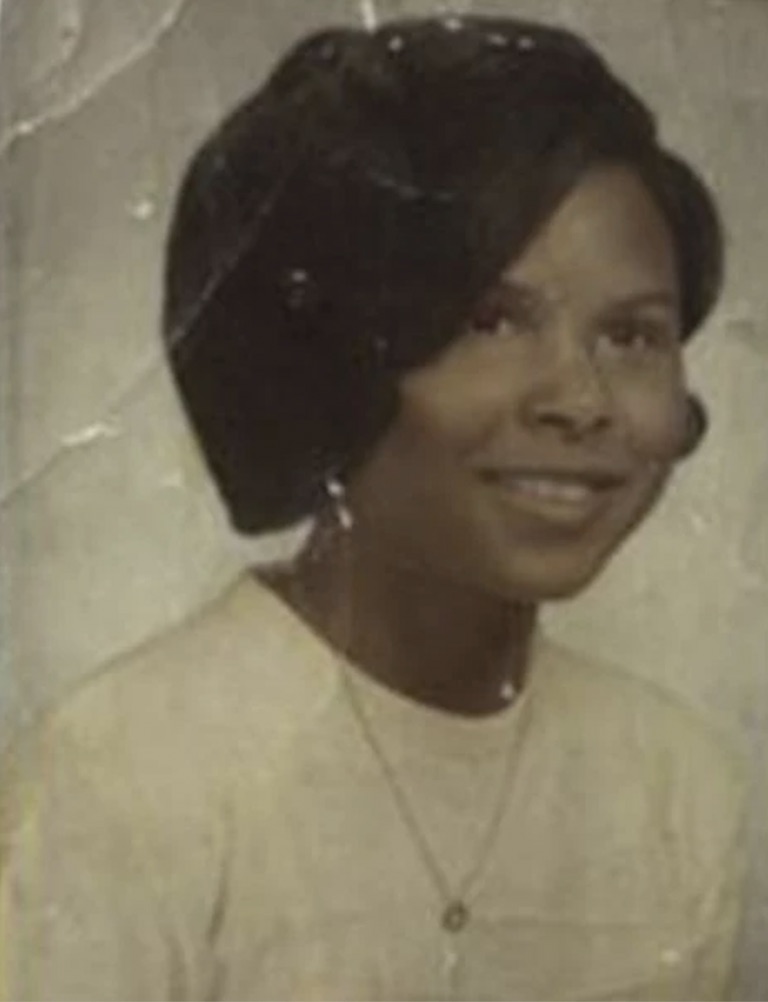
The following day, they visited her home, where she lived with her five children, and once again joined a family for dinner.
Later that evening, a television news report identified Coleman and Brown as wanted fugitives. Coleman quickly ordered the television to be turned off and sent the younger children to bed.
Although Virginia and her 10-year-old daughter, Rachelle, were not in the room when the report aired, when Coleman and Brown saw themselves identified as wanted fugitives on television, the mood shifted. Shortly afterwards, the pair forced Virginia and Rachelle into the basement, where they beat and strangled them before hiding their bodies inside a crawl space beneath the house. Evidence indicated that Rachelle had also been sexually assaulted.
The house was robbed of clothing and jewellery, some of which would later appear at other locations connected to the pair.
Before fleeing, Coleman cut his hair, apparently attempting to alter the appearance viewers had just seen on television. In doing so, however, he left the clippings behind. They would later become part of the forensic evidence connecting him to the house.
When Virginia’s younger children awoke to find their mother and sister gone, her 6-year-old son was so frightened that he initially refused to open the door – even for his grandmother.
Later that day, Coleman and Brown approached the Toledo home of 77-year-old Frank Duvendack and his 73-year-old wife, Dorothy, claiming that they needed to use a telephone. Once inside, they bound the couple with electrical cord and gagged them with paper tissues. Their car, cash, and jewellery were stolen.
On 7th July, 79-year-old Reverend Millard Gay and his 77-year-old wife, Kathryn, welcomed the couple into their Dayton home. This time, Coleman and Brown remained there for three days and even attended a religious service with the reverend.
They left without harming either of them.
Why the Gays were treated differently is unknown. But Coleman and Brown had now spent several days in their home, and they knew where to find them.
On 11th July, 15-year-old Tonnie Storey disappeared in Cincinnati after failing to return home from school. She had last been seen with a man and woman later identified as Coleman and Brown.

Her body was discovered on 19th July in a vacant apartment building. She had been strangled. Decomposition prevented investigators from establishing whether she had also been sexually assaulted.
Investigators found a racial slur written in lipstick on a wall near her body saying:
“I hate n**ger. Death.”
Because Tonnie was white, unlike many of Coleman and Brown’s victims, investigators considered whether the message indicated a racial motive.
There was also physical evidence linking both fugitives to the scene. Brown’s fingerprint was recovered from a Michael Jackson badge belonging to Tonnie, while a shoe print was linked to Coleman. Investigators also found property connected to previous victims, including a bracelet belonging to Virginia Temple and an envelope from the Gay residence.
By this point, the search stretched across several states. Coleman had been placed on the FBI’s Ten Most Wanted Fugitives list, with the Bureau temporarily expanding the list to eleven names to accommodate him.
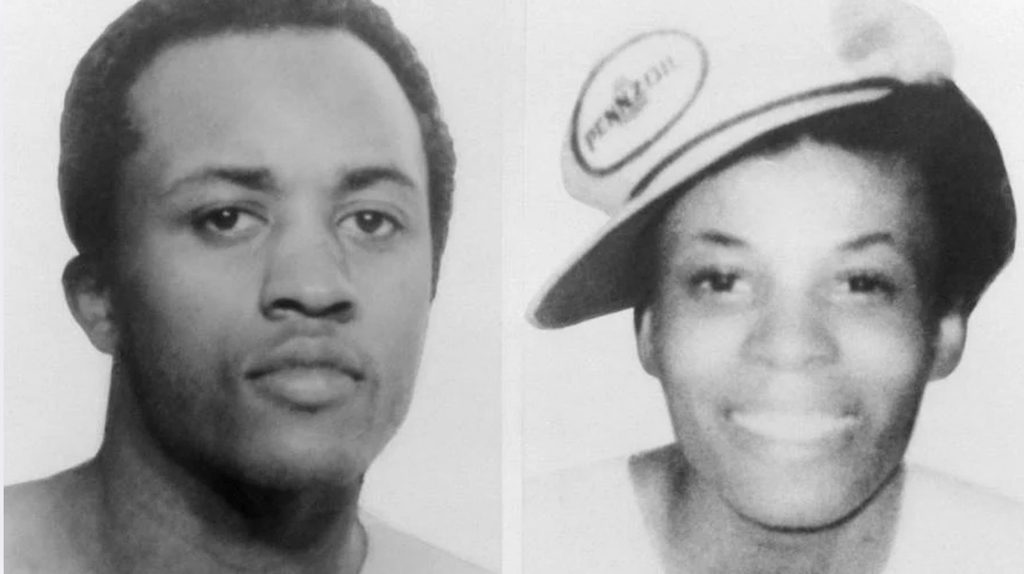
Two days after Tonnie disappeared, on 13th July, Coleman and Brown approached the home of 45-year-old Harry Walters and his 44-year-old wife, Marlene, in Norwood, Cincinnati. The couple had advertised a camper van for sale, and Coleman and Brown presented themselves as prospective buyers.
Their 19-year-old daughter, Sherri, later returned to find the house ransacked and the telephone line cut. She found her parents in the basement, where both had been restrained and severely beaten.
Marlene’s hands and feet had been tied with electrical cord. She had been sexually assaulted and struck over twenty times with a crowbar. Her injuries included lacerations made with pliers, and parts of her skull and brain were missing. She died from multiple blunt-force injuries.

Harry was still alive, although critically injured. His hands were handcuffed, his feet were tied, and he had rope around his neck. He was struck with a candlestick with such force that a fragment of his skull lodged in his brain. He remained in a coma for two months before recovering sufficiently to identify the people who had attacked him.
For all the brutality inflicted on Marlene and Harry Walters, the only thing Coleman and Brown left with was their stolen car.
Kentucky
On 16th July, Coleman and Brown were travelling with a third person, Thomas Harris, when the three abducted 33-year-old teacher Oline Carmical Jr. from the car park of a motel in Lexington, Kentucky.
How Harris came to be travelling with the couple is unclear.
After the abduction, Oline’s wife received a telephone call demanding ransom money. The kidnappers, however, failed to appear at the arranged location to collect it.
Oline was subsequently found alive, locked inside the boot of his own car, which had been abandoned in Dayton, Ohio.
Return to Ohio
As the FBI profilers had anticipated, Coleman and Brown were now returning to their home and familiar surroundings. Investigators had long suspected that Coleman would struggle to stay away from a place that felt safe and would ultimately gravitate back toward familiar territory.
On 17th July, they returned to a house where they had already been welcomed once: the Dayton home of Reverend Millard Gay and his wife, Kathryn.
However, this time, the Gays knew who they were. After seeing news reports about the fugitives, the couple confronted their former guests.
Coleman produced a gun and turned to Brown:
“Well, honey, I guess we’ll have to burn them.”
Kathryn reacted immediately, knocking the weapon from his hand. During the struggle that followed, Millard was struck with the gun, and both he and Kathryn were restrained.
Coleman attempted to strangle Kathryn but failed. Before leaving with the couple’s money and car, he pointed the gun at her and attempted to fire.
The weapon jammed.
Whether through divine intervention or luck, for the second time during the encounter, Kathryn survived.
Clothing belonging to Virginia Temple was later recovered from the house, providing another connection between Coleman and Brown and an earlier crime scene.
Return to Indiana
On 19th July, the body of 79-year-old Eugene Scott was discovered in a ditch outside Indianapolis. He had been shot four times and stabbed repeatedly.
It was his birthday.
Eugene would be the final person killed during Coleman and Brown’s seven-week journey across the Midwest.
Capture
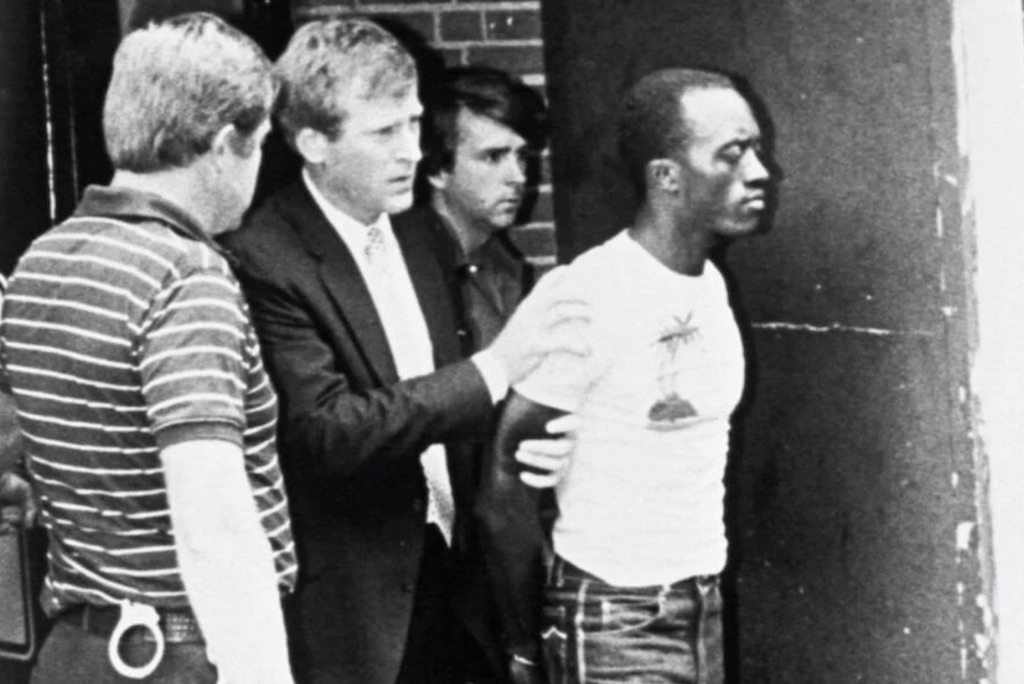
The manhunt for Alton Coleman and Debra Brown ended on 20th July 1984, when they were apprehended in Mason Park, Evanston, Illinois, after a childhood friend of Coleman recognised him and alerted the authorities.
As officers approached, Brown attempted to leave the park but was stopped at the exit. A search of her handbag revealed a gun. Coleman initially denied his identity but surrendered without incident.
Both were taken to Evanston police station, where their identities were confirmed through fingerprints. During a subsequent search, officers discovered a steak knife concealed inside one of Coleman’s boots.
Despite both being armed, neither had attempted to resist arrest.
Trials and Sentencing
Following their arrest in Illinois, Alton Coleman and Debra Brown faced prosecution in several states. Their crimes had crossed state boundaries, leaving different authorities with their own cases to pursue. This raised an important question: which state would bring them to trial first?
Michigan did not have the death penalty, whereas Ohio did. Prosecutors therefore agreed that Ohio should have the first opportunity to pursue capital convictions before the other states proceeded with their cases.
Coleman was eventually tried in Ohio, Indiana, and Illinois, receiving four death sentences for four separate murders. Ohio sentenced him to death for killing Marlene Walters and Tonnie Storey, Indiana imposed a death sentence for the murder of Tamika Turks, and Illinois sentenced him to death for the murder of Vernita Wheat.
He also received a twenty-year federal prison sentence for the interstate kidnapping of Oline Carmical Jr., along with a further hundred years for kidnapping and child molestation.
Despite the number of convictions, not every killing attributed to Coleman and Brown resulted in a separate murder conviction. Among the victims whose deaths did not lead to such convictions were Virginia and Rachelle Temple, Donna Williams, and Eugene Scott. Their cases nevertheless formed part of the evidence presented during the proceedings.
During his trials in Ohio and Illinois, Coleman chose to represent himself. In one particularly unusual development, he called Brown as a witness and personally questioned her, attempting to shift responsibility for Marlene Walters’s murder onto her.
His courtroom behaviour was frequently defiant, and he showed little indication of remorse for the crimes of which he had been convicted.
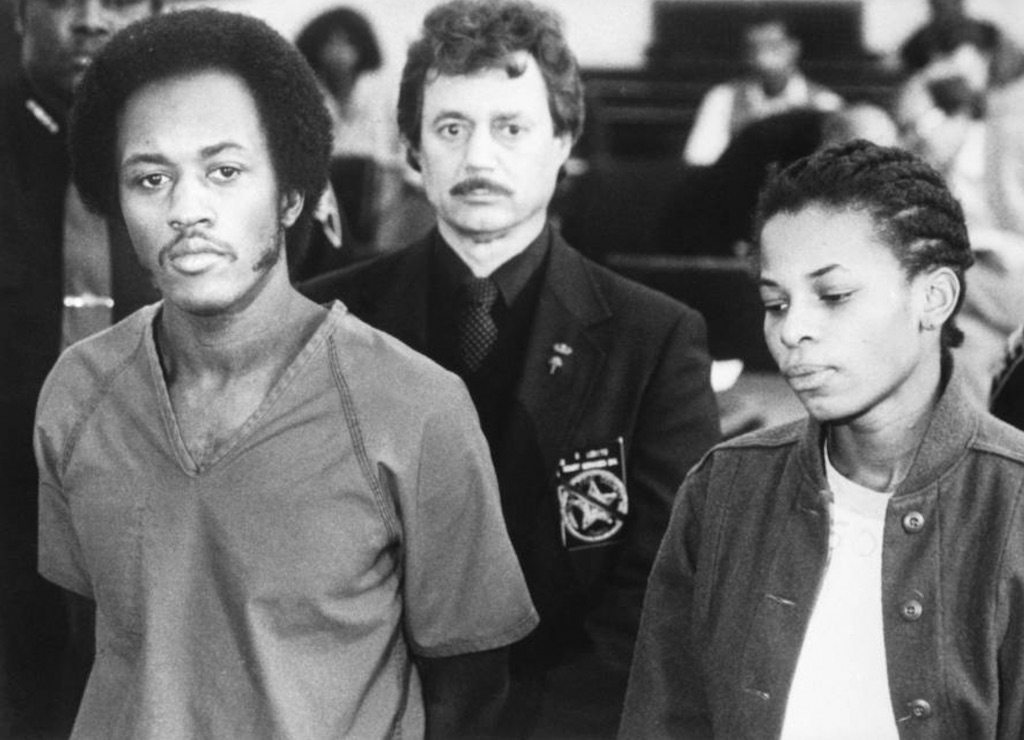
Brown was also convicted of murder in Ohio and Indiana, although the sentences she received differed from Coleman’s.
In Ohio, she was convicted of murdering both Tonnie Storey and Marlene Walters. However, she received a death sentence only for Tonnie’s murder. For Marlene’s murder and the attempted murder of her husband, Harry, she received additional prison sentences.
Indiana subsequently sentenced Brown to death for murdering 7-year-old Tamika Turks. She was also convicted of attempting to murder Tamika’s 9-year-old aunt, Annie Hilliard, and sexually assaulting her.
Like Coleman, Brown received twenty years for the interstate kidnapping of Oline Carmical Jr. She also received further prison sentences for kidnapping and child molestation.
Her own behaviour during the proceedings did little to suggest remorse. During the Ohio proceedings, Brown made a particularly disturbing statement about Marlene Walters’s murder. In a note reportedly passed to the judge, she wrote:
I killed the bitch, and I don’t give a damn. I had fun out of it.
Her words appeared to leave little doubt about her willingness to accept responsibility for the killing. However, they also came during proceedings in which Coleman was attempting to shift blame onto her, complicating the question of why she had made the statement.
Brown’s relationship with Coleman would become an important consideration when her punishment was reviewed.
Psychological assessments had identified significant limitations in her intellectual functioning, along with dependent personality disorder. Evidence presented during her Indiana trial described her as having difficulty functioning independently and suggested that she had been under Coleman’s substantial influence.
These findings did not absolve Brown of responsibility for her crimes. She had been convicted of participating in the murders, and the evidence against her included the testimony of Annie Hilliard, who described Brown’s direct involvement in the attack.
However, the psychological evidence raised questions about whether Brown should face execution.
On 10th January 1991, Ohio Governor Richard Celeste commuted her Ohio death sentence to life imprisonment without the possibility of parole. Celeste was exercising his constitutional power to reduce a criminal sentence. He did not overturn Brown’s conviction or declare her innocent. Instead, he changed the punishment she would receive for Tonnie Storey’s murder.
The decision was controversial, particularly among those who believed Brown had been a willing participant in the crimes. It also did not affect her separate death sentence in Indiana, which remained in place.
While Brown continued serving her sentences, Coleman was pursuing his own legal challenges.
He had begun appealing his convictions shortly after his first trial in 1985, but successive attempts to overturn his death sentences were unsuccessful.
In 2001, the Ohio Supreme Court scheduled his execution for 26th April 2002, bringing his case into the final stages of the appeals and clemency process.
Coleman’s attorneys argued that his mental health, childhood experiences, and possible neurological difficulties should be considered before the state carried out his execution.
They pointed to his reported childhood abuse and rejection, longstanding substance misuse, and allegations that his mother’s substance use during pregnancy had affected his development. They also raised concerns about brain dysfunction and impaired impulse control.
Psychiatric assessments described Coleman as having above-average intelligence and a probable mixed personality disorder featuring antisocial, narcissistic, and obsessive traits. Other evaluations suggested borderline personality disorder and probable manic-depressive psychosis. He was also described in court as a manipulative sociopath.
The purpose of these arguments was not necessarily to dispute his convictions, but to persuade the authorities that his personal history and mental condition justified sparing his life.
The Ohio Parole Board rejected his request for clemency.
Coleman then challenged the fairness of the clemency process in federal court, but his lawsuit was dismissed. His attorneys continued submitting petitions, including applications to the U.S. Supreme Court, in an effort to prevent the execution.
During his final two weeks, six petitions were submitted to the Supreme Court. All were rejected without comment.
The Execution of Alton Coleman
On 26th April 2002, Alton Coleman was executed by lethal injection at the Southern Ohio Correctional Facility in Lucasville. He was 46 years old.
So many victims’ relatives wished to witness the execution that prison officials arranged an additional viewing area using closed-circuit television.
For his final meal, Coleman requested filet mignon, fried chicken, cornbread, biscuits with gravy, French fries, broccoli with cheese, salad, onion rings, collard greens, sweet potato pie, butter pecan ice cream, and a cherry Coke.
He made no final statement, although he recited Psalm 23 as the lethal injection was administered.
Coleman was pronounced dead at 10:13 am.
At the time of his execution, he was the only condemned prisoner in the United States under death sentences in three separate states.
Debra Brown’s Later Years
Coleman’s execution did not bring an end to the legal proceedings involving Debra Brown. Although her Ohio death sentence had been commuted in 1991, she remained under a separate death sentence in Indiana for the murder of Tamika Turks.
In 2005, Brown reportedly expressed remorse for her crimes and apologised to the victims’ families through a video statement. This marked a considerable change from her earlier courtroom declaration.
Meanwhile, her lawyers continued challenging the Indiana death sentence, arguing that her intellectual limitations made her ineligible for execution.
A significant development had occurred in 2002, when the U.S. Supreme Court ruled that executing people with intellectual disabilities violated the United States Constitution. That ruling provided a legal basis for challenging Brown’s remaining death sentence.
In November 2018, Indiana authorities agreed to replace her death sentence with a prison term of 140 years.
The agreement meant Brown would no longer face execution, but it did not overturn her convictions. She remained legally responsible for Tamika’s murder and the other offences of which she had been convicted.
For Tamika’s family, the decision was deeply upsetting. Her mother maintained that Brown had actively participated in her daughter’s murder and deserved the same punishment as Coleman.
Brown remains incarcerated in Ohio, serving life imprisonment without the possibility of parole.
Sources and Further Reading
All That’s Interesting | Inside the Multi-State Murder Spree of Alton Coleman and Debra Brown in 1984
Chicago Tribune | Coleman’s Ex Says He Liked Pure Girls. April 6, 1986
Crime Library | Alton Coleman and Debra Brown: Odyssey of Mayhem
Murderpedia | Alton Coleman
NWI | Mom, Two Sons Accused of Beating Man with Baseball Bat During Robbery
NWI | We Have No Justice: Serial Killer’s Death Sentence Canceled to the Shock of Local Victim’s Family
Court Documents:
Brown v. State. Supreme Court of Indiana. July 17, 1998. Available at FindLaw
Clemency Report. Available at Murderpedia
People v. Coleman. 544 N.E.2d 330 (Ill. 1989) (Direct Appeal)
State v. Coleman. 525 N.E.2d 792 (Ohio 1988) (Direct Appeal-Walters)
Newspaper Articles:
Cincinnati Post. Alton Coleman: His time to die. Randy Ludlow. April 26, 2002
Madison Courier. Assault Victim Says Coleman Killed Niece. 5 Apr 1986. Via Google Books
Toledo Blade. Killer Described as Angry at Absent Mom. 14 Apr 2002. Via Google Books
Toledo Blade. Police Hunt for Pair Continues. Jul 1984. Via Google Books