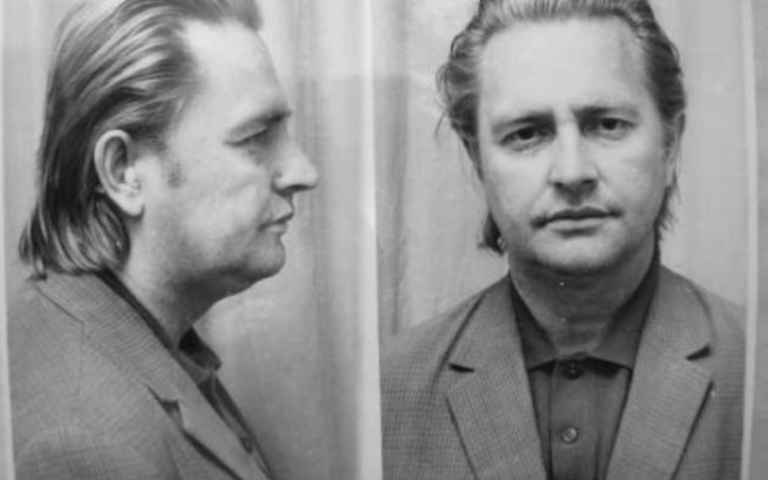
Parents in early 1980s Florida saw Christine Falling as a safe pair of hands. She was young, quiet and willing to help. But children in her care kept dying, their deaths explained away as illness or misfortune. In truth, five infants and one elderly man were smothered or choked. As Christine later admitted:
“No one could hear them scream.”
A Broken Childhood
Christine Laverne Slaughter was born on March 12th, 1963. She was the second of four children, including her older sister Carole and two younger brothers, Michael and Earl. Her mother, Ann, was just sixteen years old when she gave birth to Christine, while her father, Thomas, was a lot older at sixty-five, creating a stark age gap that shaped the family’s dynamics. Ann was still a child herself, which was an unsettling detail that would come to colour the instability of Christine’s early life.
The Slaughter family lived in Perry, a remote and tight-knit town in the Florida Panhandle, approximately 50 miles southeast of Tallahassee. Like many rural communities, Perry faced persistent economic challenges, with its economy heavily reliant on the lumber industry. Christine’s father worked as a woodsman, but his meagre income left the family in deep financial hardship. Their living conditions were cramped, and the children had limited access to healthcare, adequate nutrition, or consistent support.
Thomas was often inattentive and prone to violence. Ann, overwhelmed by poverty, teenage motherhood, and her husband’s volatility, struggled to cope, frequently leaving the home for months at a time. During these absences, Carole and Christine were often sent to relatives, while Michael and Earl, seen as useful for their labour, remained with Thomas to assist in gruelling manual work.
Thomas was suspicious of Ann’s long absences and questioned Michael’s paternity, only ever acknowledging Earl as his son. This was a family in crisis, bound by survival rather than love, stability, or support.
Eventually, Ann completely abandoned Carole and four-year-old Christine, allegedly leaving them on a bench at a shopping centre in Perry. The girls were adopted by Jesse and Dolly Falling, taking on their new surname. Dolly, unable to have children and longing for motherhood, saw an opportunity to raise the sisters when Jesse — her husband and a relative of the Slaughter family — agreed to help. Together, they brought the girls into their home.
The couple were devout churchgoers, but their religious devotion concealed deep dysfunction, and their home lacked the emotional warmth and refuge the girls so desperately needed. Christine and Carole later alleged that Jesse was physically abusive, lashing out in anger, beating them, and locking them in confined spaces. They described him as a volatile alcoholic whose behaviour cast a shadow over their childhood.
The girls also claimed Jesse sexually assaulted them. In later psychiatric evaluations, Christine recounted a harrowing incident:
“One time when he physically raped my sister, I had to stand and watch, and I tried to tell my mother what had happened, and my father got to me before I could really explain to my mother what had happened.”
Dolly dismissed the allegations, accusing Christine of fabricating stories to cause division. In an interview, she said,
“Christine told me that they had had sex, you know what I mean? She told me only she put the blame on her sister Carole, and Jesse denied it. He denied it. He said that it wasn’t true. So I don’t know whether there was anything like that that went on or not. I haven’t gotten no proof of it. I think they was trying to break up a home. If you want to know the truth, it was Christine doing it, trying to break the peace between me and my husband.”
Jesse denied the allegations.
On top of the physical and sexual abuse Christine suffered, she had always been a sickly child, frequently battling health issues. Diagnosed with epilepsy early on, she endured regular seizures and required medication to manage the condition — something her birth parents had struggled to provide. She also faced severe learning and developmental challenges. Later psychiatric evaluations placed her IQ in the borderline range, and her academic progress never advanced beyond a sixth-grade level. Christine’s struggles with weight further deepened her sense of isolation at school, where her developmental delays had already made social and academic life difficult.
As a result, her behaviour grew increasingly troubling. She vented her frustration in disturbing acts of cruelty towards cats, strangling them or dropping them from heights to “test their nine lives.” Christine claimed this was her way of showing affection, an early, warped understanding of love and control that would echo chillingly in her later crimes.
Prone to violent outbursts and uncontrollable rages, Christine received none of the care or support she desperately needed from her adoptive parents. Had she found stability, it might have altered the course she tragically followed. Instead, she remained in constant conflict with them until she became more than they could manage. Eventually, life at the Falling home grew so dysfunctional that the church pastor intervened, and the girls were sent away.
Christine was nine years old when she was placed in a group foster home called Great Oaks Village in Orlando. Her time at the home offered a brief reprieve from the chaos of her adoptive family. Some accounts suggest she enjoyed the structure and attention, but others describe her as socially isolated and frequently bullied. Caregivers at the home described Christine as a liar, a compulsive thief, and a child who broke the rules. This desire for attention while also lashing out reflects both a need for connection and a deep discomfort in her own skin.
At the age of twelve, Christine left the children’s home, and after a period of instability, sought out her birth mother in Blountstown. However, Ann was not a stabilising force, and by September 1977, at just fourteen years old, Christine married an older man called Bobby Adkins, a local man in his twenties. The marriage was tumultuous and lasted just six weeks. There were reports of frequent violent arguments between the couple. Christine accused her husband of abuse but also admitted to violent behaviour herself, once hurling a 25-pound stereo at him in a fit of rage. Christine later claimed she became pregnant during the marriage but lost the child before the relationship ended, though this remains unverified.
After the separation, Christine’s need for attention intensified. Over the next few years, she was admitted to hospital on dozens of occasions, sometimes genuinely due to her epileptic seizures, but more than 50 other times for vague and often psychosomatic complaints, including fainting spells, abnormal menstrual bleeding, hallucinations of “red dots” dancing before her eyes, and even claims of snake bites. Doctors suspected Munchausen syndrome, a psychological disorder in which individuals feign or induce illness to gain sympathy, but no formal diagnosis was ever made.
Christine also began to act out in more visible ways. In 1978, after facing public accusations that she was faking her seizures, she stole money from a local church in a fit of rage, reportedly to retaliate against those who doubted her condition. Following her arrest, she attempted suicide by overdosing on pills. Just three months later, in January 1979, she was arrested again for stealing someone’s wallet.
By the age of sixteen, Christine had returned to Perry, Florida, drifting between homes and struggling to find work. Her birth mother urged her to contribute financially, but with no formal education, persistent health complaints, and few viable job options, Christine relied on handouts and occasional petty crime to get by.
There was, however, one kind of work that always seemed available: babysitting.
Despite her erratic behaviour, neighbours and relatives entrusted Christine with their children. Her quiet, childlike demeanour seemed harmless. But it would turn out to be a deadly illusion that would cost lives.
The Killer Babysitter (1980–1982)
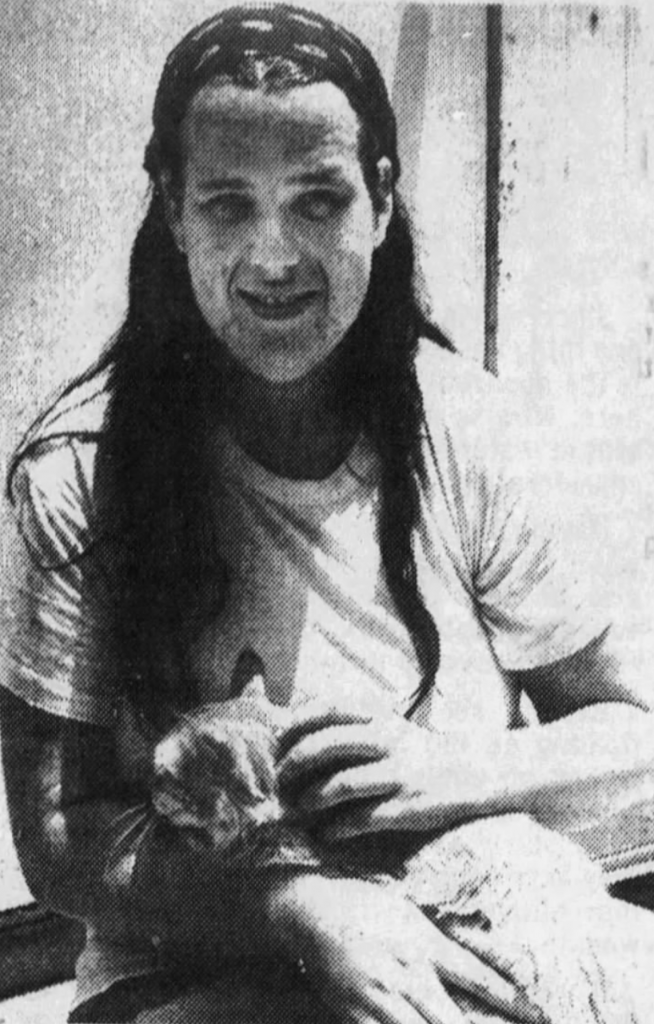
Over the next two years, Christine Falling babysat for families across northern Florida. Some described her as gentle, sweet, and good with children. But behind that quiet façade, the deaths began. One by one, under her watch, children stopped breathing, went limp, or never woke up from their naps. An elderly man even succumbed to Christine’s cruelty. It would take six confirmed deaths and three near misses before anyone connected the dots. The explanations were vague. The patterns were missed. Medical professionals chalked each tragedy up to chance. But Christine Falling wasn’t just unlucky. She was lethal.
Cassidy Johnson — February 25th, 1980, Blountstown
The first of Christine’s victims was two-year-old Cassidy Johnson, affectionately known as Muffin. On February 22nd, 1980, the seventeen-year-old was hired by Cassidy’s parents to take care of their daughter while they were at work digging worms to sell as bait.
But four hours later, Cassidy fell gravely ill, becoming limp and unresponsive. Christine took her to the doctors, where they suspected encephalitis — inflammation of brain tissue — and she was rushed to Tallahassee Memorial Regional Medical Center. Tragically, however, Cassidy died three days later on February 25th.
Dr. Jerry Harris, the associate medical examiner, noted bruising on her scalp and concluded that Cassidy had actually died from a blow to the head prior to her death. A red streak across her neck, which was initially unnoticed by her parents until it was highlighted by the doctor, further raised suspicions.
Christine claimed she had briefly left Cassidy alone in her room and returned to find her unconscious on the floor, suggesting she had fallen from her crib. An elderly witness, Tom Griffin, later testified that Christine had been alone with Cassidy in the bedroom for ten to fifteen minutes before emerging and saying, “Granddaddy, I don’t believe Muffin’s breathing.”
One of the attending physicians at the hospital did not believe Christine’s account, asserting that the pattern of blunt force trauma noted in the autopsy didn’t match a simple fall from the crib. Concerned, the physician wrote a note recommending that the police investigate Christine, but the note was misplaced, and the warning was ignored. Cassidy’s mother, Linda Johnson, later testified that the doctor had contacted child-abuse authorities, suspecting foul play.
Ultimately, the lack of definitive physical evidence led to the case being quietly closed, and Christine walked free.
Cassidy Johnson was the first child known to have died under Christine’s care. But not every child she looked after died. Some became suddenly, inexplicably ill. At the time, there was no reason to suspect anything other than natural causes. It was only later, when investigators began putting the pieces together, that these other cases would also be linked to Christine.
The first of these close calls occurred a few days after Cassidy’s death, when three-year-old Kyle Summerlin was hospitalised with suspected meningitis.
Thankfully, he survived. And at the time, there was no reason to suspect anything was wrong.
Only later, when investigators revisited the case, did questions emerge about how abruptly the illness had appeared and how little it resembled classic meningitis symptoms. The sudden onset, followed by Kyle’s rapid recovery, made the diagnosis seem less like an infection and more like something deliberately provoked.
At the time, though, the incident was not investigated further. Christine soon relocated from Blountstown to Lakeland, Florida, and resumed her babysitting duties.
Jeffrey Davis — February 23rd, 1981, Lakeland
Almost a year to the day after Cassidy Johnson’s murder, on February 23rd, 1981, Christine was caring for her four-year-old nephew Jeffrey Davis when, according to her account, he took a nap on the couch while she was sitting next to him, but he never woke up. The family didn’t have a phone, so Christine went to a neighbour’s house to ask for help, and Jeffrey was rushed to the hospital.
An autopsy later determined the cause of death to be myocarditis — an inflammation of the heart muscle. Because myocarditis is often caused by viral infection, doctors speculated he may have succumbed to a contagious illness, and no foul play was suspected.
Christine appeared distraught, and the family was sympathetic, believing she had gone through a traumatic incident. They never suspected she was the one who had caused it.
Joseph Spring — February 26th, 1981, Lakeland
Three days after Jeffrey’s death, his grieving family gathered for his funeral. Among the mourners were the parents of Jeffrey’s two-year-old cousin, Joseph ‘Joe Boy’ Spring. With no reason to suspect foul play, they asked Christine to babysit Joseph while they attended the service.
It was a decision they would come to regret because while the family grieved for one child, another slipped away. Like his cousin before him, Joseph went down for a nap and never woke up.
Doctors initially attributed his death to a viral infection — possibly the same one suspected in Jeffrey’s case. The theory seemed plausible at the time as the boys were close in age, had recently played together, and were related. However, there was now a fear that if true, the illness might spread among other children in the area.
That fear intensified just two days later when two more children under Christine’s care became ill. Fourteen-month-old Jeffrey Heil, who was a friend of Joseph’s, was rushed to Lakeland General Hospital when he became unresponsive. While the baby’s parents remained by their son’s side at the hospital, Christine babysat his older brother, three-year-old Charles Heil, who also collapsed, suffering a seizure. He was transferred to the Children’s Hospital in St. Petersburg.
Fortunately, both brothers survived, but their sudden illnesses fuelled concerns that the deaths might be connected, and doctors began wondering whether Christine might be a silent carrier of an undetected virus.
Tissue samples from Joseph’s autopsy were sent to the Epidemiology Research Center in Tampa, but no definitive link was found. The investigation broadened, testing Christine’s blood and faecal matter, screening family members of the victims, looking into other local children who had taken ill around the same time, and even analysing the Lakeland water supply. But still, no clear link emerged.
Within the community, fear spread faster than the facts. Carole Davis, Jeffrey’s mother, was barred from returning to work at a petrol station after her employer grew concerned that she might pass on whatever had killed her son. Without definitive answers, people were scared and unsure what to believe.
Meanwhile, Christine watched, unfazed by the fear and confusion around her, reportedly saying later:
“If they dumb enough, they can’t figure it out for theirself, then why should I tell them? I mean, they’re doctors, you know? It was like a game with me. I was getting away with it.”
Jennifer Daniels — July 14th, 1981, Perry
Five months after the deaths of cousins Jeffrey Davis and Joseph Spring, Christine remained not just involved with her extended family but also trusted by them. Jeffrey’s mother, Geneva Daniels — who was also Christine’s stepsister — had an eight-month-old daughter named Jennifer. And tragically, she too would lose her life at the hands of Christine Falling.
On July 6th, 1981, just days before Jennifer’s death, Christine was looking after her niece while Geneva attended a funeral. They were at the Blountstown trailer home of a friend, Theresea Odom, when Christine took Jennifer into the bathroom to bathe her. According to Odom’s deposition, Christine remained inside for approximately 20 minutes before emerging with the baby wrapped in a towel. Jennifer was unconscious. Christine said, “She’s out. She’s not coming to.”
Jennifer was rushed to Madison County Memorial Hospital, where Christine told medical staff that the baby had suffered a seizure. However, nurses noted red marks on her throat and burst blood vessels across her face, symptoms they said were not consistent with seizures. Nevertheless, Jennifer was quickly discharged and referred to a doctor in Perry for further evaluation. No formal investigation was opened.
On July 14th, Christine accompanied her stepsister and niece to the Taylor County Health Department, where Jennifer received routine childhood vaccinations for polio, diphtheria, whooping cough, and tetanus. Afterwards, they stopped at a Winn-Dixie supermarket. Geneva went inside to shop, leaving Christine alone with Jennifer in the car.
When Geneva returned, Christine was holding the baby, who wasn’t breathing. The scene quickly turned chaotic. Geneva was screaming, “She’s dead! She’s dead!” while Christine kept telling her, “No, she died in my arms,” and crying, “Oh, not again.”
Jennifer’s cause of death was ruled natural, possibly a reaction to the vaccines earlier that day, or attributed to sudden infant death syndrome. At the time, SIDS was poorly understood and frequently used as a blanket explanation for unexplained infant deaths. Today, medical advances and public health campaigns have drastically reduced SIDS-related fatalities. But the lack of understanding at the time meant deaths like Jennifer’s were very often chalked up to bad luck.
However, within the space of sixteen months, four children had now died while in Christine’s care. The pattern was becoming increasingly impossible to ignore.
Wilburn Swindle — January 4th, 1982, Perry
With families growing hesitant to leave their children in her care, Christine briefly sought work outside of babysitting. In January 1982, she took a housekeeping job in her hometown of Perry, working for a seventy-seven-year-old man named Wilburn Swindle. Wilburn lived alone and, with a cancer diagnosis and a history of heart problems, needed help around the house.
Christine was a family friend, so he took a chance on her. But it was a chance that didn’t pay off because on her very first day, Wilburn collapsed and died at home. According to Christine, when she left his house for a few hours, he was sitting in a chair. When she came back, he had toppled to the floor and died of a heart attack.
Dreading more negative publicity and accusatory looks from friends and strangers, she asked Wilburn’s family to keep quiet about her employment, and the death was never publicised. Therefore, the police were completely unaware of her presence in his home and never connected her to his death. No autopsy was initially performed, and his death was put down as natural causes, which was understandable at the time because of his poor health.
For now, the case faded into the background, and once again, Christine slipped through without suspicion.
Still lying low and with a growingly dubious reputation in Florida, Christine travelled north to Proctorville, Ohio. She was taken in by Linda and Ricky Harris, who offered her room and board in exchange for babysitting their six-month-old daughter, Pokey.
On January 23rd, Christine emerged from the family’s back bedroom in a panic and told Linda that something was wrong with Pokey. When Linda got into the bedroom, Pokey was lying on her back, not breathing, and her skin and lips were blue. Linda began shaking her daughter until the colour returned to her face. Pokey was taken to the hospital, where doctors diagnosed a viral infection, and no further action was taken.
The next day, Christine showed Linda a tabloid clipping about the babies dying under her care. Alarmed, Linda ordered her to leave her home, but two days later, Christine returned uninvited and refused to go. The police were called to remove her, and she was sent to the City Mission in Huntington, across the river in West Virginia. There, she showed residents a photo of Pokey, claiming the child was her own. Whether she was seeking attention or attempting to garner financial support through deception, Pokey was alive, not dead as Christine was telling people, and she was still manipulating those around her.
She spent the next few months in West Virginia, where she ran into legal trouble, getting arrested three times and charged with public drunkenness, fighting, and grand larceny.
Homesick, she returned to Florida in May 1982, where, frustratingly, she took one last babysitting job. But the damage she’d left in her wake was becoming clearer, and the net was closing in.
Travis Coleman — July 3rd, 1982, Blountstown
By July 1982, nineteen-year-old Christine had returned to Blountstown, where her murderous spree had begun, and was living in a rundown trailer with her boyfriend, Robert Johnson. Robert was also the uncle of Christine’s first victim, Cassidy Johnson, a haunting connection that went unnoticed at the time.
That summer, Christine accompanied seventeen-year-old Lisa Coleman and her ten-week-old son, Travis, on a shopping trip. Later that night, Travis fell suddenly ill and was hospitalised with pneumonia and heavy bleeding from the nose. He remained at Tallahassee Memorial Regional Medical Center for five days before being discharged with a prescription for liquid antibiotics.
Grateful for her son’s recovery, Lisa wanted to celebrate and asked Christine if she would babysit him so she could go out. Christine agreed, and on the evening of July 2nd, she left Travis in Christine’s care while she went out with her sister and their boyfriends. Lisa was aware of Christine’s reputation but later confessed,
“I just didn’t believe it.”
Tragically, she should have done so, because by dawn, Travis was dead.
In the early hours of July 3rd, 1982, Christine’s boyfriend awoke to find ten-week-old Travis Coleman dead on a mattress beside their bed. Dried blood had pooled under the baby’s nose and soaked into his blanket. Christine claimed the baby had been fine during the night and had simply stopped breathing in his sleep.
Travis was first taken to Calhoun General Hospital, then transferred to the office of medical examiner Dr. Joe Sapala near Panama City. The preliminary autopsy lasted two and a half hours. No definitive cause of death was found, but the baby showed swelling of the brain and lungs, as well as burst blood vessels in his eyes.
These findings were consistent with suffocation or SIDS, but not conclusive, so tissue and fluid samples were taken, including liver, bile, stomach contents, stool, blood, and urine, and sent to a specialised lab in Fort Lauderdale for toxicology screening. The results were never made public, but retrospective sources suggest the tests revealed no trace of poison. With no toxins and no clear physical evidence of smothering, there was nothing further for the authorities to pursue. The death was left without a firm explanation — for now, at least. Because the authorities were finally paying attention.
Travis was buried the same day he died at a small cemetery south of Blountstown. The casket was reportedly made from pieces of wood from an old house, and friends of the family dug his grave.
Investigation and Arrest
Despite six suspicious deaths across two and a half years, Christine had not been arrested. She remained free, even as suspicions mounted.
On July 9th, 1982, a multi-county task force was formed to examine possible links between the cases, marking the first formal coordination between law enforcement and medical examiners. Until then, systemic gaps had allowed Christine to operate undetected.
At the time, forensic technology was limited. So too was interagency coordination. Christine had worked across Calhoun and Taylor Counties, yet law enforcement agencies failed to share information. The rural setting stretched resources thin, and with no centralised background checks for childminders or domestic workers, Christine’s troubling past remained concealed, both from the investigators attempting to connect the dots and from the families who had entrusted her with their children.
Desperate for answers, the authorities tested Christine for any undiagnosed illness that might explain the deaths. Of course, Christine knew what had really happened to the babies, but she leaned into public sympathy. Outside the Calhoun County Health Center, where she submitted blood and stool samples for analysis at a state lab in Tampa, she said:
“I’m just interested in finding out what it is. If I have something, I want to find out.”
Alongside the theory that Christine may be a modern-day Typhoid Mary, unknowingly transmitting illness to the children in her care, other rumours were circulating, like contaminated formula, undiagnosed infections, malnutrition, and even witchcraft.
But there was only ever one explanation.
She wasn’t infecting people or casting spells, but choking and smothering children with her bare hands. Christine Falling was a serial child killer.
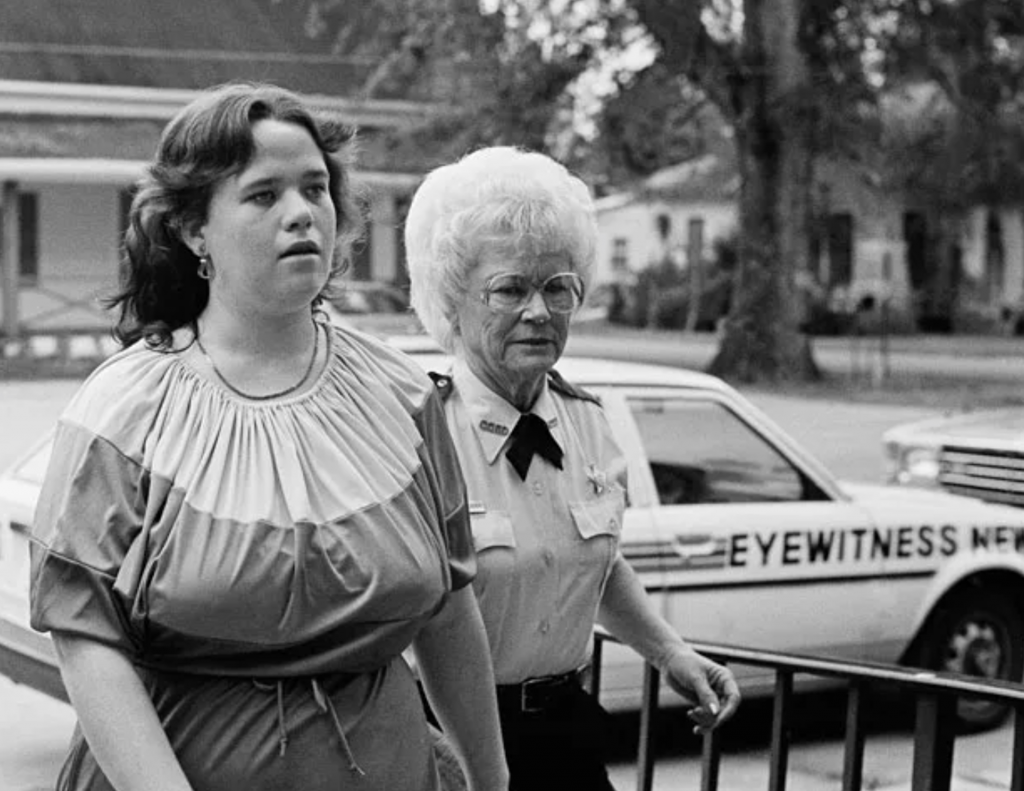
On July 13th, Christine voluntarily entered Goodwood Manor, the psychiatric unit at Tallahassee Memorial Regional Medical Center. She had admitted to feeling suicidal, and whether it was guilt or something else, she was struggling to keep up the façade, and it was here that the first cracks began to appear.
In a private visit, Christine confided in her sister, Carole Phillips, that she had killed five children. Carole later told investigators that Christine had seemed upset at first, but became eerily calm once she admitted the killings, as if unburdened. This moment marked a turning point in the investigation.
During her week at Goodwood, Christine opened up about her crimes, revealing how she used pillows or blankets to smother the children’s faces while they slept, a method she referred to as “smotheration.” It was something she had seen on television, “simple and easy,” she said, “no one could hear them scream.”
She also claimed she was hearing voices telling her to “kill the baby.” She later repeated the phrase in court to suggest mental instability, but the claim was met with scepticism, and no psychological defence was accepted.
On July 20th, Christine gave a taped confession to Calhoun County Sheriff W.G. “Buddy” Smith and Deputy Ronnie Stone. When asked about Cassidy Johnson, she said, “She got kinda rowdy or something. Anyway, I choked her until she quit breathing, and she had turned purple.” When asked about Jeffrey Davis, she told the deputy they had come in from playing and he made her mad, “I was already kinda mad that morning, and I just took it out on him. I started choking him until he was dead.” Regarding Joseph Spring, she said, “He had laid down for a nap, and he was asleep. And I don’t know, I just got the urge I wanted to kill him, so I went down and choked him.” About Jennifer Daniels, she explained: “Well, her mama had went in the grocery store to buy groceries and was continually cryin’ and cryin’ and cryin, and it made me mad, so I just put my hands around her neck and choked her until she shut up.” And finally, when asked about Travis Coleman, Christine coldly stated, “I just choked him — no apparent reason, I guess. I just picked him up off of his pallet and choked him to death and laid him back down.”
When Christine was asked if she had anything else to say about any of the children, she said, “Not other than I killed ‘em, That’s about all I got to say…I don’t know why I did none of this.”
Her statements were disturbingly clinical and devoid of remorse. What emerged wasn’t just a confession, but a glimpse into a mind shaped by confusion, control, detachment, and a chilling absence of empathy.
Christine was released from the psychiatric facility on July 22nd and arrested. She was charged with two counts of first-degree murder — those of Travis Coleman and Cassidy Johnson — and held without bond in Calhoun County Jail. These were the only charges brought at the time due to jurisdictional constraints. While Travis and Cassidy had died in Blountstown, placing their cases within Calhoun County’s authority, the deaths of Joseph Spring, Jeffrey Davis, and Jennifer Daniels occurred elsewhere and required coordination to pursue further charges.
In the immediate aftermath of her arrest, Christine’s defence team challenged the legality of her confession, arguing her psychiatric status and the informal nature of the interviews at Goodwood Manor compromised due process. But ultimately, the court ruled that the confession was admissible and accepted it as part of the evidence against her.
Attention then turned to her mental competency, and court-appointed specialists were tasked with evaluating her mental state. They reviewed her history of unexplained hospitalisations, borderline intellectual functioning, and claims of hearing voices. Some speculated about traits of Munchausen by proxy, where a person fabricates illness in others under their care. Others questioned whether her behaviour pointed to deeper psychological disturbance.
Ultimately, none of it amounted to a clinical diagnosis. Christine was deemed legally sane, and her claims were seen as attempts to justify the killings after the fact, and not grounds for diminished responsibility.
With Christine deemed legally sane and facing multiple charges, preparations for trial continued. It was during this process — specifically a pre-trial deposition hearing for the Jennifer Daniels case in November 1982 — that startling new information surfaced about the death of Wilburn Swindle, whom it was assumed had died due to natural circumstances.
Deputy Hugh Poppell testified that earlier in the summer, a woman had contacted the state attorney’s office with concerns about bluish marks on Wilburn’s neck. In response, his body was exhumed, and photographs of the markings were admitted into evidence. They were strikingly similar to the injuries found on Jennifer Daniels.
Further details painted an even darker picture: Wilburn had been found face-down in his living room, his pockets turned inside out. “Mr. Swindle was known to have large amounts of money, and he was known to bury his money,” Poppell explained. “There were places under his house and around his house that were dug up.” Given Christine’s history of theft, the new information firmly linked her as a suspect.
The possibility of there being an elderly victim on top of five infant victims deepened public alarm. Christine’s violence, it seemed, had not been confined to children but extended to any setting where trust could be exploited. Yet despite physical evidence and growing suspicion, no charges were ever filed, and the family never saw justice for Wilburn’s death.
Conviction, Prison, and Parole
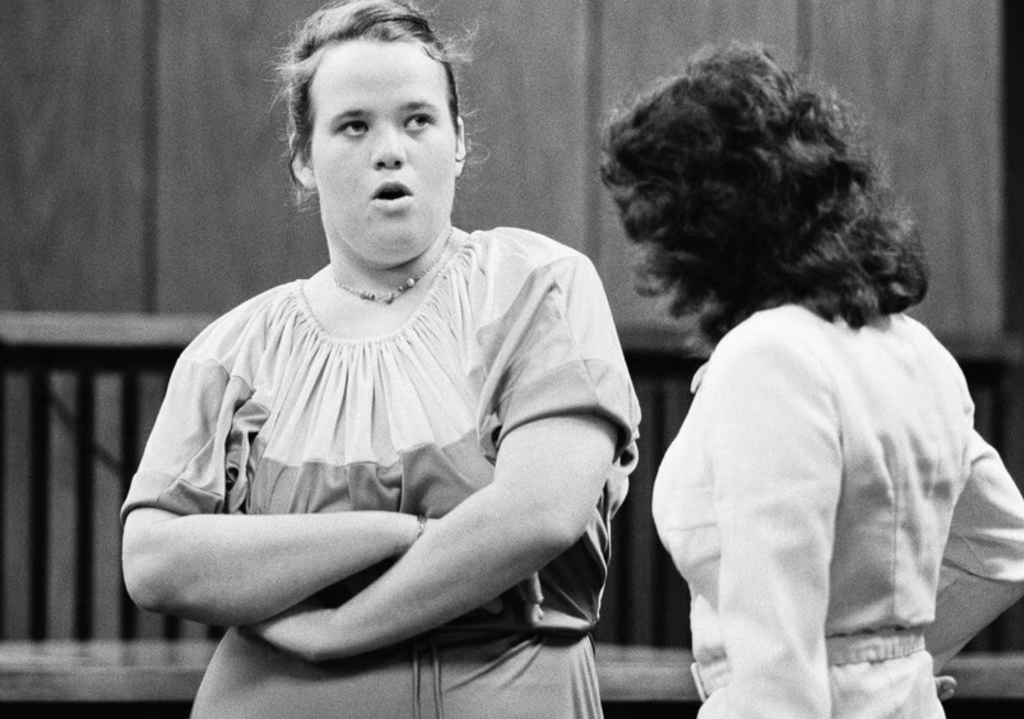
In September 1982, nineteen-year-old Christine Falling appeared in court for pre-trial hearings related to the murders of Cassidy Johnson, Travis Coleman, and Jennifer Daniels. With investigations still ongoing and facing the possibility of six death penalty charges, she accepted a plea deal to avoid trial.
Her guilty pleas were entered in two separate hearings later that year: first in Calhoun County Circuit Court, where she admitted to killing Cassidy and Travis, and then in Taylor County Circuit Court, where she pleaded guilty to the murder of Jennifer Daniels.
The deaths of Jeffrey Davis and Joseph Spring were never prosecuted. Forensic evidence was limited, and earlier medical misdiagnoses had clouded both cases. For their families, the lack of formal recognition in court deepened the grief, leaving unanswered questions about their children’s final moments. The pain endured long after the headlines faded.
Throughout the hearings, Christine appeared largely emotionless. She offered no insight into her motives, repeating only that voices had compelled her to kill.
Later that month, she was sentenced to three concurrent life terms, with the possibility of parole after 25 years. The decision was controversial, with many relatives of the victims believing it was far too lenient, given the scale and cruelty of the crimes.
Christine was transferred to Broward Correctional Institution, where she quickly drew attention for disruptive behaviour. Within months, she set fire to her mattress. No one was injured, but she was placed in solitary confinement for 30 days. The incident was seen by some as evidence of her attention-seeking and her unwillingness to take responsibility for her actions.
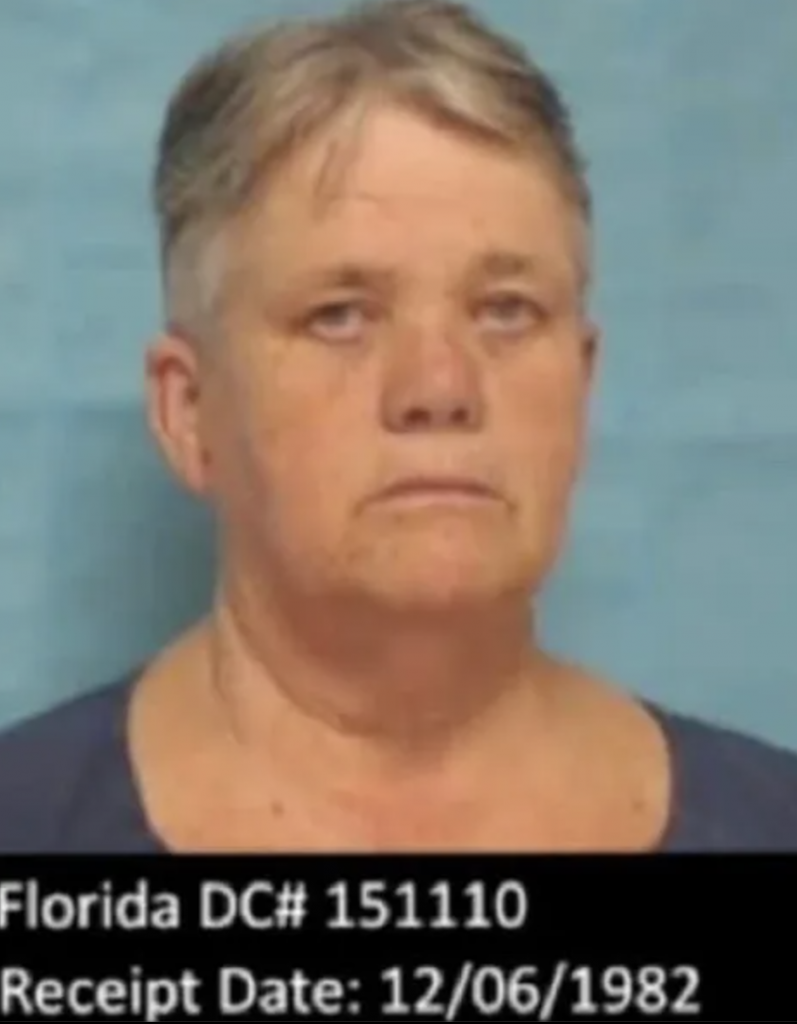
In 2007, Christine became eligible for parole, though records are unclear whether a hearing was held. By the time of her confirmed hearing in 2017, opposition had intensified. The Calhoun County Sheriff’s Office, along with victims’ families, submitted written statements urging the commission to deny her release. One prosecutor even referred to her as the “babysitter from hell.”
No one appeared on Christine’s behalf, not family, not legal advocates, not even mental health professionals. The Florida Parole Commission unanimously rejected her application, citing the horrific nature of her offences and her apparent lack of remorse or rehabilitation.
Her next hearing was scheduled for 2024, but official records list a presumptive release date of 2254 — a timeline so distant it effectively guarantees she will remain incarcerated for life unless extraordinary legal changes occur.
Christine Falling has never issued a public apology or offered meaningful reflection. With no visible sign of remorse or growth, she remains a disturbing figure whose crimes continue to haunt the communities she once lived in.
Sources
Florida Memory. State Library and Archives of Florida.
Murderpedia. Christine Falling.
New York Daily News. The Casual Horror Behind Christine Falling, The Florida Babysitter from Hell.
New York Times. Florida Babysitter Pleads Guilty to Murdering Three in Her Care.
UPI. A 19-Year-Old Babysitter Pleaded Guilty Friday To Strangling…
UPI. Babysitter Christine Falling Told Her Sister During A July…
UPI. Babysitter Now Linked to Death of Elderly Man.
UPI. Five Babies Die In Care Of Babysitter In Two Years.
Washington Post. Babysitter Accused of Killing 2 in Her Care.
Newspapers
Beaver County Times
Baby Sitter May Be Isolated • 11 Jul 1982 • Page 7.
Bryan Times
Babysitter Linked To Death Of Elderly Man • 3 Nov 1982 • Page 5.
Courier
Accused Babysitter Linked to Man’s Death • 3 Nov 1982.
Daytona Beach Morning Journal
Dead Tot’s Mom Told Differing Stories • 13 Nov 1982 • Page 7.
Eugene Register-Guard
Baby Sitter, 19, Given Life For Killing Three Children • 3 Dec 1982 • Page 3.
Evening Independent
Parents Say Child Had Mark On Her Neck Before She Died • 25 Sept 1982 • Page 2.
Sitter Linked With Close Call In Ohio • 28 Jul 1982 • Page 1.
Gadsden Times
Children’s Deaths Remain Mystery; So Is Baby Sitter • 15 Jul 1982 • Page 7.
Gainesville Sun
Baby Sitter Is Content In Jail Cell • 2 Aug 1982 • Page 1.
Sister Says Baby Sitter Is Innocent • 13 Aug 1982 • Page 8.
Lakeland Ledger
Sister Reveals Her Infant Died After Being Cared For By Falling • 13 Aug 1982.
Christine Falling In Confinement For Setting Mattress On Fire • 20 Apr 1983 • Page 42.
Lawrence Journal-World
Trail Of Death Haunts Sitter, Florida Towns • 15 Jul 1982 • Page 2.
Ocala Star-Banner
No Connection Between Sitter, 4 Deaths: Doctors • 27 Jul 1981 • Page 22.
Boyfriend Testifies In Sitter Hearings • 9 Sept 1982 • Page 22.
St. Joseph News-Press
Christine Falling Is Shown In Her Home. Babysitter Charged… • 22 Jul 1982 • Page 6.
St. Petersburg Times / Tampa Bay Times
‘I Just Got The Urge Wanted To Kill Him’ • 4 Dec 1982 • Page 5
Times-News
The Mysterious Deaths Of Five Florida Infants • 16 Jul 1982 • Page 8.