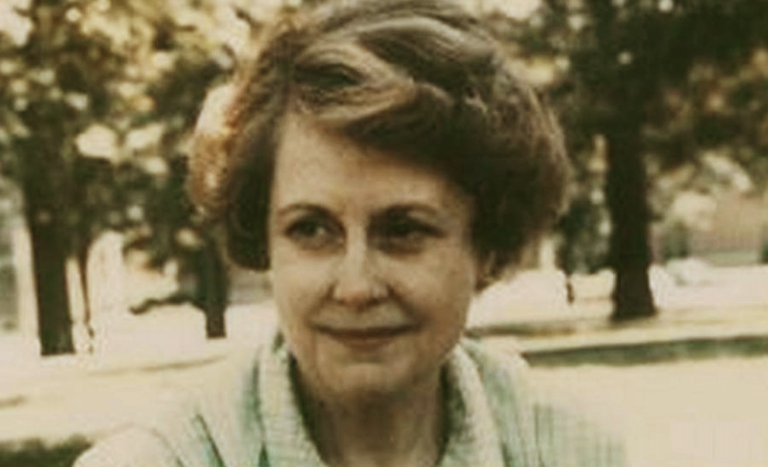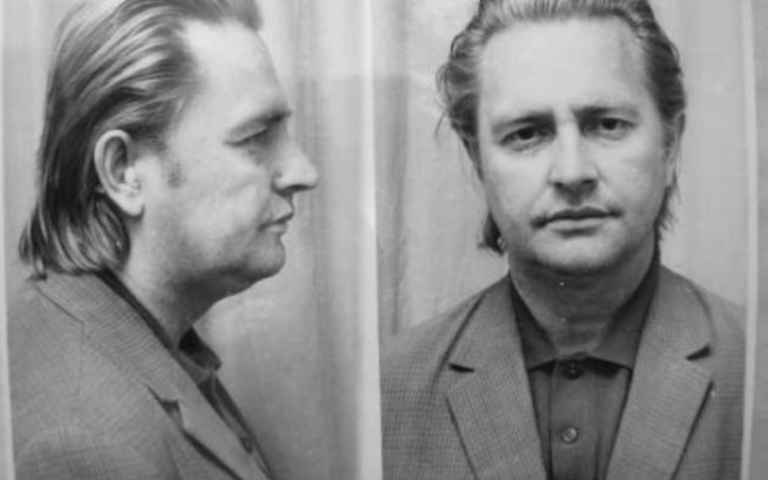
In 1961, four‑year‑old Michele LeAnn Morgan died in rural Illinois. She was covered in injuries and known to doctors who suspected abuse, yet it took more than three decades — and a letter from a prison cell — to force the system to confront what had really happened to her.
A Blended Family
In 1961, Bill Morgan and his wife Mary were living in a rented farmhouse near Mascoutah, a few miles from Scott Air Force Base in St. Clair County, Illinois. Bill was serving in the United States Air Force and had recently returned from a posting at Prestwick Air Base in Scotland, where he had met and married a local woman called Mary Rae. The couple had a baby daughter, Sharon, born overseas, who emigrated with them when Bill’s posting ended. By the time they settled in Illinois, Mary was pregnant again.
Bill’s two children from previous relationships, eight-year-old George and four-year-old Michele, had been staying with their grandparents in Knoblick, Missouri, during his time overseas. After Bill and Mary settled in Illinois, the children joined them, and Mary stepped into the role of stepmother.
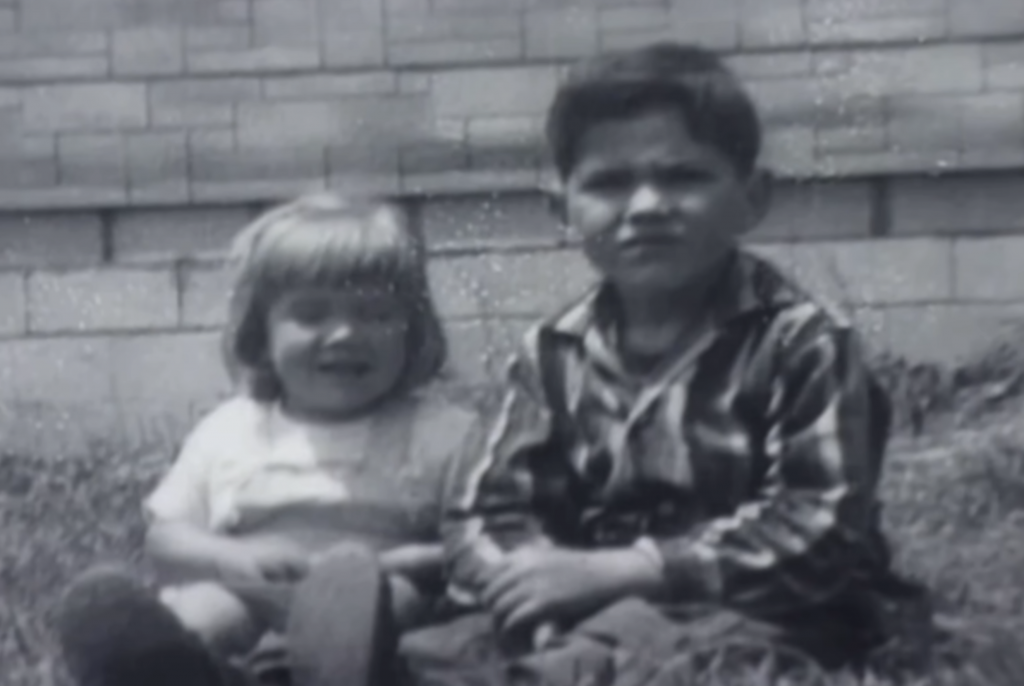
Life around Scott Air Force Base was often transient, with families regularly arriving and departing, but the rural areas beyond the base were quiet and spread out. Homes sat far apart, neighbours kept to themselves, and day‑to‑day contact with others was limited. It was an isolated setting, the kind of place where what happened inside a home could go unseen and unquestioned.
A Year of Injuries No One Stopped
In the year after Mary arrived in Illinois, Michele began turning up at the Scott Air Force Base hospital again and again with injuries that were difficult to ignore. She was only three or four years old during this period, yet she was treated more than twenty times for everything from bruises and burns to fractures.
Some of the injuries were severe: a broken arm, a broken nose, multiple injuries to the back of her head, burns across her scalp and back, and deep bruising on her thighs and chest. Others were smaller but constant, like bruises, cuts, and abrasions to her face and abdomen, and patches of hair missing from her head. Each time, Mary explained Michels’s injuries away as accidents or fainting spells, insisting that Michele collapsed without warning.
Inside the home, the reality was far darker. George later described months of escalating violence: beatings with objects, forced punishments, and long stretches of neglect in which Michele received little care or comfort. He was himself at the receiving end of Mary’s violence, claiming to have been kicked in the teeth, hit by the buckle-end of a military air force belt, stabbed in the chest with a fork, and strangled with the cord of a vacuum cleaner until he blacked out. As a child, George saw and experienced enough to understand that what was happening to his sister was not normal, and not accidental.
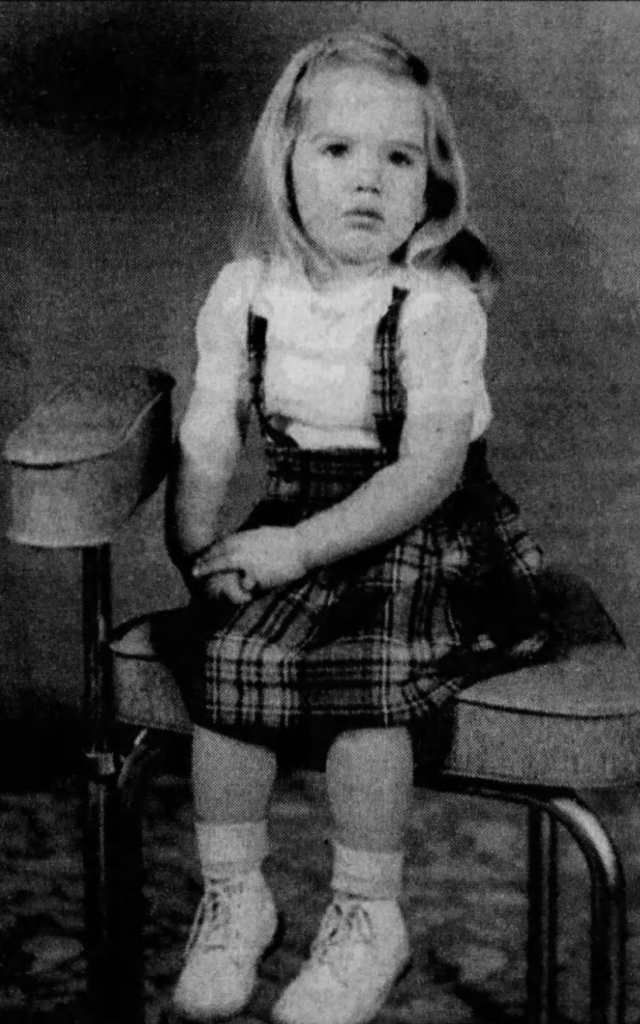
Doctors grew concerned enough to admit Michele for nearly a month to investigate possible epilepsy. But during that entire stay, she never had a single seizure. What staff did notice, however, was that Michele became visibly distressed whenever Mary visited, crying and screaming in a way no one could quite explain.
Despite the pattern, there were no child‑protection protocols in place in 1960 or 1961. No mandatory reporting. No social services follow‑up. The hospital treated the injuries, documented them, and sent Michele home each time.
No one intervened.
The Day the Violence Turned Deadly
On Wednesday, August 9th 1961, eight-year-old George and four-year-old Michele were playing outside. At some point that afternoon, Michele made a small mistake, something so minor that George later could not even remember what it was, but it was enough to set Mary off.
Mary accused Michele of lying. She grabbed her, dragged her to an outdoor rinse tub filled with rainwater, and forced her into it. George watched as Mary held Michele underwater, lifting her only long enough for the little girl to gasp and cry before pushing her under again.
When Mary finally pulled her from the tub, she dragged Michele inside. George followed to the doorway and saw Mary force Michele to lie on her back on the kitchen floor. Mary was wearing the square-heeled shoes she favoured, solid, blocky shoes with hard edges.
What happened next stayed with George for the rest of his life. Mary lifted her foot and brought it down on Michele’s chest. She did it more than once – four or five times – each blow driven by the weight and shape of those square heels. George later said that every time Mary’s foot struck, Michele’s small body “bounced like a rag doll.”
Later that evening, the family sat down for dinner. Michele was quiet, pale, and clearly in a lot of pain. Partway through the meal, she began vomiting blood clots onto her plate, a sign of the internal injuries she had already suffered.
Bill, their father, looked startled and asked Mary what was wrong with her. The two adults stepped out of the room to talk. As Mary left, she told Michele to finish her dinner.
Michele turned to George, crying, saying she did not want to eat what she had just been sick. George told her she had to, because they both knew what would happen if she did not.
When Bill returned to the table, he told Michele she could stop eating.
By the next morning, Michele’s condition had worsened. She complained of dizziness and nausea, with weakness in her legs and a complete loss of energy. At some point she lay down, and then she stopped breathing.
Michele was rushed to the hospital at Scott Air Force Base. Despite the doctors’ efforts, her injuries were too severe, and two days after the assault, on August 11th 1961, she died from massive internal trauma.
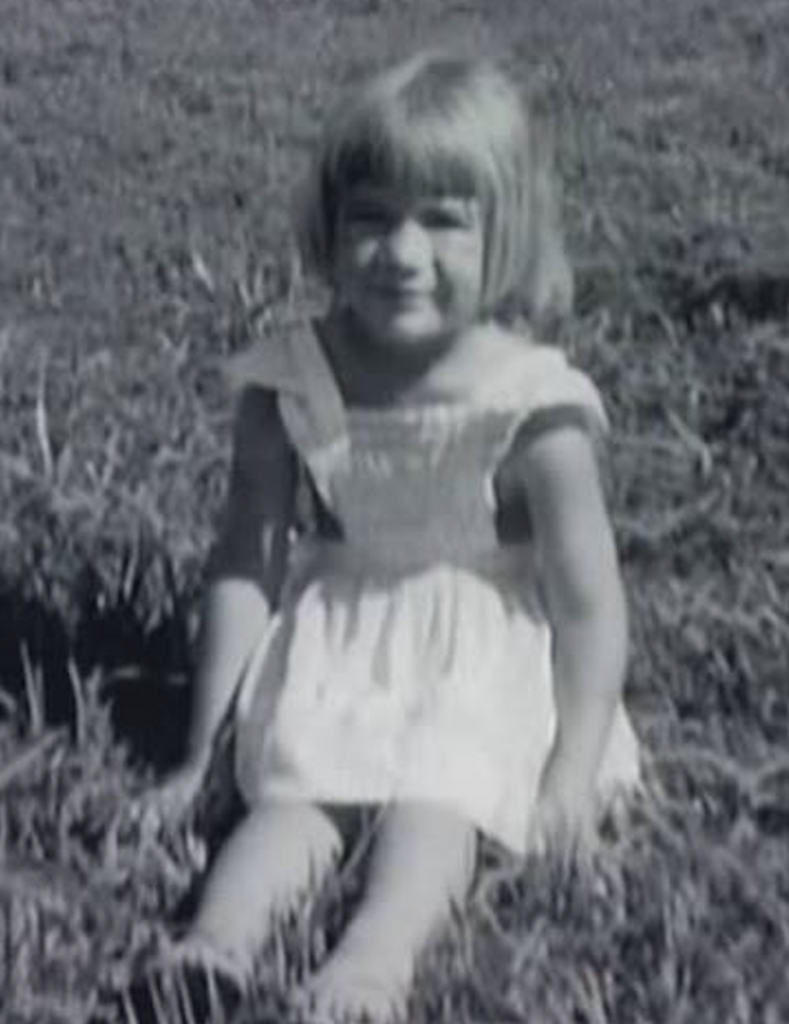
Michele’s funeral was held the following day. During the service, George tried to tell relatives that his stepmother had murdered her. But no one listened.
Mary had told the authorities that Michele had fallen from a woodpile while chasing rabbits, and that was the version of the story people who knew them accepted.
Within a year of Michele’s death, the family was gone. Bill, Mary, and the children left Illinois, leaving Michele behind in an unmarked grave, her real story buried with her.
The System That Buried the Case
The autopsy was performed by Air Force Captain Dr Brian Harrold. His examination revealed catastrophic injuries. Michele had a torn section of bowel, massive internal bleeding, and had lost more than half of her blood. She also had patterned bruising – repeated, distinctly shaped marks that told Harrold she had been struck with an object, and not injured in a fall as Mary had claimed. Her official cause of death was recorded as internal bleeding caused by blunt force trauma to the chest and abdomen.
Harrold also found signs of previous harm: two healed rib fractures, a healing skull injury, and older wounds on her head and thigh. These injuries showed a longer history of abuse, separate from the assault that killed her.
Three years later, in 1964, the Air Force conducted a follow-up review of Michele’s case. Several Air Force physicians re-examined the autopsy and concluded that her injuries were the result of abuse, identifying a pattern consistent with the newly recognised battered child syndrome.
However, even with the findings from the original autopsy and the follow-up review, no agency took responsibility for investigating. The Air Force said the assault occurred off base and was therefore a civilian matter. Local authorities argued that the family were military dependents and should fall under military jurisdiction. Each side waited for the other to act. Neither did.
Then, fifteen years later, it transpired that Michele’s case had sat untouched in the coroner’s office. When a retiring county coroner was clearing out old files, Michele’s incomplete paperwork resurfaced. He did not remember the case, so he listed pneumonia as the cause of death and filed the death certificate in 1976, fifteen years after Michele died. No one re-examined the body, no one checked the hospital charts, and no one reviewed her long history of injuries.
Together, these failures ensured that Michele’s case remained buried for more than thirty-five years.
A Letter from Prison
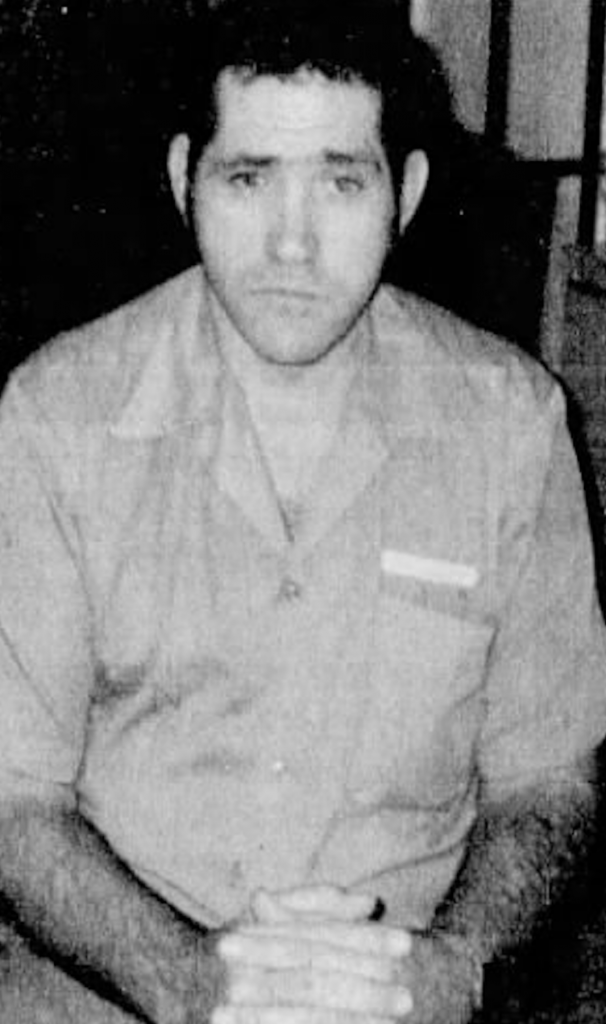
More than thirty years after Michele’s death, her brother George, who was now in his forties, was serving a prison sentence in Jefferson City, Missouri. He was a convicted child abuser, serving three consecutive 15-year sentences for one rape and two acts of sodomy against his 10-year-old stepdaughter.
During his incarceration, he began researching his family history, and as part of that search, he requested a copy of Michele’s death certificate. What he received made no sense.
The certificate had been issued fifteen years after her death, in January 1976, and the cause of death was listed as viral pneumonia, something George knew was impossible.
In August 1995, the St Clair County coroner’s office received a letter from George explaining that the certificate was wrong and that, when he was eight years old, he had watched his sister being murdered.
His letter eventually reached Coroner Rick Stone, who later admitted he was sceptical, but something in George’s tone, the bluntness, the lack of self-interest, the absence of any request for a deal or favour, made him pause. He wrote back, and they exchanged letters. Eventually, Stone contacted the Illinois State Police.
On January 31st 1996, Stone and cold case detective Kurt Sachtleben travelled to Missouri to speak with George in prison. When Stone asked why he was coming forward, George said he did not want anything in return. He simply wanted justice for Michele.
That was the moment Stone believed him, and in 1996, the case was reopened.
Rebuilding the Case
The investigators now faced the problem of how to prove a homicide from 1961 when the original autopsy was never filed. But they had one advantage. Michele had died at a military hospital, and military hospitals do not destroy their records.
Their search led them to Air Force Captain Dr Brian Harrold, the pathologist who had performed Michele’s autopsy more than three decades earlier. He was now living in Florida and had his own private practice. When they called, he told them he remembered the case in detail and had been waiting over thirty years for someone to ask about Michele.
Dr Harrold confirmed everything George had described. The patterned bruising he had noted on Michele’s body, which he had not been able to explain at the time, was now unmistakably consistent with the block-heeled shoes George had described Mary wearing on the day of the attack.
As part of the reopened investigation, the rediscovered autopsy and surviving medical charts were reviewed by medical staff at Scott Air Force Base. Their findings matched Harrold’s exactly: Michele had not died of pneumonia, but had been beaten to death.
With those findings reinforcing the original autopsy decades later, investigators knew they needed physical confirmation. So in December 1996, investigators made the decision to exhume Michele’s body. After thirty-five years, they needed to know whether her remains would still reflect the injuries described in the lost autopsy and in George’s account. It was a grim step, but it was the only way to confirm what had happened to her.
Forensic pathologist Dr Janice Ophoven examined the remains and ordered X-rays of Michele’s bones. Even after decades in the ground, Michele’s bones still carried the marks of the violence she had endured. Two of her ribs showed healing fractures. Her left upper arm had a significant healing break. Her nose had been broken. The back of her skull bore signs of repeated impact injuries. And the facial trauma was so severe that, had she survived, she would likely have needed reconstructive surgery.
None of Dr Ophoven’s findings contradicted the original autopsy. In 1961, Dr Harrold had been able to observe the soft tissue injuries: the torn stomach, the internal bleeding, and the bruising shaped like the square heels of Mary’s shoes. Those injuries disappear with decomposition. What remains are the bones, and thirty-five years later, they told the same story – one that matched George’s account.
Even after thirty-five years, Michele’s body still spoke for her. And what it said was enough to move the case forward.
Finding Mary Morgan
Cold case detectives eventually tracked down Michele’s stepmother, Mary Morgan, in West Columbia, Texas. She was still married to Michele’s father, Bill, and together they had built an entirely new life. They had gone on to have four biological children together: two boys and two girls, and were now working as missionaries for a local church. In the community, the couple were known for their devotion to children, including their work with orphans in Mexico.
When detectives questioned Mary about Michele, she claimed she did not remember. She said she did not recall broken ribs, did not recall the month-long hospitalisation, and did not recall the injuries. She insisted she had no memory of anything unusual.
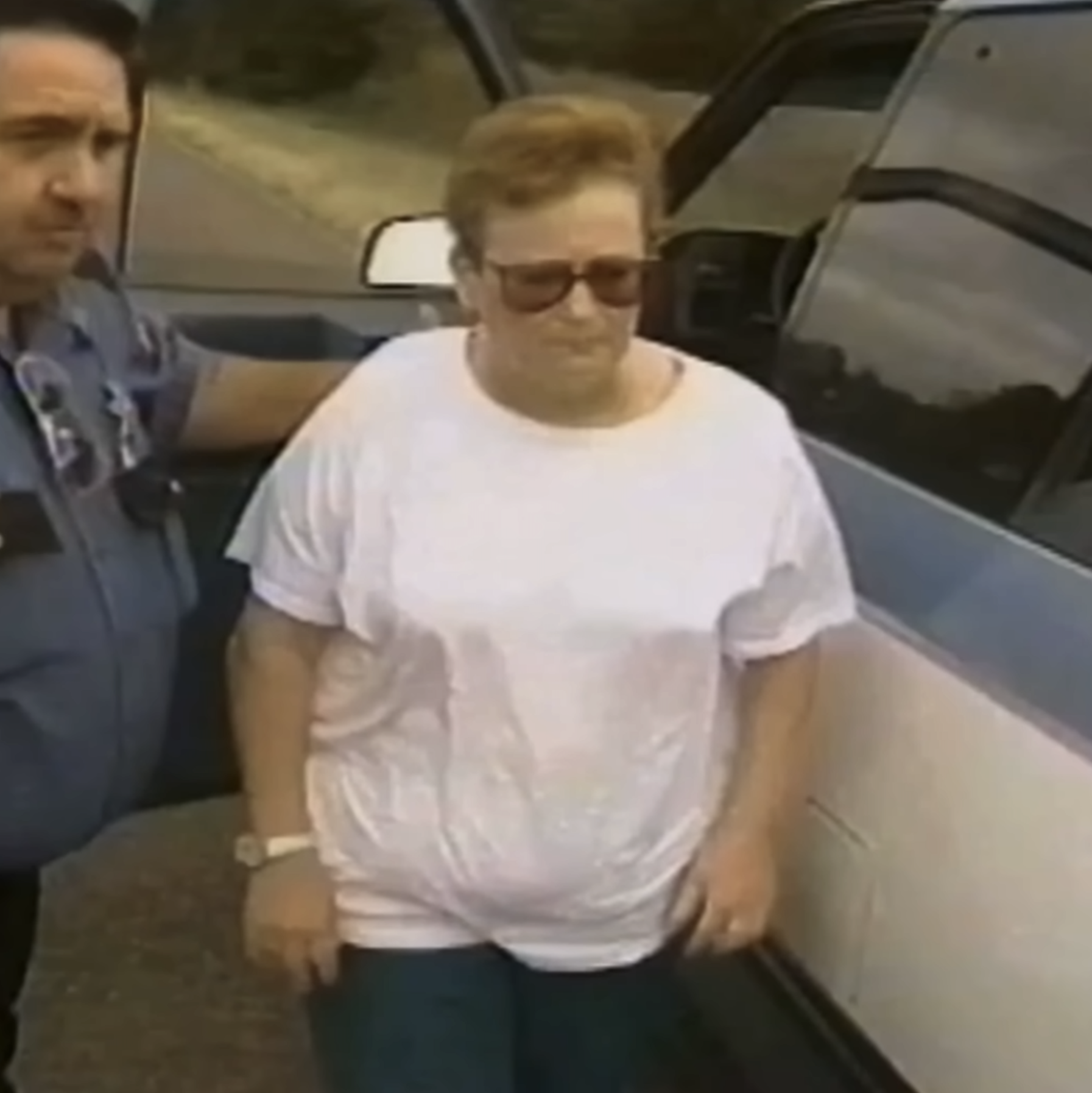
However, shortly after the detectives left, a reporter stationed outside the house called the police to say the Morgans were loading their van and preparing to leave town. Officers intercepted them in Montgomery County, Texas. Mary said they were driving to Illinois to speak with an attorney. Given the timing of their departure immediately after police questioning, authorities believed they were attempting to flee. She was arrested.
The Charges and the Plea
In February 1997, a grand jury in Illinois indicted Mary Morgan on one count of murder and two counts of involuntary manslaughter: one for causing death during an assault and one for causing death through corporal punishment. However, although she was indicted for murder, she could not face the death penalty because the crime had occurred in 1961, meaning she had to be sentenced under the laws in force at that time. By then, the death penalty had been ruled unconstitutional, making life imprisonment the maximum possible sentence.
After the indictment, Mary’s legal team negotiated a plea agreement. She agreed to plead guilty to involuntary manslaughter, a charge that carried a maximum sentence of eight years under modern guidelines. Mary was undergoing cancer treatment at the time, and her lawyer, Burton Shostak, said she accepted the deal because she wanted to put the case behind her and reduce the strain on her health.
Her bail was set at $1,000,000. She posted it and remained under house arrest while awaiting sentencing.
Sentencing
Because Mary had pleaded guilty under the plea agreement, there was no trial and the case moved directly to sentencing.
At the sentencing hearing, Mary’s four children supported her, insisting she was innocent. They had grown up with a very different version of their mother: a woman they believed to be loving, devout, and incapable of the violence described in court. However, the cold case team’s investigation presented a very different picture of Mary Morgan. Hospital records showed that after Michele’s death, her four biological children had collectively visited emergency rooms more than 150 times before the age of five, a pattern disturbingly similar to Michele’s. Their injuries included burns from a hot iron, lacerations, and ingestion of penicillin and mercurochrome, as well as repeated falls.
Mary’s husband, Bill, also defended her, telling the court that George was lying to reduce his own sentence. He claimed he did not remember how Michele died, saying, “There was no reason to go into detail. She was gone.” However, medical records from 1959 to 1961 show repeated hospital visits for Michele, with doctors raising concerns about possible abuse on multiple occasions. Bill would have been aware of these incidents, as well as the pattern involving his other children in the years that followed, but dismissed them as accidents. Despite this, he was never considered a suspect.

After hearing the evidence and testimony, the court turned to sentencing. Under the law in force in 1961 at the time of Michele’s death, the maximum penalty for involuntary manslaughter was five years, leaving the judge with no discretion to impose a higher sentence regardless of the severity of the abuse or the length of time it had gone unpunished.
Mary Morgan was sentenced to five years in an Illinois state prison.
After serving her time, she was released in 2001 and vanished from public record.
Conclusion
Michele Morgan was four years old when her life ended, and for decades the truth of her death lay buried under silence, error, and a system that failed her. But the traces of what happened to her endured, and so did the memory of a brother who refused to let her story vanish.
In 1995, that brother wrote a letter from his prison cell, and it was that letter that finally forced the authorities to confront the reality of Michele’s death. It could not undo the past, but it ensured that Michele was finally seen, heard, and acknowledged.
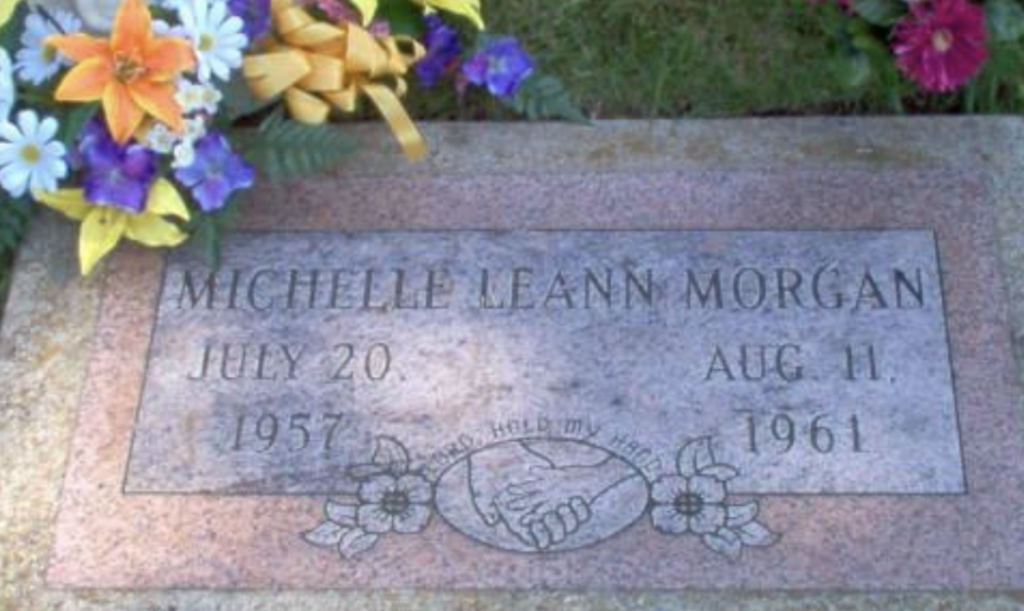
And the impact of that truth reached further still. For more than thirty years, Michele’s grave had no headstone — only a temporary marker that was never replaced. After the case was reopened, it was the local community, not her family, who raised the money to give her a proper stone at last. A small act, perhaps, but one that stands as proof that her story was heard, and that she will not be forgotten again.
Sources
The Herald. Step-daughter died in 1961 Scots mother admits killing child.
Cold Case Files. Through the Eyes of a Child. S1 E6.